
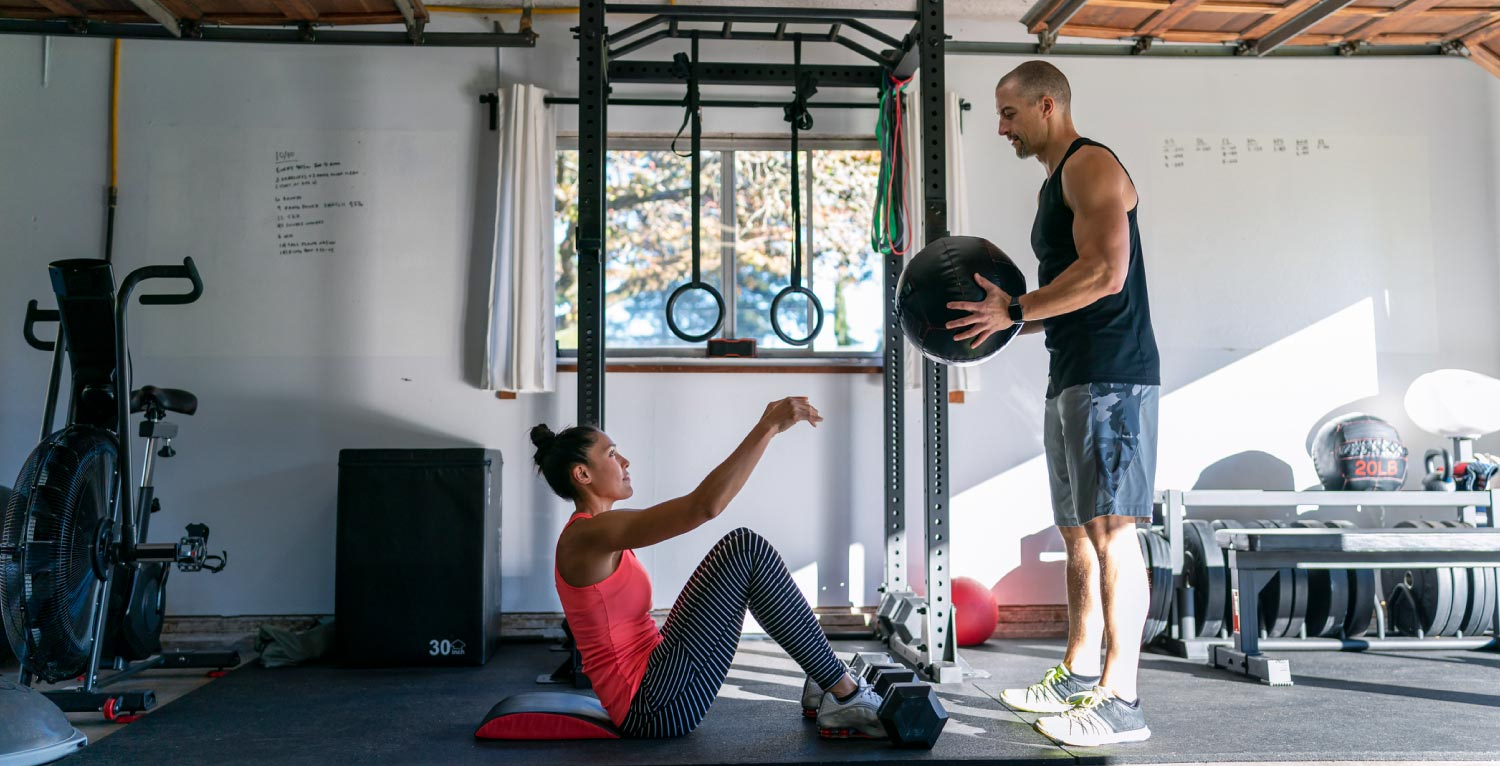
If you have a garage, you already have the space for one of the most ideal types of home gyms– the garage gym. And while you may have already dreamt what you’d do with this space, it’s possible that reality has gotten in the way. Maybe you think: “Now’s not the right time.” “The money’s not there yet.” so you postpone building your gym until the timing is right or after you get a raise.
The truth is: you have no idea how close you are to making your garage gym reality, even with a tight wallet.
The garage gym ideas on a budget I’m going to walk you through aren’t about settling for less. They’re about being smarter than the person who drops $4,000 on a commercial gym’s worth of equipment they’ll use three times before it becomes a very expensive coat rack. A thoughtful garage setup — even at $500 — can outperform any machine-filled big-box gym membership if you build it with intention. That’s the SOMA philosophy: the environment you build is the foundation your transformation is built on. Get it right, and the work gets easier to show up for.
Let’s get into it.
Why the Garage Is the Most Underrated Training Space You Already Own
Before we talk equipment and budget, I’d like to emphasize why garage gyms are such gems to the home gym community. Hopefully this perspective will open your eyes to what a powerful space garage gyms can be– and how much potential yours has as well.
First of all let’s talk about space. The average two-car garage runs around 400–576 square feet. Even a single-car garage at roughly 200 square feet gives you more usable floor space than most commercial gym floor plans allocated per member. This translates to freedom of movement and freedom of expression. Unlike a spare bedroom, you’re not working around furniture, low ceilings, or stressing about downstairs neighbors. You can drop weight. You can move and be as loud as you want.
Second: you have climate control flexibility. You have the power to condition your garage gym on your terms. By adding a simple wall-mounted unit, a tower fan, or a space heater, you can create a space (once only suitable for storage or parking cars) into a functional, fitness environment year-round. You’re not locked into the commercial gym’s thermostat set to a temperature that serves 200 people instead of you.
Third, (and this is my favorite point as a trainer/ fitness enthusiast): autonomy. You never wait for equipment. Never adjust your workout because someone else is using the rack. You train when you want, how you want, to whatever music you want. That psychological freedom is worth more than any feature a commercial gym could offer.
Take action: Walk your garage tonight and start taking mental and physical notes. Measure the footprint, note any HVAC, and identify what’s taking up space that could be relocated or removed. You’re not committing to anything — you’re just beginning to see the space for what it could be.
Budget-Friendly Equipment That Actually Moves the Needle
Here’s what I tell every client who’s starting a garage gym from scratch: you don’t need a lot of equipment, but pieces that you choose had better be essential. For many new home gym owners or rookie lifters may not know what constitutes “essential” gym equipment- but the distinction is simple: maximum training versatility per dollar spent. Here are a few examples to consider.
The non-negotiables for under $300:
Adjustable dumbbells — A single pair of adjustable dumbbells (Bowflex SelectTech 552s run around $300–350 new, but we’ll cover used options shortly) replaces an entire dumbbell rack. If budget is tighter, fixed dumbbells at a few strategic weights — 15s, 25s, 35s — from a sporting goods store closeout will get you started.


Resistance bands — A full set of loop and long bands costs $25–50 and handles everything from mobility work to serious strength assistance. Don’t underestimate them.
A pull-up bar — Doorframe-mounted if you’re space-constrained, wall-mounted if you want permanence. Budget: $30–80.


A kettlebell — One well-chosen kettlebell (16kg/35lb for most women, 24kg/53lb for those with a strength base) is a full conditioning system. Budget: $40–70.
Related Post: Essential Home Gym Equipment vs Optional: What to Buy First
The first upgrade when you have $150–200 more:
A quality adjustable bench — not the $60 folding kind that wobbles under load, but a solid mid-range option like the Rep Fitness AB-3000 or FitRx SmartBell Bench. The bench multiplies the utility of every piece of equipment you own.
Take Action: Create your list in tiers — what you’re buying this month, what you’re adding in 90 days, what’s six months out. This keeps you from panic-buying things you don’t need yet while working toward a real, complete setup.
DIY Solutions That Save Hundreds (and Actually Hold Up)
The garage gym world has a thriving DIY culture, and for good reason: some of the most expensive line items in a gym setup can be built for a fraction of the cost with basic materials and a Saturday afternoon.
The lifting platform. A proper deadlift and Olympic lifting platform runs $500–1,000+ from commercial vendors. DIY version: three 4×8 sheets of 3/4″ plywood (two stacked as the base, one on top), topped with horse stall mats on the outer edges and either another mat or a strip of hardwood in the center. Total cost: $150–250 depending on your lumber prices. This is something I’ve recommended to clients for years — it protects your floor, reduces noise transfer, and makes your space feel intentional.
DIY storage. Equipment creep is real, and disorganized equipment is equipment that doesn’t get used. Before you spend $200 on a commercial storage rack:
- Wall-mounted lumber (2x4s and 2x6s with proper anchoring) makes excellent bumper plate storage
- PVC pipe cut to length and mounted horizontally holds resistance bands and jump ropes
- Simple pegboard with hooks handles accessories, straps, chalk bags, and small tools
Concrete floor protection on a budget. If you’re not ready to commit to full flooring yet (we’ll cover that in detail shortly), interlocking foam tiles from a big-box hardware store run $1–2/square foot and provide enough cushion for bodyweight work and light dumbbell training.
Take action: Identify the one DIY project that would most immediately improve your training experience. Build that first. One solved problem at a time.
The Used Equipment Market Is the Best-Kept Secret in Home Gym Building
If you’re buying all of your equipment new, you’re leaving real money on the table — and you’re missing out on quality that your budget wouldn’t otherwise touch.
Here’s the thing about fitness equipment: people buy it with the best intentions and sell it with barely any use. The pandemic-era home gym boom created an enormous secondary market of quality equipment that people are motivated to move.
Where to look:
- Facebook Marketplace — This is the primary market. Search your target equipment, set a radius, and check daily. Prices move fast.
- Craigslist — Still active in many markets, especially for heavier items like power racks and barbells
- OfferUp — Strong in certain regions
- YMCA and commercial gym liquidations — These happen more than people realize. Follow your local gym’s social media and watch for announcements.
What to look for and what to skip:
- Barbells: check for straight sleeves (roll it on a flat surface), knurling condition, and center markings. A bent barbell is a safety hazard and a bad deal at any price.
- Dumbbells: almost always a safe used purchase — there’s not much that can go wrong with a cast iron dumbbell
- Benches: check the uprights (no wobble), pad condition, and adjustment mechanism
- Cardio equipment: approach with more caution — motors wear out and parts get expensive

Take action: Set up saved searches on Facebook Marketplace for your top three equipment priorities right now, before you close this tab. The best deals go in hours, not days.
Seasonal Realities: Training Year-Round in a Garage
This is the section most budget garage gym guides skip, and it’s also the section that determines whether your setup stays in use 12 months a year or sits un-used every August and January.
Summer heat management: A garage in summer can push temperatures detrimental to your health. Some solutions include:
- $30–60: A powerful box fan positioned to pull hot air out while a window or door lets cooler air in can drop temperature meaningfully, especially during early morning or evening sessions
- $150–300: A portable evaporative cooler (“swamp cooler”) works well in low-humidity climates and requires no installation
- $400–800: A mini-split or wall-mounted AC unit is the permanent solution and dramatically expands your usable training windows
Winter cold management: Cold training can (in some ways) be more manageable than the heat. Athletes often perform better in cool temperatures — but even the cold has its limits.
- $50–150: A quality electric space heater can warm a single-car garage space adequately for most sessions. Propane is not recommended in enclosed spaces without ventilation.
- For your equipment: Cold temperatures affect rubber and steel differently than warm environments. Barbells become stiffer; bumper plates can crack if dropped in extreme cold. Warm up both yourself and your equipment gradually.
Related Post: How to Ventilate Your Garage in the Summer
Take action : Identify your biggest seasonal threat — summer heat or winter cold — and price out the minimum viable solution for that season. That’s your next purchase after core equipment.
How to Make the Car and the Gym Coexist
For most people, the garage gym doesn’t get to replace the car. It has to share the space. This is actually more workable than it sounds.
Zone your space deliberately. Think of the garage as having two distinct zones: the car zone and the training zone. The training zone gets defined by your flooring — once mats are down, that’s gym territory and everyone in the house knows it.
Vertical storage is your best friend. The more items you can store vertically is less contested space between your car and gym floor. Wall-mounted plate storage, folding squat racks (a great option for budget builds by the way), ceiling-mounted bike hooks — every item moved off the floor is a win.

Folding and modular equipment earns its place. In a shared garage, a folding squat rack like the Rogue RML-3W Wall Mount Fold Back Rack ($500–700 new, often available used) is a game-changer. Folds flat against the wall when the car comes in, extends into a full training rack when it’s gym time.

The one mistake to avoid: Designing your gym around the car being out of the garage. When you build your garage gym around the reality of its multiple functions, it becomes easier to adjust for the ebb-and-flow of its everyday usage. Life happens, people share vehicles, seasons change. Design it so it functions with the car present, and the times the car is gone become a bonus.
Take action: Map your garage on paper — car footprint included — and identify the training zone that remains when the car is parked. That’s your real usable footprint. Plan from reality, not the ideal scenario.
Garage Gym Flooring on a Budget: The Horse Stall Mat Solution
In case you didn’t know, horse stall mats are some of the best flooring value in the home gym community. You’ll find the same quality in professional training facilities for triple the price per square foot– all that to say horse stall mats are an opportunity you can’t afford to sleep on.
You can find them at Tractor Supply, Rural King, and similar farm supply stores. These mats run $50–70 for a 4’x6′ mat that’s 3/4″ thick! That’s the density and thickness you want for heavy training — more than enough support to protect your concrete and your joints, with enough grip to stay in place without adhesive.
For a 10’x10′ training zone (a solid starter footprint), you need approximately 4–5 mats. Total cost: $200–350.
What to know before you buy:
- New mats off-gas a rubber smell that can be strong for the first 1–2 weeks. Unroll them outside or in the garage with the door open for several days before training on them.
- They’re heavy — 100 lbs per mat. Bring help or a hand truck.
- They’re not adhesive — they stay in place through weight and friction, which is actually a feature for garage gyms where you may rearrange occasionally.
What to skip: Avoid thin puzzle foam tiles like the plague! They have their uses; fine for yoga and stretching but they compress under heavy loads and don’t protect your floor from dropped weight. If you’re doing any barbell training, horse stall mats are the minimum viable flooring.
Related Post: Best Home Gym Flooring: Rubber vs Foam vs Mats (Complete Guide)
Take action: Take a field trip to your nearest Tractor Supply store website and check local stock. Be sure to call ahead — mats like these move quickly, especially in spring when people are building out their garage gyms.
Three Complete Garage Gym Setups by Budget
Here’s where it all comes together. These aren’t aspirational wish lists — they’re real, trainable setups built around the budget-garage-gym ideas we’ve covered throughout this article.
The $500 Garage Gym Setup
For: Beginners, those testing the waters, or anyone prioritizing getting started over getting complete.

| Item | Approx. Cost |
| Horse stall mats (3 mats / ~72 sq ft) | $150–200 |
| Resistance band set (loop + long) | $30–50 |
| Adjustable dumbbells (used, mid-range set) | $80–120 |
| Pull-up bar (doorframe or wall mount) | $40–60 |
| Kettlebell, 16–24kg (used) | $30–50 |
| Jump rope | $15–25 |
| Total | ~$345–505 |
What you can train: Full-body strength, conditioning, mobility, HIIT, bodyweight progressions. This is more than most people think.
What you’re missing and when to add it: A bench (open up pressing movements) should be the first add. A barbell and plates come next if strength training is the priority.
The $1,000 Garage Gym Setup
For: The committed home trainer who wants a real, complete program without compromise.

| Item | Approx. Cost |
| Horse stall mats (5 mats / ~120 sq ft) | $250–350 |
| Adjustable dumbbells (Bowflex 552 or similar, used) | $180–250 |
| Quality adjustable bench (used) | $100–150 |
| Pull-up/dip station | $80–120 |
| Resistance bands + accessories | $40–60 |
| Kettlebell set (2–3 weights, used) | $80–120 |
| Foam roller + mobility tools | $30–50 |
| Total | ~$760–1,100 |
What you can train: Serious strength, hypertrophy, conditioning, mobility — a complete program that rivals any commercial gym for most goals.
The $1,500 Garage Gym Setup
For: The home gym builder who wants the foundation of a long-term, expandable training environment.

| Item | Approx. Cost |
| Horse stall mats (full zone, ~150 sq ft) | $350–450 |
| Wall-mount folding squat rack (used or mid-tier new) | $300–450 |
| Olympic barbell + bumper plate set (used) | $200–300 |
| Adjustable bench | $120–180 |
| Adjustable dumbbells or fixed set | $150–200 |
| Resistance bands + accessories | $40–60 |
| Pull-up bar (integrated into rack or separate) | Included or $40–80 |
| Total | ~$1,160–1,640 |
What you can train: Everything. Squat, deadlift, bench, overhead press, Olympic lifts, conditioning, accessory work. This is a complete strength and conditioning facility.
The Garage Gym Is Just the Beginning
If you got anything from this post I hope it’s this: a garage gym on a budget doesn’t have to be a lesser version of the “real thing”. When done right it can be a real gym where you get real results, just as effectively as a setup worth thousands of dollars.
Successful fitness journeys are rooted in intentional action– which includes how you choose to spend your money. The garage gym ideas on a budget we’ve covered here aren’t about pinching pennies for their own sake. They’re about being deliberate — spending on what moves the needle and skipping what doesn’t, buying used when quality holds, building when you can, and always keeping the bigger picture in focus. Because the equipment is never really the point. The point is who you become when you stop making excuses and start putting in the work in a space that was built to support that.
Your garage is ready. The question is whether you are.
P.S. If you want a thorough walkthrough of everything you need to setup your ideal home, check out our post: How to Set Up a Home Gym: The Complete Beginner’s Guide
Written by Micah Le’Gare, CPT — certified personal trainer, fitness nutrition specialist, and founder of SOMA.FITNESS.


Leave a Reply