
We all know stocking a home gym is not easy on the wallet; without a strategic mindset the costs will add up– fast. What makes it worse is that everything is so appealing! Everywhere you look or scroll there’s a new, sleek, sophisticated piece of fitness equipment that promises to get you in better shape. However this is the great deception of the fitness industry; you buy these beautiful products and likely end up with a home gym full of pretty pieces collecting dust rather than a functional workout space.
So the question and true approach becomes this: in order to save your wallet and have the most efficient workout possible– which pieces of fitness equipment are essential and which are simply optional?
Well I’m glad you asked! Over the course of this article we’ll tackle the essential home gym equipment, clarify what’s optional, and set you on the path to establishing the best home gym possible without breaking the bank. So without further ado, let’s get into it.

The Money-Saving Power Of Essential Home Gym Equipment
Before we get too deep into things I want to establish this section for the unbelievers, for the readers who don’t see the merit of the basic, fundamental pieces. Trust me when I say I get the appeal of “investing” in your home gym (at any cost), but trust me when I say you do NOT want the buyer’s remorse that comes along with that line of thinking. Imagine dropping $3,000 on a beautiful treadmill only for it to serve as a glorified laundry rack! And It wouldn’t stop there if we’re being honest. If you don’t use your home gym you could in theory spend thousands if not tens of thousands of dollars on items you never use.
Starting with the essentials ensures the equipment you use serves multiple functions. When you’re focused on the essentials, a set of adjustable dumbbells can go just as far as individual barbells and accessories. These foundational pieces give you maximum workout variety without turning your spare room into a cramped equipment graveyard. Plus, you’ll save serious cash that you can put toward upgrades later—once you actually know what you need based on your workout habits, not what some Instagram fitness influencer is hawking.
What “Essential Gym Equipment” Actually Means
The word “essential” in this context is a little misleading because there isn’t a one size fits all answer for fitness. What is “essential” for a runner training for a 5k is definitely not essential for a weightlifter trying to build 10lbs of added muscle. So to make things very clear moving forward let’s define what we mean when talking about essential home gym equipment.
Defining Essential vs. Optional Gear
To be considered essential equipment, it has to meet 3 criteria;
- It’s versatile
- It supports fundamental movement patterns
- It’s used consistently
This gear can be used for most if not all of the exercises that mimic activities of daily living; squatting, pushing, pulling, hinging, and carrying. Equipment like this will provide the most use for your money and most use per square foot.
You could use adjustable dumbbells, pull-up bars, resistance bands, etc. With a little creativity and strategic planning most (and in some cases all) compound movements can be done with just one item if not a combination of one or more.They’re the foundation of a solid training program, whether you’re into strength training, general fitness, or even athletic conditioning.
Optional gear, on the other hand, is the nice-to-have stuff. Think battle ropes, slam balls, suspension trainers, or specialty barbells. Don’t get me wrong—these can be awesome additions! But they’re specialized tools that enhance specific aspects of training rather than forming the core of your workouts. A medicine ball might be great for rotational power, but you can build a fantastic physique without ever touching one. That’s the difference.
The key question to ask yourself: “Can I get a complete, effective workout without this?” If the answer is yes, it’s optional. If the answer is no, or if removing it would seriously limit your training, it’s essential.
How Fitness Goals, Space, And Budget Affect What’s Essential
This is where your personal touch comes into play. The items that make up your essential home gym equipment list should mirror your fitness goals, not equipment that looked good during a video on social media.
Everything Training Specific
If you have a marathon on the horizon, investing in a quality treadmill or hitting the open road is what we’d consider essential. Weighted sets like barbells or dumbbells are obviously secondary. However if muscle building is your goal, the opposite is true; a focus on barbells, dumbbells, resistance bands, etc. with any other form of fitness (like cardio) being optional. Having a strong understanding of goals will help you choose the right equipment to help accomplish them.
Space Is A Major Reality Check
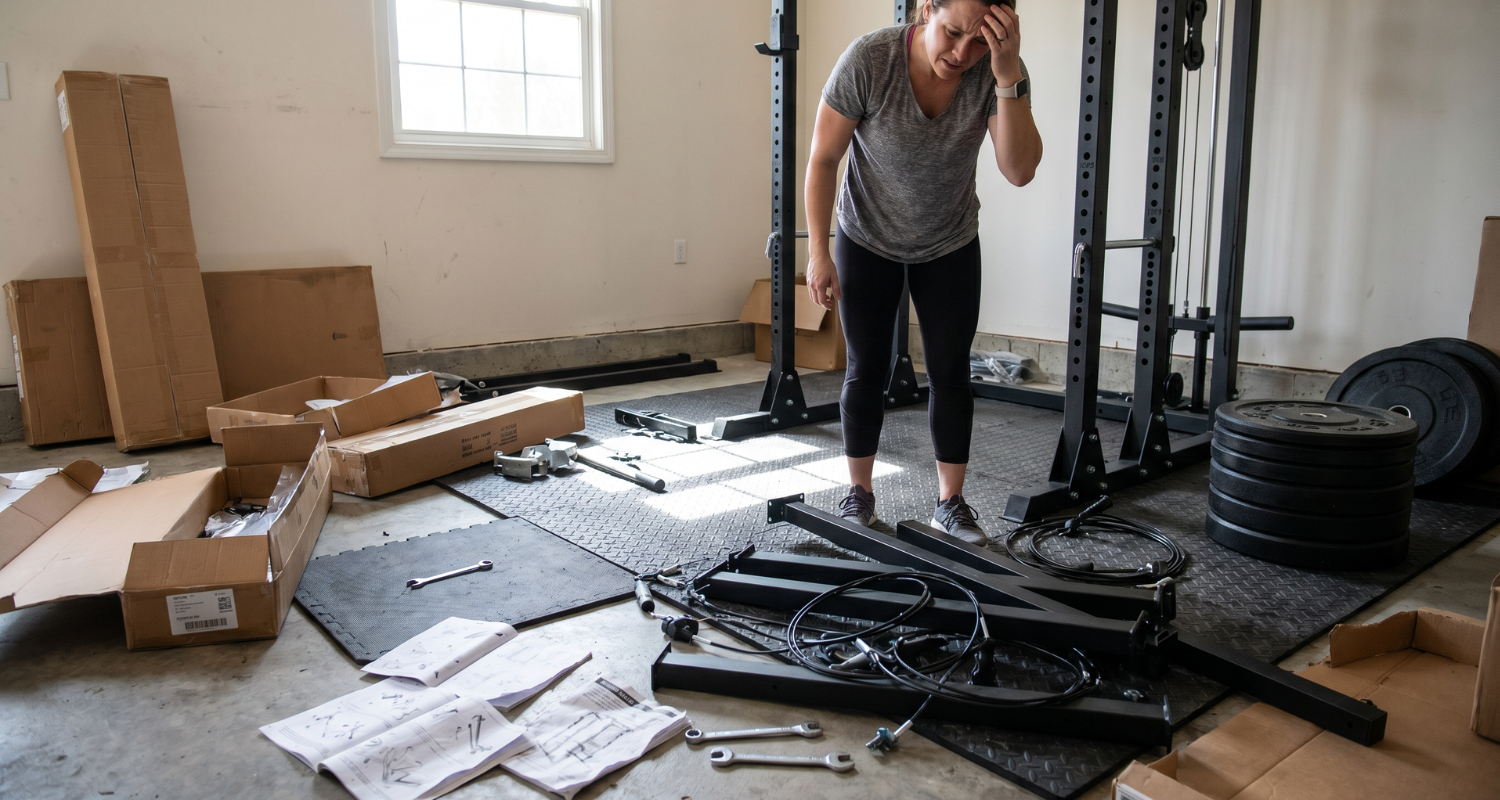
Living in a 500-square-foot apartment? A full power rack probably isn’t essential for you, even if you’re serious about lifting. You might prioritize adjustable dumbbells and a doorway pull-up bar instead. Got a dedicated garage gym? Then maybe a barbell and rack setup becomes essential because you have the room to use them properly. Be honest about your space limitations. Essential equipment is only essential if you can actually set it up and use it without rearranging your entire life.
Budget Defines What To Buy Here And Now
Essential doesn’t mean “buy everything at once.” Maybe dumbbells are essential, but you start with one pair and add more as your budget allows. Or you choose resistance bands first because they’re affordable and versatile, then upgrade to weights later. The essentials are what you need to get started and stay consistent—not what you need to have a Instagram-worthy gym on day one. A $200 budget and a $2,000 budget will produce very different “essential” lists, and that’s totally fine. Start where you are, not where you wish you were.
Essential Gym Equipment For The Home (*Buy These First)
So, let’s get into the stuff you need to know. If you’re starting from square-one building a home gym that gets you the most results with the least equipment– then read on. The variety of exercises these pieces offer and the money they save you will revitalize your workouts and your wallet. So listen well, take some notes and prepare to change your workout for the best!
Adjustable Dumbbells– The Pillars Of Strength Training
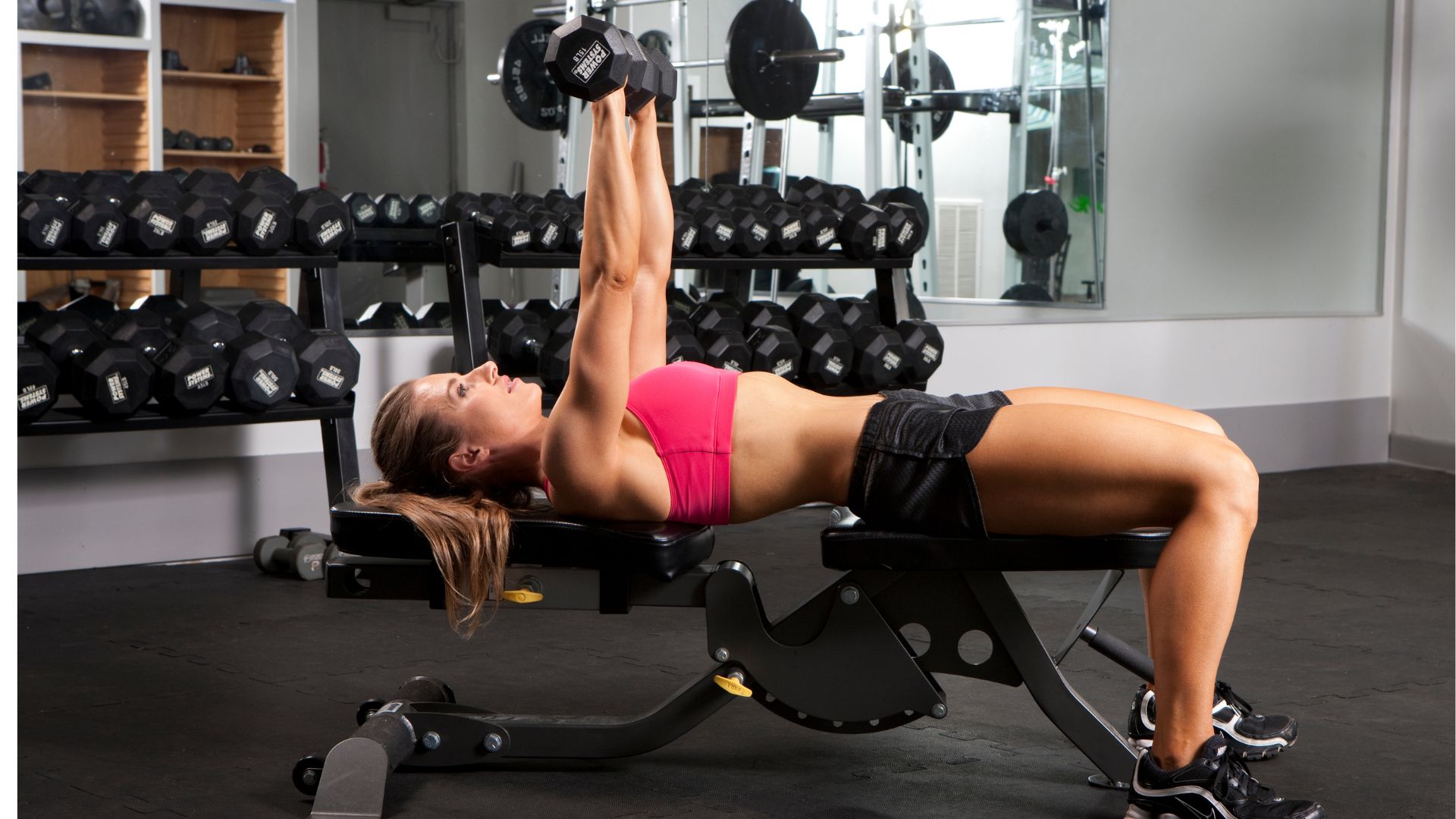
If you were stranded in a gym with only one piece of gym equipment to reach your strength goals– adjustable dumbbells are mandatory. These dumbbells can target everything; chest presses, shoulder raises, rows, curls, lunges, goblet squats—the list goes on.
The best part is that instead of spending hundreds of dollars on different weight ranges, you can make a one time purchase with access to weight from 5-50+lbs! This also makes organization and clean-up much more efficient opposed to re-racking and re-organizing a handful of individual weights.
For beginners, dumbbells are also more forgiving than barbells. They allow each side of your body to work independently, which helps correct muscle imbalances and improves coordination. Plus, they’re safer when you’re training alone—if you fail a dumbbell bench press, you just drop them to the side. No getting pinned under a barbell.
Expect to spend anywhere from $200 to $500 for a decent adjustable set, depending on the weight range and brand. This price-tag might sound steep, but this is far cheaper than the price of other individual pairs. Powerblock, Bowflex SelectTech, and Ironmaster are popular choices. It might seem like a chunk of change upfront, but compare that to buying individual pairs of dumbbells, and you’ll realize you’re getting a steal.

Barbell And Weight Plates- The Foundation Of Compound Movements
With dumbbells as the foundation of your inventory, you’re ready to add to barbells and weighted plates to your list of essentials. Dumbbells allow you to perform the basic compound exercises (squats, deadlifts, bench press, overhead press, rows, etc.), but the barbell will unlock these same movement’s fullest potential.
A typical Olympic barbell (7 feet, 45lbs) is likely the best purchase. Adding multiple bumper plates or iron plates (depending on your budget) will complete the set. Bumper plates are a great choice if you’re interested in Olympic weightlifting or prefer to drop your weights on the ground. Iron plates are great for any of the basic strength exercises and generally the cheaper option.
If price isn’t an issue, start by purchasing enough plates to challenge yourself for all of the compound lifts. For example a collection of plates totaling 300lbs is heavy enough to keep even the most seasoned lifters well conditioned. And you can always buy more weight as you get stronger or as your wallet permits. A basic barbell and plate set will run you anywhere from $300 to $600, depending on quality and whether you go new or used.
One thing to note: a barbell really shines when paired with a rack (which we’ll get to next), but even without one, you can do deadlifts, rows, Romanian deadlifts, and floor presses. Just be smart about safety.
Power Racks/ Squat Stands: Adding Safety And Exercise Variety
Now we begin really building your home gym with the incorporation of a power rack or squat stand. There are few pieces that make a space feel more gym-official. If you plan to use barbells for serious strength training, then it’ll be very difficult to progress without the inclusion of a power rack or squat stand. It will provide easy accessibility, safety, and stability that will unlock a plethora of exercises to you.
The biggest benefit? Safety bars (or spotter arms). These adjustable bars catch the barbell if you fail a squat or bench press, which means you can train heavy without a spotter. That’s huge for home gym users. No more anxiety about getting pinned under a heavy bench press or bailing on a back squat.
Beyond safety, a power rack gives you anchoring points for resistance bands, space for a pull-up bar (most racks have one built-in), and the ability to do rack pulls, pin presses, and other partial-range movements. Some racks even have attachments for cable systems, landmines, and dip bars.
I understand if dropping hundreds of dollars on a sleek power rack sounds unreasonable, in which case a squat stand is a much more economic option. It’s basically a smaller version of a power rack without the full cage. While squat stands make assembly and use simpler, you will invariably lose out on the safety and exercise variety power racks provide.
Power racks range from about $300 for basic models to $1,000+ for heavy-duty setups with all the bells and whistles. Squat stands run a bit cheaper, usually $150-$400. Either way, this is an investment that pays off in safer, more effective training.
Adjustable Bench– The Key To Presses, Rows, And Core Work
The natural progression from a power rack is the inclusion of an adjustable bench. The adjustable bench may not seem essential at first, but its absence from your home gym will make you realize proper strength training is incomplete without it.
The word “adjustable” is critical here because for just as many exercises as a bench unlocks, the option to incline can double them (at least). A flat bench is necessary for flat bench press, but an adjustable bench lets you do incline presses (for upper chest), decline work (for lower chest), seated shoulder presses, incline curls, and supported rows. You’ll use it for way more exercises than you’d think.
Keep your eyes open for sturdy benches that can bear anywhere between 600-1,000lbs, has good padding, and adjusts easily between a variety of angles. You want to make sure you feel stable while pressing heavy weights with a wide enough base to support your shoulder-blades and full back.
You don’t need to go crazy here. A solid adjustable bench will cost you between $150 and $400. Rep Fitness, Rogue, and Titan all make dependable options. Avoid the super cheap ones from big-box stores—they tend to be wobbly and don’t hold up well over time.
Flooring– Protecting Your Investment
Alright, I already hear the objections; “You said this was about essential EQUIPMENT, so why should I buy flooring?” Trust me I get it! The idea of investing in flooring rather than equipment that will further your fitness goals seems like a step in the wrong direction. But understand this; you are investing in essential equipment because good gym flooring is essential for equipment longevity.
It seems like a waste of money until you think about all of the previous pieces of equipment; barbells, weighted plates, dumbbells, racks– all of these items are heavy metal. Over time slip-ups happen, and if this mistake happens with heavy metal equipment you best believe something is going to be damaged (the weights, the floor or both). Proper gym flooring safeguards your actual floor from damage, all while providing cushion for dropped weights and stable footing during lifts.
Rubber Flooring
Rubber gym flooring is the way to go. Horse stall mats (¾-inch thick rubber mats from farm supply stores like Tractor Supply) are the budget-friendly favorite—they’re durable, thick enough to protect your floor, and cost around $40-50 per 4×6 foot mat. For a basic lifting area, you might need 3-6 mats depending on your space.
If you want something a bit nicer looking, interlocking foam tiles or rubber tiles designed specifically for gyms work great too. They’re easier to install and remove, but they’re usually thinner and pricier than stall mats.
Don’t sleep on this. Good flooring costs $100-300 for most home gym setups, and it saves you from potentially thousands in floor repairs. Plus, it just makes your workout space feel more official and dedicated, which honestly helps with motivation.
For more information about the best gym flooring for your space, check out this article “The Best Flooring for Home Gyms: Rubber, Foam, or Carpet?”
Optional Home Gym Equipment (*Nice To Have, But Not Required)
We’ve covered the necessities, now we get into the fun extras that will make your home gym feel like a complete gym. The following pieces, while not mandatory, will definitely enhance your workout space and make the experience more enjoyable. If you’re working with limited resources, a healthy body/ great physique can be developed with the previously mentioned items. However, if you’ve already handled the essentials for your own home gym, here are some items worth purchasing.
Cardio Machines (Treadmill, Bike, Rower)
Cardio machines are rather debatable for many home gym owners. Some people wouldn’t consider their fitness complete without them, others could think of better things to spend their money on. In all honesty it really just depends on your fitness goals.
You’ve got to think in terms of usage: If you live somewhere that’s exceedingly cold, has dangerous running routes, or just prefer to run indoors– a cardio machine will be vital to you. Outside of these conditions, you don’t need a machine to get cardio done. There’s the great outdoors, jump ropes, high school/college tracks, or even high intensity circuits with your dumbbell or barbell.
But if you’re dead-set on purchasing cardio equipment, here are some of the options available to you:
- Treadmills are great for runners who want consistency regardless of weather. They’re also easy to use—just hop on and go. Downside? They’re big, loud, and expensive. Expect to drop $500-$2,000+ for anything decent.
- Stationary bikes (especially spin bikes or air bikes) are lower-impact, quieter, and take up less space than treadmills. They’re awesome for interval training and easier on your joints. Air bikes like the Assault Bike or Rogue Echo are brutal for conditioning work. Price range is similar to treadmills, though you can find basic bikes for cheaper.
- Rowers are the dark horse of cardio machines. They provide a full-body workout, they’re relatively compact (many fold up), and they’re low-impact. Concept2 rowers are the gold standard and hold their resale value like crazy. You’re looking at around $900-$1,000 for a quality rower.
Bottom line: if cardio training is a major part of your routine and you know you’ll use it multiple times per week, go for it. If you’re mostly focused on strength training and can get your cardio elsewhere, skip it for now.

Resistance Bands And Specialty Bars
Resistance bands are regular and unfortunate victims of underestimation. While they sit on the wall collecting dust in most gyms, athletes go about their business oblivious of how effective these items really are. And the worst part is that a set of bands only cost around $30-$100, occupy very little space, and open ample exercise variety.
The cool thing about bands is they provide variable resistance—the stretch increases tension, which feels different than free weights and can be great for muscle activation and joint-friendly training. They’re also clutch for travel or when you just want a quick workout without setting up a bunch of equipment.
As for specialty bars—think trap bars, Swiss bars, safety squat bars, or EZ curl bars—these are definitely optional but can be game-changers for specific purposes. A trap bar makes deadlifting more accessible and back-friendly for a lot of people. A safety squat bar is amazing if you have shoulder mobility issues that make back squats uncomfortable. But do you need them? Nope. A standard barbell handles 95% of what most people want to do.
If you’re deep into training and have specific needs or limitations, specialty bars are worth exploring. Otherwise, bands are the better bang-for-buck optional add-on here.
Kettlebells And Functional Training Tools
Kettlebells are very useful tools, however they’re definitely not for everyone. They’re great for ballistic movements such as snatches and swings, and translate well for goblet squats and presses. However the technical skill required to perform advanced kettlebell exercises like the Turkish-get up or cleans can be more of a challenge than most are willing to tackle.
Kettlebells are very specific for functional training, but for strength and muscle building, dumbbells and barbells are all you need. If you love kettlebell training or you’re into functional fitness and CrossFit-style workouts, then by all means, grab a few. A 35-pound bell for men or 25-pound for women is a solid starting point, and they run about $50-$100 each depending on quality.
There are several other tools that fall into niche training categories; slam balls, medicine balls, battle ropes, plyo-boxes, sandbags, TRX, etc. They are great for refining very specific types of training, adding flavor to workouts, and improving real world strength and conditioning– but they are far from essential. Consider them the frosting on the cake. Remember that while these are all useful tools, nothing will get you results quite like consistency and essential gym equipment. Stick with this foundation and then add functional training tools as your training evolves.
Mirrors, Fans, And Comfort Upgrades
Let’s talk about the stuff that doesn’t directly make you stronger but definitely makes your gym more enjoyable to use.
- Mirrors aren’t just for vanity (though checking your pump is a legitimate morale booster). They’re actually super useful for checking your form, especially on exercises like squats, deadlifts, and presses. Seeing your positioning in real-time helps you make adjustments and lift more safely. A cheap full-length mirror from IKEA or a big wall-mounted gym mirror does the trick. Cost? Anywhere from $20 to a few hundred depending on size and quality.
- Fans might sound trivial, but if you’re training in a garage during summer, a good fan is the difference between a productive workout and a miserable sweat-fest where you quit early. A heavy-duty shop fan or a couple of oscillating fans can make a huge difference in comfort. You’re looking at $50-$150 for something that moves real air.
- Other comfort upgrades include things like a quality Bluetooth speaker (because training with good music just hits different), a small fridge for cold water and post-workout shakes, foam rollers for recovery, a workout timer or clock, and maybe some motivational posters or decor to make the space feel like your gym.
None of this builds muscle directly, but it all contributes to an environment where you actually want to train. And consistency is what gets results, so if a $40 fan and a $30 speaker keep you showing up, that’s money well spent.
Just don’t fall into the trap of buying comfort upgrades instead of essential home gym equipment. Get the dumbbells and barbell first, then make your space nice.
How To Decide What To Buy Next
With the essentials secured, and a consistent gym routine locked in— some may be wondering how to decide what to buy next? If growing your fitness inventory is on your mind, here are some practical tips to help choose your next pieces thoughtfully and not impulsively.
Compliment Your Training Style With Necessary Equipment
Every purchasing decision for your home gym going forward is about alignment. Does this item I want actually align with my goals or does it just look like a cool fitness tool I want to try? Remember: any piece of equipment that doesn’t serve your fitness goals doesn’t serve you at all. Random equipment doesn’t serve the space that could be open or used for more useful tools, it doesn’t serve your wallet, and it doesn’t serve the clarity of your mission.
Let your fitness goal(s) give context to your equipment
If your goal is to increase strength with romanian deadlifts, but only have light dumbbells at your disposal– it may be time to consider a barbell and bumper plates in your inventory. If you’re really into high intensity work with light or body weight, plyo-boxes and resistance bands are a more natural progression than another barbell specific item.
Your training style also includes your preferences and what keeps you motivated. Some people thrive on variety and need new equipment to stay engaged. Others could do the same five barbell exercises for years and never get bored. Neither approach is wrong—just know which type you are.
With all that’s been said, here’s an actionable step: take note of your weekly workout routine. Then decide: if you were to get new equipment, which pieces would be used at least 3 times a week? If you can answer this objectively then congratulations you’ve found your next purchase! If another prospect would only be used occasionally for the sake of variety in your workouts, save it for later.
When Optional Gear Becomes “Essential” For Progress
This is where things get interesting. Sometimes what starts as optional equipment becomes essential for you because of where you are in your fitness journey. While consistency is vital for reaching any goal, we also have to consider that goals can shift at any time in response to ever changing conditions.
Here are some signs that optional gear might have become essential for your situation:
- You’ve hit a plateau that a different tool could help you break through
- You have an injury or limitation that makes standard equipment problematic, but a specialty item would let you train around it
- Your goals have evolved beyond what your current setup optimally supports
- You’re consistently programming workouts around equipment you don’t have, which means you’re mentally already training with it
The key word here is “consistently.” If you randomly think “oh, a GHD would be cool” once every few months, that’s not essential. If you’re regularly modifying workouts or feeling limited by your current equipment week after week, it’s time to consider an upgrade.
One test: could you make meaningful progress over the next 3-6 months without this piece of equipment? If the honest answer is “not really,” then it’s graduated from optional to essential for you.
Expansion Over Time, Not All At Once
There will be much less stress both mentally and financially when you understand that all of this doesn’t have to happen at once– it’s all a process. You won’t believe how much of an advantage it is to spread these purchases out over months and years.
This time allows you to become intimate with the equipment you have. For example if all you have are a pair of dumbbells at your disposal– they become a part of your everyday workout routine. That level of use and familiarity develops creativity in your training, perfects your form, and allows you to get the most usage for your money.
Gradual expansion also permits the natural evolution of your training regimen– and the necessary equipment. How you trained a year ago may not be how you train now, and the equipment you use will inevitably reflect that growth. But remember, this change should come as a result of gradual adjustment, not a drastic, fleeting pivot in interests. I can’t tell you how many people buy a bunch of equipment upfront, only to realize they hate half of it or never use certain pieces. Give yourself time to discover what you actually enjoy and what supports your goals.
Also on a financial level, expanding over time is so much easier on your wallet. You could pay $3,000 up front and risk possible buyer’s remorse OR you could spend $300-$500 quarterly or when the need arises.

Sample Expansion Timeline
Months 1-3: Essential home gym equipment only (dumbbells, maybe a bench)
Months 4-6: Add barbell and plates if strength training is your focus
Months 7-9: Add a rack or squat stand for safety and progression
Months 10-12: Assess what’s missing based on your actual training patterns—maybe bands, a rower, or specialty bar
This approach also helps you avoid the “shiny object syndrome” where you keep buying new stuff instead of actually doing the work. The gym doesn’t make you fit—consistent training does. More equipment is only valuable if it supports more effective or enjoyable training.
This approach will give you the time you need to really evaluate what you need and avoid impulsive purchases. It will give you a much broader picture of what’s working for you– be it your equipment or your level of consistency. Because sometimes it’s not that you need new equipment, but rather to see how consistent and effective you’re being with the tools you do have.
But when you’ve genuinely outgrown your current setup, when you’re training hard and consistently, and when a specific piece of equipment would unlock new progress or prevent injury? That’s when it’s time to expand. Just do it thoughtfully, one piece at a time.
Sample Buying Order For Beginners
Alright, let’s make this super practical. If you’re starting from absolute zero and want a roadmap for building out your home gym, here’s a sample buying order that makes sense for most people. Remember, this isn’t gospel—adjust based on your goals, space, and budget—but it’s a solid framework to follow.
Phase 1: Minimal Essential Home Gym Equipment Set-Up
Budget: $300-$600
Timeline: Start here, train for 2-4 months minimum
This is your foundation. The goal here is to get the bare minimum you need to start training effectively at home without breaking the bank or overwhelming yourself with choices.
What to buy:
- Adjustable dumbbells (5-50 lbs range): $250-$400
- Resistance bands (set of various resistances): $30-$50
- Yoga mat or basic flooring: $20-$100
That’s it. Seriously. With just these three things, you can do hundreds of exercises and build a complete full-body program. You’ve got pushing (chest presses, shoulder presses), pulling (rows, curls), legs (squats, lunges, Romanian deadlifts), core work, and assistance exercises covered. The bands add variety, help with warm-ups, and can assist or add resistance to bodyweight movements.
This phase is about proving to yourself that you’ll actually use your home gym. It’s low commitment financially, it fits in any space (even a studio apartment), and there are no excuses. If you can’t stay consistent with this minimal setup, adding more equipment won’t magically fix that.
What you can accomplish: Build strength, muscle, and work capacity. Lose fat. Improve conditioning. Establish a routine. Learn proper form and movement patterns.
When to move on: When you’re training consistently 3-4 times per week, you’ve gotten noticeably stronger with your dumbbells, and you’re genuinely feeling limited by the weight or exercise options. Not when you’re bored—when you’ve actually outgrown the equipment.
Phase 2: Strength And Variety Upgrades
Budget: $800-$1,500
Timeline: After 3-6 months of consistent training
You’ve proven you’re serious. You show up, you do the work, and now you’re ready for the equipment that’ll take your strength training to the next level. This is where essential home gym equipment really comes together into a complete setup.
What to buy:
- Olympic barbell and weight plates (bar + 300 lbs of plates): $350-$600
- Power rack or squat stand: $300-$600
- Adjustable bench: $150-$350
- Additional rubber flooring (if needed for barbell work): $100-$200
Now you’ve got a legit strength training setup. Squats, deadlifts, bench press, overhead press, barbell rows—all the big compound movements that build serious strength and muscle are on the table. The rack gives you safety and confidence to push heavy weights without a spotter. The bench opens up incline work and proper pressing positions.
This is the phase where most people see dramatic improvements because they can finally implement progressive overload properly with a barbell. You’re adding 5-10 pounds to the bar every week or two, and your body responds.
What you can accomplish: Significant strength gains. Noticeable muscle growth. The ability to run any beginner or intermediate strength program (Starting Strength, StrongLifts, 5/3/1 for Beginners, etc.). Build confidence under heavy loads.
When to move on: When your training has a consistent rhythm, you’ve run at least one full training cycle (12+ weeks) with your barbell setup, and you’ve identified specific areas where your current equipment feels limiting. Maybe your conditioning is lacking, or you want more variety, or you’ve developed specific preferences in your training style.
Phase 3: Performance And Convenience Additions
Budget: $500-$2,000+
Timeline: After 6-12 months of consistent training
This is the fun phase. You’ve got all the essential home gym equipment, you’re training consistently, and now you’re adding things that enhance your performance, support your specific goals, or just make training more enjoyable.
What to consider (pick based on your needs):
- Cardio equipment (rower, bike, or treadmill): $500-$1,500+
- Kettlebells (1-3 bells in useful weights): $100-$300
- Specialty barbell (trap bar, safety squat bar, etc.): $200-$400
- Cable attachment or pulley system for your rack: $100-$300
- Plyo box for box jumps and step-ups: $80-$150
- GHD or back extension: $300-$600
- Comfort upgrades (mirrors, fans, speaker, gym clock): $100-$300
Notice this phase is more customized. You’re not buying everything—you’re buying what makes sense for where your training is going.
If you’ve gotten into CrossFit-style metcons, maybe you grab a rower and some kettlebells. Maybe if you’re chasing powerlifting numbers, maybe a specialty bar and a GHD are more your speed. If you’re focused on bodybuilding, cable attachments and more dumbbell weights might be the move.
What you can accomplish: Peak performance in your chosen area. Address specific weaknesses. Add variety to prevent burnout. Create a truly personalized training environment. Support long-term training sustainability.
The key principle: By this point, you’re not guessing what you need—you know because you’ve been training consistently and you’ve identified the gaps. You’re buying equipment that solves real problems or supports clear goals, not stuff you think you’re supposed to have.
Points On This Buying Order
This timeline assumes consistent training. If you’re only working out once a week, stretch these phases out. There’s no rush. Your gym equipment will last for decades—build it thoughtfully.
Also, buying used can accelerate this process significantly. Quality gym equipment holds up incredibly well, and you can often find barely-used barbells, plates, and racks for 50-70% of retail price on Facebook Marketplace, Craigslist, or local gym equipment groups. That $1,500 Phase 2 budget might get you $2,500 worth of equipment if you’re patient and shop smart.
Finally, remember that overlap between phases is totally fine. Maybe you skip dumbbells and go straight to a barbell setup because you’ve been lifting at a commercial gym for years and you know that’s what you’ll use. Or maybe you stay in Phase 1 for a year because that’s all your space or budget allows, and that’s completely okay. These phases are guidelines, not rules.
The worst thing you can do is jump straight to Phase 3, buying everything at once without establishing a routine. Start small, build consistency, then expand as your training demands it.
Final Thoughts
Growing your own home gym is a very fun experience. There’s nothing like seeing your own space come alive with only equipment you want with no waiting, no rushing, and no stress. It becomes your happy place, your sanctuary, and that’s a beautiful thing. And because of this, filling your home gym is something that everyone should approach with care! That initial excitement to create your “dream space” can quickly turn to buyer’s remorse if you waste your money on gear you don’t need.
This is why focusing on essential gym equipment is so– well essential. Beginning with just the bare necessities gives you time to use them before adding more. A simple pair of dumbbells, a barbell, a squat rack; while not as exciting as the shiny, finished home gyms you see online will get you nearly if not the same results with some intensity and consistency.
These essential home gym equipment pieces are everything you need to get to what fit looks like for you. Maybe you want to build muscle or lose fat or improve your conditioning. Whatever high, lofty fitness goal you have, you be sure that those who achieved what you want did so with the same basics as you will.
So master the fundamentals, get strong with what you have, remove all that’s unnecessary, and lock in with dogged consistency. With just a little time, the essential pieces of equipment, intensity, and consistency you will have health beyond your wildest dreams.


Leave a Reply