

Building a home gym on a budget sounds simple enough — buy some equipment, carve out a space, and start training. But the reality is that most people make a handful of critical budget home gym mistakes that quietly drain their wallets, sometimes to the tune of thousands of dollars over just a year or two. The good news? Every single one of these mistakes is avoidable if you know what to look for before you spend a single dollar.
Whether you’re just getting started or you’re knee-deep in a garage gym build that’s gone sideways, this guide breaks down the most costly budget home gym mistakes people make — and exactly how to sidestep them.
1. Buying Everything at Once Before Testing Your Consistency
This is arguably the most expensive of all budget home gym mistakes, and it happens constantly. Someone gets fired up about fitness in January, pictures their dream setup, and drops $2,000 to $4,000 on a full rack, barbell, plates, dumbbells, and a treadmill — all before they’ve worked out at home a single time.
Then life happens. The novelty wears off. The equipment sits.
Before committing to a full home gym purchase, give yourself a genuine trial period. Train in your garage or spare room with minimal equipment — a single kettlebell, a jump rope, a pull-up bar — for 60 to 90 days. If you’re still showing up consistently, that’s when you start building out your setup piece by piece.
The people who end up with the best home gyms didn’t buy everything at once. They grew their setup in line with their habits. The ones who bought everything upfront are the ones selling it on Facebook Marketplace at 40 cents on the dollar six months later.
2. Cheaping Out on Safety Equipment
If there’s one place in your home gym budget where you should never cut corners, it’s safety. Racks, benches, collars, and flooring that sits under heavy equipment are not the places to find the cheapest option available.
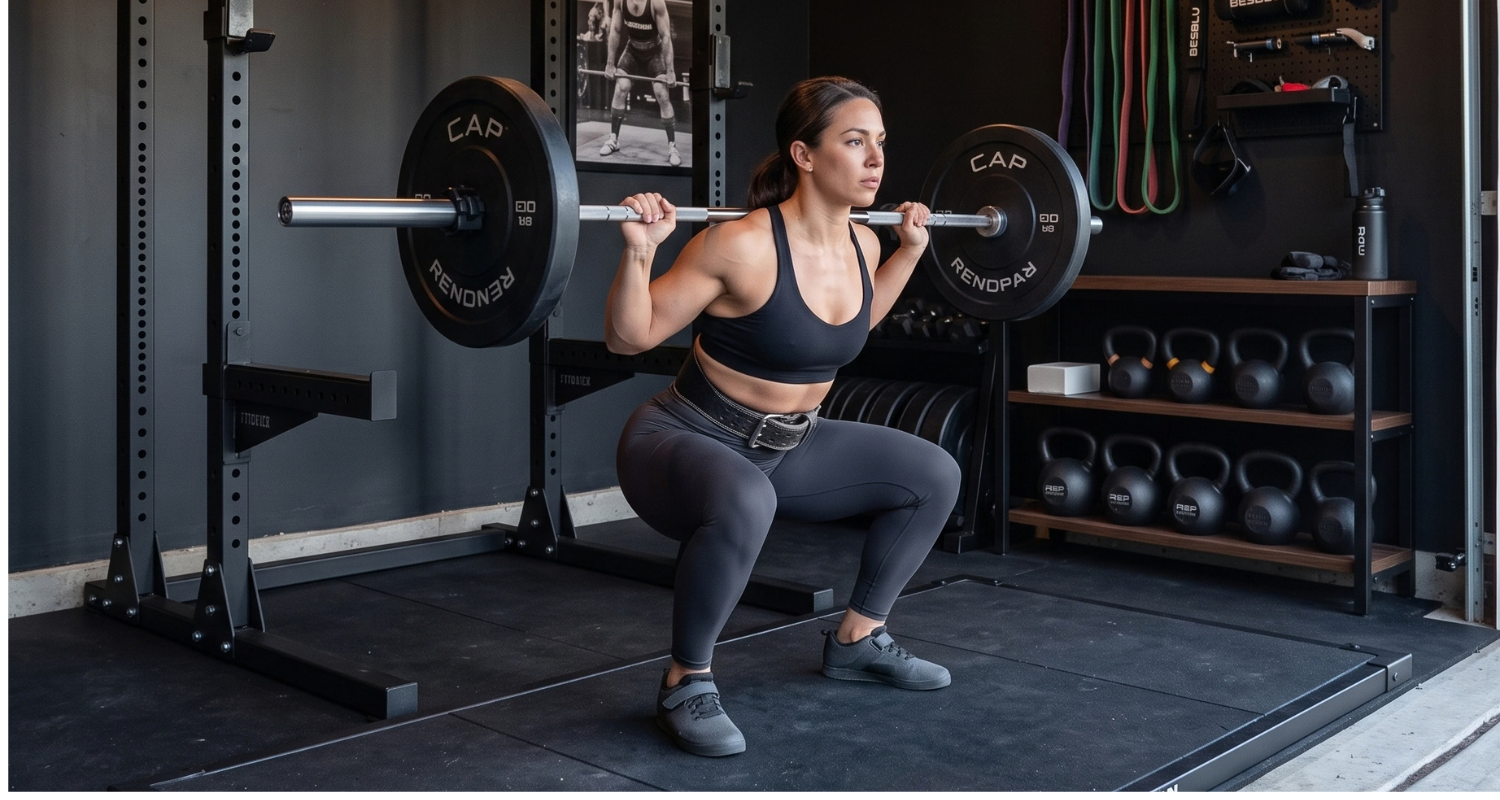
A flimsy squat rack from an off-brand retailer might save you $150 upfront, but if it wobbles under load, fails a weld, or tips when you’re mid-set with 225 pounds on your back, the cost — physical and financial — is catastrophic. The same logic applies to weight benches. A cheap bench with a low weight rating or a poor frame design is a liability, not a savings.
This is one of the budget home gym mistakes that carries real physical risk, not just financial risk. Spend the money on trusted brands with solid construction, clear weight ratings, and good user reviews. Rogue, Rep Fitness, Titan Fitness, and Body-Solid all offer entry-level options that are legitimately safe without requiring a luxury-tier budget. A quality rack in the $400–$600 range is almost always worth it over a $180 rack that fails in 18 months — or worse, fails mid-lift.
Safety equipment is not optional. It’s the foundation everything else is built on.
3. Buying the Wrong Equipment for Your Goals

One of the most consistently overlooked budget home gym mistakes is buying equipment that doesn’t actually align with how you train. A home gym full of the wrong tools is just an expensive storage unit.
Ask yourself one question before every purchase: does this equipment directly support the way I want to train? If your goal is powerlifting, you need a barbell, plates, and a rack — not a $700 cable machine. If your goal is cardio and weight loss, a jump rope and a set of adjustable dumbbells will serve you better than a full bench press setup gathering dust.
This mistake is especially common when people get swept up in what looks impressive rather than what’s functional. A lat pulldown machine looks great. But if you’re focused on general strength training, a good set of resistance bands and a pull-up bar will give you 80% of the benefit at 10% of the cost.
Map your goals to your equipment. Write it down. Then buy only what’s on the list.
Related Article: Essential Home Gym Equipment vs Optional: What to Buy First
4. Ignoring the Used Equipment Market
Skipping the used equipment market entirely is one of the most financially painful budget home gym mistakes you can make. The secondhand market for gym equipment — particularly post-New Year’s and post-pandemic — is absolutely loaded with high-quality gear at a fraction of retail prices.
Facebook Marketplace, Craigslist, OfferUp, and local buy/sell groups regularly feature lightly used barbells, plates, power racks, adjustable dumbbells, and cable machines at 40% to 70% off retail. And unlike used cars or electronics, gym equipment rarely “wears out” in ways that affect performance. A 45-pound iron plate from 1995 is functionally identical to one made last year.
Before you buy anything new, spend two weeks actively monitoring the used market in your area. Set up search alerts. Be ready to move quickly on good deals. In many cities, you can piece together a fully functional strength training setup — rack, bar, and 300 pounds of plates — for under $500 if you’re patient.
The used market isn’t a compromise. For most home gym builders, it’s the smartest buying strategy available.
5. Paying Retail When Major Sales Are Coming
Paying full retail price right before a major sale window is one of the more quietly painful budget home gym mistakes — mostly because it’s so easy to avoid with a little patience.
The fitness equipment industry has predictable sale cycles. Black Friday and Cyber Monday consistently bring the deepest discounts of the year — often 20% to 35% off from major retailers. January brings additional promotions as brands capitalize on New Year’s fitness resolutions. Amazon Prime Day, Memorial Day, and Labor Day are also reliable windows for equipment deals.
If you’re planning a home gym build and a major sale is four to eight weeks away, wait. A $600 rack on sale for $420 saves you $180 on a single item. Multiply that across a few pieces of equipment and you’ve saved several hundred dollars with nothing more than a bit of patience.
Sign up for email lists from Rep Fitness, Rogue, Titan Fitness, and Dick’s Sporting Goods. Follow their social media. Set price drop alerts on tools like Google Shopping or Honey. Timing your purchases around sale events is one of the easiest ways to stretch a home gym budget significantly further.
6. Forgetting to Factor in Shipping Costs
Shipping costs are one of the sneakiest budget home gym mistakes — and one that catches people off guard constantly. A barbell listed at $189 with a $75 freight shipping fee is actually a $264 purchase. A set of bumper plates “on sale” for $220 with $60 shipping isn’t the deal it appeared to be.
Heavy fitness equipment is expensive to ship. Barbells, power racks, plate sets, and large cardio machines frequently come with freight shipping costs ranging from $50 to $200 or more depending on the retailer and your location.
Always calculate the total delivered cost before comparing prices across retailers. A product that appears $40 cheaper at one retailer may actually be more expensive once shipping is factored in. Many major retailers — Rogue, for instance — offer free shipping on certain items but charge on others. REP Fitness and Titan Fitness often run free shipping promotions worth watching for.
Don’t let a low sticker price distract you from what you’re actually paying to have the equipment at your door.
7. Not Comparing Prices Across Multiple Retailers
Buying from the first retailer you find is a textbook budget home gym mistake. The fitness equipment market is competitive, and prices on identical or comparable products can vary significantly across retailers.
A barbell that costs $299 at one retailer might be $249 at another. The same weight plate set can carry a $40 to $60 price difference depending on where you shop. Over the course of a full gym build, failing to shop around can easily cost you $300 to $600 that you didn’t need to spend.
Get in the habit of checking at least three to four sources before purchasing any piece of equipment. Major options to cross-reference include Rep Fitness, Titan Fitness, Rogue, Amazon, Dick’s Sporting Goods, and Walmart’s fitness section. Also check brand websites directly — they sometimes offer deals that third-party retailers don’t carry.
Use Google Shopping to pull up price comparisons quickly. Browser extensions like Honey or Capital One Shopping can automatically surface better prices or apply discount codes at checkout. Five minutes of comparison shopping on a single purchase can save you more than the time is worth.
8. Buying “Deals” on Equipment You Don’t Actually Need

A sale price is only a deal if you actually need the item. Buying discounted equipment you have no real use for is one of the budget home gym mistakes that feels financially smart in the moment and reveals itself as wasteful within weeks.
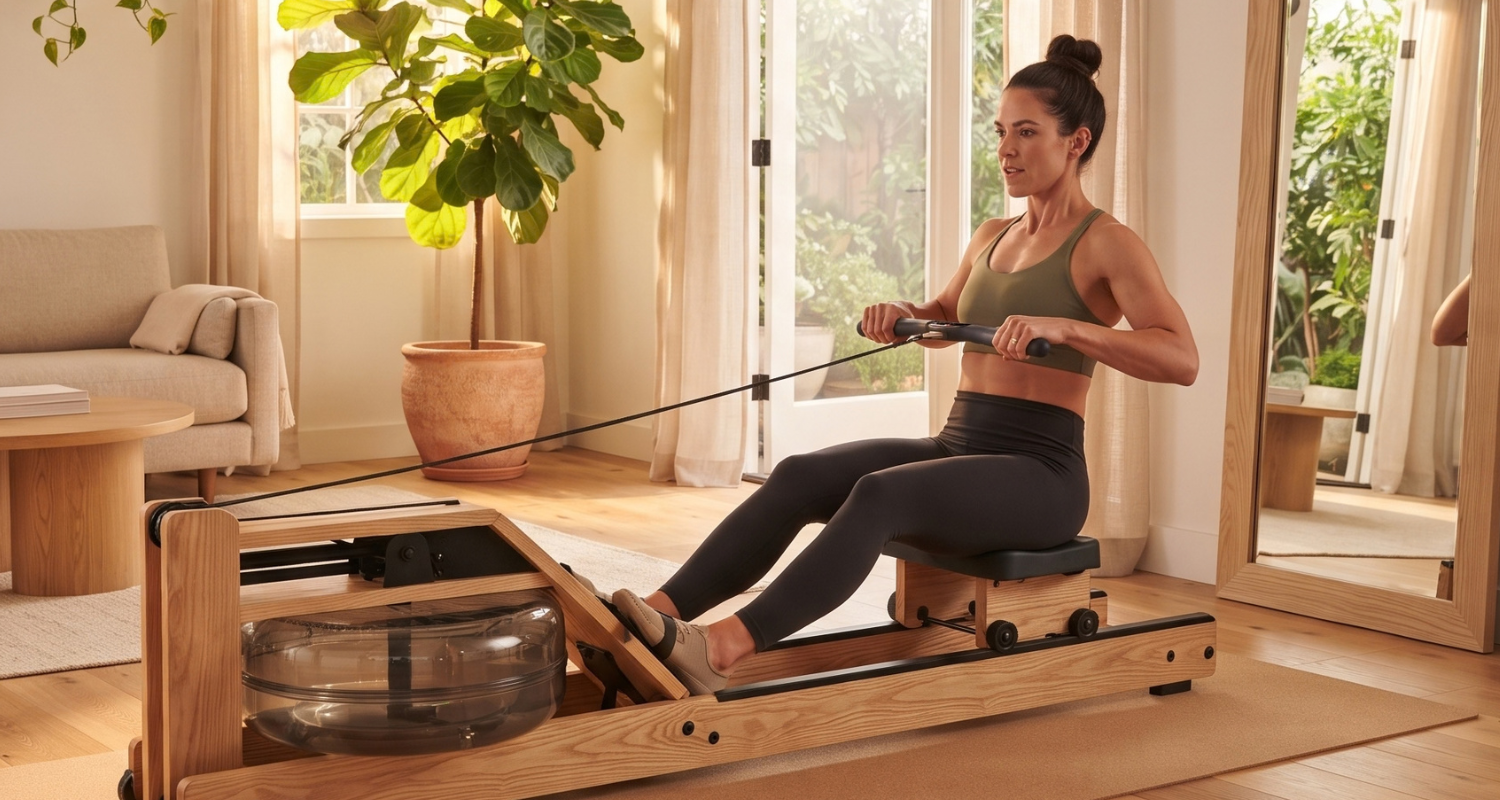
This trap is particularly dangerous during major sale events. You see a rowing machine marked down 40% and think, “I should grab this while I can.” But if your training plan has no meaningful place for a rowing machine, you’ve just spent $300 to $600 on a very expensive clothes hanger.
No-need purchases masquerading as smart deals are common with specialty bars (trap bars, safety squat bars, Swiss bars), cardio machines, and cable attachments. These are excellent tools — for the right person with the right program.
Before pulling the trigger on any discounted item, ask yourself: would I pay full price for this? If the honest answer is no, it’s not a deal. It’s a budget home gym mistake waiting to be made.
9. Not Budgeting for Flooring and Accessories
First-time home gym builders frequently blow their entire budget on equipment and then discover their garage concrete is cracked, their subfloor can’t handle the weight, or they have no way to safely drop a loaded barbell without destroying the floor. This is one of the most consistently underestimated budget home gym mistakes on this list.
Flooring is not optional — it’s infrastructure. Rubber flooring protects your floor, reduces noise, and provides a stable surface for training. For a standard one-car garage gym, expect to spend $150 to $400 on rubber stall mats or interlocking rubber tiles. Horse stall mats from Tractor Supply (typically $50 per 4×6 mat) are one of the best values available and are widely used in home gyms.
Beyond flooring, don’t forget to budget for accessories that are easy to overlook: a barbell brush, chalk, collars, lifting straps, cable attachments, resistance bands, storage solutions (plate trees, dumbbell racks), and mirrors if visibility matters for your training.
These items add up. Budget $200 to $400 for flooring and accessories from day one, and build that into your overall home gym plan rather than treating it as an afterthought.
10. Replacing Cheap Equipment Within the First Year
Buying bargain-tier equipment only to replace it within 12 months is perhaps the most expensive of all budget home gym mistakes — because you end up paying twice. You spend money on cheap equipment, it fails or frustrates you badly enough to upgrade, and then you buy the quality piece you should have bought originally. Now you’ve paid for both.
This cycle is most common with barbells, benches, and resistance-based equipment. A $70 barbell that bends under load, has poor knurling, or develops sleeve wobble within months is going to get replaced. A $50 foldable bench with a weight limit you hit on day one is getting swapped out quickly. The cumulative cost of buying cheap and replacing is almost always higher than buying quality the first time.
The fix is to research before you buy and identify the minimum viable quality for each piece of equipment. For barbells, brands like CAP, Titan, and REP offer solid entry-level bars in the $150–$250 range that hold up for years. For benches, anything rated to 1,000 pounds from a reputable brand is a reasonable benchmark.
Cheap isn’t always a budget home gym mistake — but buying cheap in the wrong places absolutely is. Know the difference before you spend.
Final Thoughts
The smartest home gym builders are the ones who treat every dollar as a decision. They test their consistency before going all-in, buy used when it makes sense, wait for sales, compare prices, factor in shipping, skip the deals they don’t need, and invest in quality where it counts.
Avoiding these budget home gym mistakes won’t just save you money — it’ll result in a gym you actually enjoy using, built with gear that lasts, without the financial regret that trips up so many people who go in without a plan.
Build smart. Buy intentionally. And train consistently enough to make it all worth it.
Related Article: Best Budget Home Gym Equipment Under $600

Leave a Reply