
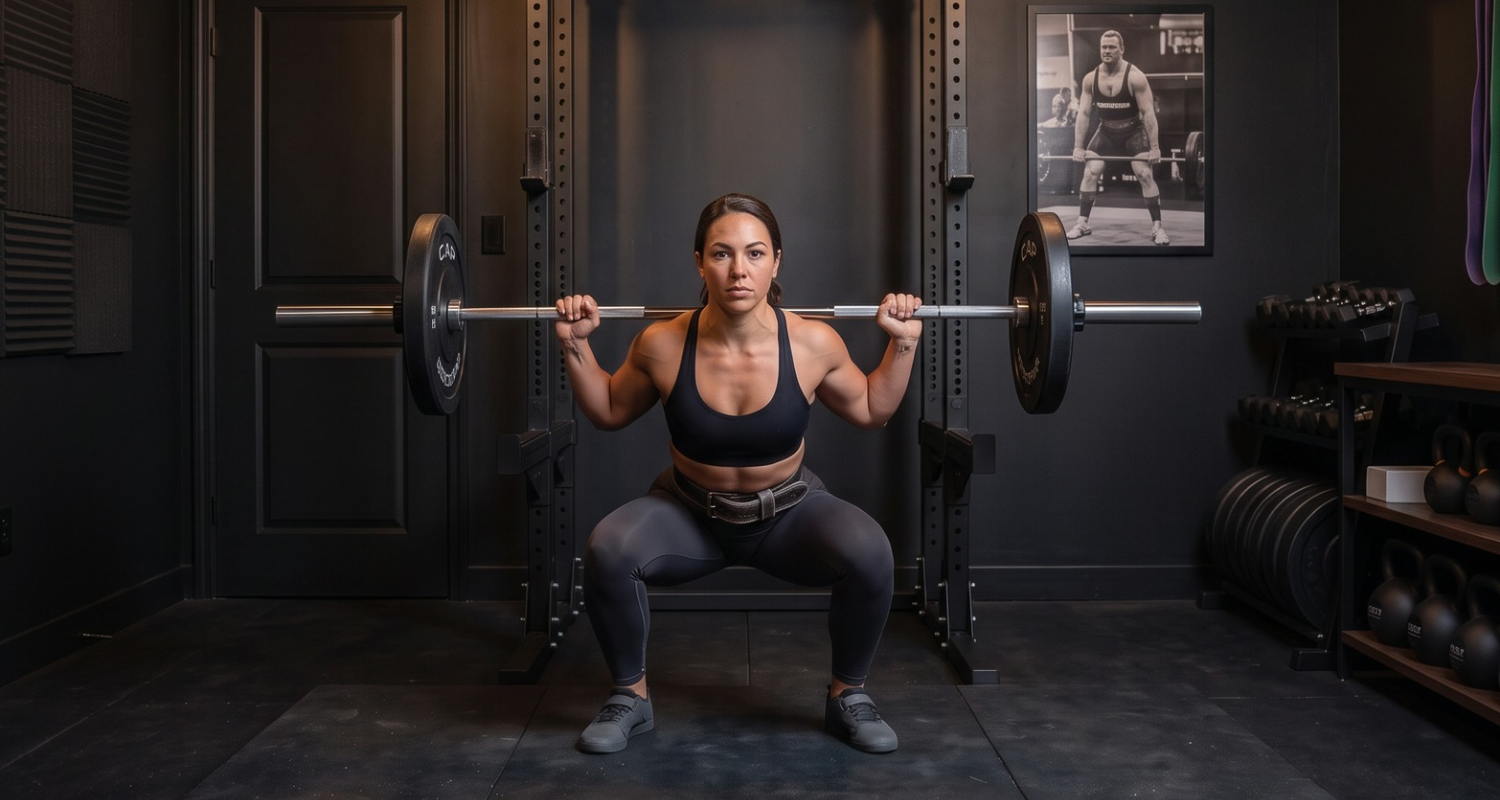
The Athlete Cave is most commonly imagined in a garage.
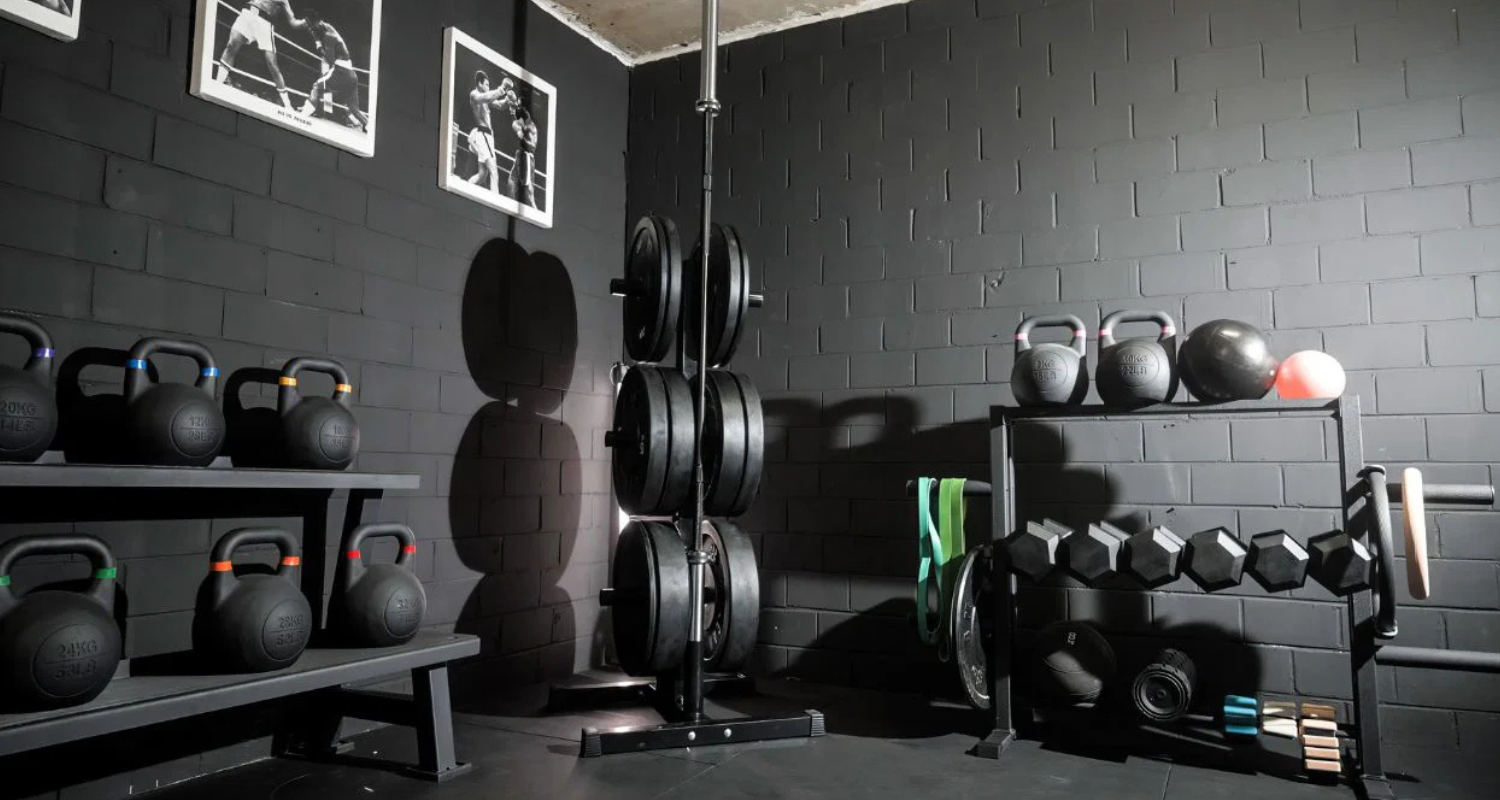
Dark charcoal walls against concrete block. Horse stall mats on a concrete floor. A power rack against the back wall with the garage door cracked open at 5am. The industrial bones of the space doing half the atmospheric work before a single design decision is made.
The spare bedroom has none of those bones.
It has drywall. A carpeted or hardwood floor. Shared walls with the rest of the house. A window that looks into the backyard or the street rather than the driveway. And — most significantly — a ceiling that was finished and painted and designed for sleeping, not for squatting.
The question the Athlete Cave spare bedroom asks is the most interesting one in this guide: can the focused, uncompromising identity of the Athlete Cave be built in a room that was designed for an entirely different purpose, that shares its walls with the household it lives inside, and that has none of the architectural characteristics that make the garage and basement configurations feel natural?
The answer is yes. With specific knowledge about which decisions matter most in this room type, which solutions replace the ones that aren’t available, and which constraints the aesthetic can tolerate without losing what makes it the Athlete Cave rather than just a dark room with equipment in it.
The athlete this space serves is the serious trainer who lives in an apartment, a townhouse, or a home without garage or basement access — and who refuses to let the room type determine the quality of the training environment. The Athlete Cave spare bedroom is not a consolation prize. It is a specific, intentional solution to a specific spatial situation. And in the hands of someone who understands what the aesthetic actually requires it produces a training environment that is darker, more focused, and more psychologically complete than most people believe a spare bedroom is capable of becoming.
Here is everything you need to build it.
What Makes the Athlete Cave Spare Bedroom Gym Different
The spare bedroom Athlete Cave is not a scaled-down version of its garage counterpart. It is a different expression of the same training identity — one that requires purposeful execution since the room offers less architectural help and more specific constraints that have to be addressed rather than worked around.
Three characteristics define it specifically.
The Space That’s Engineered- Not Inherited
The Athlete Cave is defined by a very specific character- when you see it, there’s no mistaking it. In it’s default setting, the garage Athlete Cave is constructed on concrete floors, dark, metal walls, and the industrial character of a working space — the dark paint and focused lighting plays off of what’s already there.
The basement version plays on its own strengths natural to the Athlete Cave archetype- its own below-grade containment and acoustic separation perfect for the nature of heavy lifting and serious equipment.
The spare bedroom however offers drywall, a residential floor, and shared walls — zero of the raw material that makes the other versions easier to set up. In this case, all of the design elements of the spare bedroom Athlete Cave have to be created from scratch through the precise combination of wall color, lighting, flooring, and equipment finish language. This demands more intentionality from the builder. It produces a result that is arguably more impressive because of it — because the atmosphere was engineered entirely through design rather than through the inherited character of the space.

Acoustic Challenge
The acoustic challenge is the largest issue and the one that will shape most of your purchasing decisions. The spare bedroom shares walls, floors, and ceilings with the rest of the residential structure in a way that a garage or basement typically does not. A barbell drop is totally normal — even encouraged — in a basement Athlete Cave, but in a spare bedroom above a living room at 5am? That’s not going to fly. The training program, the equipment selection, and the flooring system all have to account for noise control in a way other setups simply don’t.
Most people who identify as Athlete Cave athletes but don’t have a garage or basement assume the aesthetic is not for them- but the spare bedroom Athlete Cave exists to challenge that assumption. The focused, dark, amber-lit training identity of the Athlete Cave doesn’t require the square footage of a garage to exist. All it needs is the right wall color, the right lighting system, the right flooring, and the right equipment. All of those things are available in a ten by twelve foot spare bedroom.
Related Post: The Athlete Cave Garage Gym: Design, Setup, and Training Guides
Related Post: The Athlete Cave Basement Gym: Design, Setup, and Training Guides
The Space Setup: Design, Flooring, Lighting, and More
The spare bedroom setup section addresses the specific challenges of building Athlete Cave atmosphere in a residential indoor room — challenges that the garage and basement versions don’t face in the same form and that generic home gym guides don’t address for this specific aesthetic. Getting these decisions right before any equipment arrives is the difference between a spare bedroom that becomes a serious Athlete Cave and one that becomes a dark room with equipment that never quite achieves the identity it was reaching for.
Wall Color
Dark charcoal or near-black throughout — Benjamin Moore Wrought Iron or Sherwin-Williams Peppercorn in flat matte finish. The spare bedroom has one real advantage over the garage and basement for dark paint application — drywall takes flat matte paint more cleanly, more evenly, and more completely than painted concrete block, OSB, or the varied surface textures of garage and basement walls. Make sure you prime with a high-hide primer before the dark top coat — if you skip this step on drywall you’ll end up with an uneven finish that shows through the flat dark paint and becomes more visible as the eye adjusts to the low-light training environment.
The color of the ceiling is debatable and deserves more thought than just telling you to “paint it dark”. However in a spare bedroom with a ceiling of eight feet or above I’d recommend painting it the same dark charcoal as the walls. The focused tunnel effect this creates is one of the defining aesthetics of the Athlete Cave and it is as achievable in a spare bedroom as in a basement. In a spare bedroom with a ceiling lower than eight feet I’d recommend using a warm dark grey rather than near-black — Sherwin-Williams Gauntlet Gray or Benjamin Moore Kendall Charcoal. These colors create the focused, contained quality of the Athlete Cave ceiling without the claustrophobic compression that near-black on a very low ceiling produces in a smaller room.
Lastly in regards to the door — I’d recommend painting it the same dark color as the walls without exception. A standard white door in an Athlete Cave spare bedroom would be too much of a visual disruption. Dark door, dark walls, dark ceiling where height allows. When the door is closed the room should feel complete and sealed — every surface communicating the same identity rather than one surface breaking it.
Flooring
The spare bedroom flooring situation is different from the garage and basement in one fundamental way — the existing floor beneath the training zone is hardwood, laminate, engineered wood, or carpet rather than concrete. The solution is layered rubber flooring over the existing surface rather than the direct-to-concrete installation of the garage and basement versions.
Three-eighths to half inch interlocking rubber tiles in dark charcoal or black over the existing floor are the appropriate specification for a spare bedroom Athlete Cave. Not the three-quarter inch horse stall mats recommended for garage and basement applications — those are designed for concrete subfloors and barbell drop training and are both unnecessarily heavy for a residential floor and potentially damaging to the floor beneath them under significant point loads. The thinner interlocking tiles provide the dark rubber surface that completes the Athlete Cave floor aesthetic, protect the existing floor from equipment weight and training traffic, and are appropriate for the training load of a spare bedroom program that manages rather than eliminates impact.
The Athlete Cave Spare Bedroom Floor- Where to Start
Remember- the flooring you choose will shape the acoustic and aesthetic quality of every session going forward. That means you have a very important decision to make- but the following options will hopefully make that process easier for you.
Three-Layer Platform System
Plywood subfloor layer over existing floor, interlocking rubber tiles on top, dedicated lifting platform within the primary lifting zone. The most complete acoustic and protective solution for a spare bedroom with barbell training. The plywood layer distributes point loads across the existing floor surface and provides meaningful impact absorption before the rubber tile layer.


Half-Inch Interlocking Rubber Tiles
Dark charcoal interlocking rubber tiles over the existing floor covering the full training zone. Appropriate for dumbbell and bodyweight training profiles without heavy barbell deadlift work. Clean installation, reversible, and produces the dark Athlete Cave floor aesthetic immediately.

Three-Eighth Inch Rubber Tile Over Carpet
This is the least effective solution for a spare bedroom with existing carpet that will remain beneath the training zone. Thinner tiles over carpet provide limited acoustic benefit but establish the visual language of the dark rubber floor that the Athlete Cave aesthetic requires.

Lighting
The spare bedroom lighting challenge is definitely the most technical.
There are two solutions that could work for a residential spare bedroom without the need for any electrical modification.
Plug-in Edison pendant lights are the most impactful addition available to the spare bedroom Athlete Cave lighting system and the solution that requires the least installation effort. Pendant lights designed to plug into a standard wall outlet — with the cord running along the ceiling edge or the wall to the outlet — create the warm amber pool of light over the training zone that defines the Athlete Cave atmosphere without requiring any ceiling modification, any electrician involvement, or any permanent installation. It’s also available at multiple price points from home goods retailers and online. I’d recommend installing two over the primary training zone — one above the rack position and one above the lifting platform — and the spare bedroom’s finished white ceiling becomes invisible within the amber light pools it casts.

LED strip lighting along the ceiling perimeter in warm white provides the secondary ambient light layer that prevents the dark spare bedroom from feeling oppressive rather than focused. The strip runs along the top edge of all four walls — or along the two walls adjacent to the primary training zone as a minimum — and creates the warm atmospheric quality of the space at all hours without requiring any fixture installation.

NOTE: If the spare bedroom has an existing overhead ceiling fixture replace the bulb with the warmest available equivalent — 2200K to 2700K — rather than removing the fixture. A single warm-toned bulb in an existing ceiling fixture supplemented by plug-in Edison pendants and LED perimeter strip produces a lighting quality that serves both the atmospheric and functional requirements of the Athlete Cave spare bedroom without a single electrician visit.
Acoustic Management — The Most Important Spare Bedroom Specific Guidance
You won’t find this section in the garage or basement articles. The spare bedroom Athlete Cave has to address noise control because in a training environment like this- noise will travel. That is inevitable- the key is going to be keeping as much of that sound in the room to avoid disturbing the rest of the house.
Impact noise is the primary challenge. The foot strike of a heavy conditioning session, the controlled descent of a deadlift to the floor, a kettlebell swing landing, jump rope contact — all of these send vibrations through the floor and into the ceiling of any space below. The three-layer flooring system — plywood subfloor, rubber tiles, lifting platform — help reduce this transmission better than any single-layer solution. The lifting platform will offer the most impact absorption where it matters most — directly beneath the heaviest barbell work.
Airborne noise is the next hurdle. The acoustics of an intense training session — music, grunting, equipment movement — have less resistance traveling through drywall than concrete blocks or poured concrete. Mounted acoustic panels in dark colors are one of your best bets at reducing noise while offering a design element that reads as intentional in an Athlete Cave. A dark fabric-wrapped acoustic panel on a charcoal wall is nearly invisible as soundproofing and completely appropriate as an Athlete Cave design element — particularly on the wall shared with the most acoustically sensitive adjacent space.

Workout Timing
The timing principle is the honest acknowledgment that no flooring or acoustic treatment system eliminates the impact of heavy training at 5am in a spare bedroom above a living room. The Athlete Cave spare bedroom athlete sets the barbell down rather than dropping it during early morning and late night sessions. The highest-impact conditioning work — assault bike intervals, heavy kettlebell complexes, anything involving significant floor contact force — is scheduled for hours when the household is active rather than sleeping. These are not compromises. They are the training schedule adaptations that make a serious training environment compatible with a shared household — which is the practical reality of the spare bedroom configuration.
Storage
Same dark walnut lumber shelving on heavy matte black steel brackets as the other Athlete Cave configurations — scaled to the spare bedroom’s smaller footprint. One to two shelves rather than the two to three of the garage version. Matte black pegboard panel for accessories, resistance bands, and chalk. The spare bedroom storage system is more compact than the garage or basement version but maintains the organized display principle — the equipment visible, accessible, and communicating the identity of the space before a session begins.
The storage wall in the spare bedroom Athlete Cave is typically the wall adjacent to the door rather than the longer training walls — which are needed for the rack, the mirror if included, and the primary training zone. A single dark walnut shelf and matte black pegboard panel on the door-adjacent wall provides sufficient storage for a complete Athlete Cave training kit in a ten by twelve room.
Training Setup 1: Barbell Strength and Powerlifting
For the serious strength athlete who lives in a home without garage or basement access and refuses to compromise the programming or the training environment because of the room type.

The spare bedroom powerlifting setup requires the most from the space than any other version we’ll touch on. The equipment and training necessary for effective powerlifting push the boundaries of every constraint of a spare room- square footage for equipment, flooring, noise control, etc. If powerlifting is your training style, you will have to make the most strategic equipment choices going forward- but fortunately we have some recommendations.
The ceiling height is likely the most important pre-purchase step in this setup and the one most commonly skipped by gym-owners who fall in love with a specific rack model before measuring the room it will live in. Standard full power racks with a built-in pull-up bar require a minimum of 90 to 96 inches of ceiling clearance at the bar’s highest position. Many spare bedrooms have ceiling heights of exactly 96 inches — or 8 feet — which places some rack models at exactly their minimum clearance and others outside it entirely. Measure the ceiling height before researching any rack model. Then measure your full overhead extension in the position where the bar will be pressed from. The difference between those two measurements is the margin available for safe overhead pressing — and in a spare bedroom that margin is often smaller than it would be in a garage or basement with higher ceilings.
The Equipment
For the rack look for a compact power rack designed for residential ceiling heights — models specifically marketed for low-ceiling applications typically max out at 84 to 88 inches of overall height with the pull-up bar integrated, providing adequate clearance in most spare bedrooms with standard eight-foot ceilings. The finish should be matte black or raw steel — to match the aesthetics of other Athlete Cave variations.

For the barbell a raw steel or black oxide finish. For the plates black bumper plates regardless of whether the training program includes drops — just to keep everything visually cohesive. The rubber coating also provides excellent floor protection during the controlled descents that the spare bedroom acoustics need.


The controlled descent principle is the honest center of the spare bedroom powerlifting program. Dropping a barbell in a spare bedroom above a living room is not a training option — it’s a household annoyance. The controlled descent — lowering the bar to the floor under tension rather than releasing it at the completion of the concentric phase — is not a compromise of the powerlifting program. That’s a technical skill that elite powerlifters develop deliberately because the eccentric phase of the deadlift and the squat contributes meaningfully to strength development and hypertrophy outcomes. The spare bedroom powerlifting athlete develops this skill from the first session and trains it as rigorously as the primary lifts.
Related Post: Best Power Rack for Home Gyms in 2026
Training Setup 2: Conditioning and Athletic Performance
For the reader training for athletic performance or conditioning capacity who wants the Athlete Cave atmosphere for conditioning work in a spare bedroom environment.

All of the conditioning equipment that makes up the garage Athlete Cave — assault bike, battle ropes, plyo box, sled — can’t reasonably fit or function in a ten by twelve spare bedroom without making making sacrifices or getting very creative with the space. The following equipment recommendations are built around delivering the highest training stimulus per square foot of floor space and the lowest acoustic impact per unit of cardiovascular demand. Depending on the size of your own space, feel free to utilize as many (if not all) of the following recommendations as possible.
The Equipment
The rowing machine is the most appropriate conditioning anchor piece for the spare bedroom setup. It’s quieter than the assault bike and foldable, giving you a little more freedom in your floorplan. A quality rowing machine in a dark matte finish also offers the same cardiovascular and metabolic conditioning stimulus as the assault bike. Position it in the training zone against the wall when not in use. Deploy it to the center of the mat zone for conditioning sessions.

Cast iron kettlebells handle the conditioning metabolic strength circuits that develop the functional power output and cardiovascular capacity that athletic performance training demands. In the spare bedroom the kettlebell complex — swings, cleans, presses, and carries within the training zone — replaces the outdoor loaded carries and sled pushes that the garage conditioning program uses for the same training stimulus. Same metabolic demand- a fraction of the floor space.

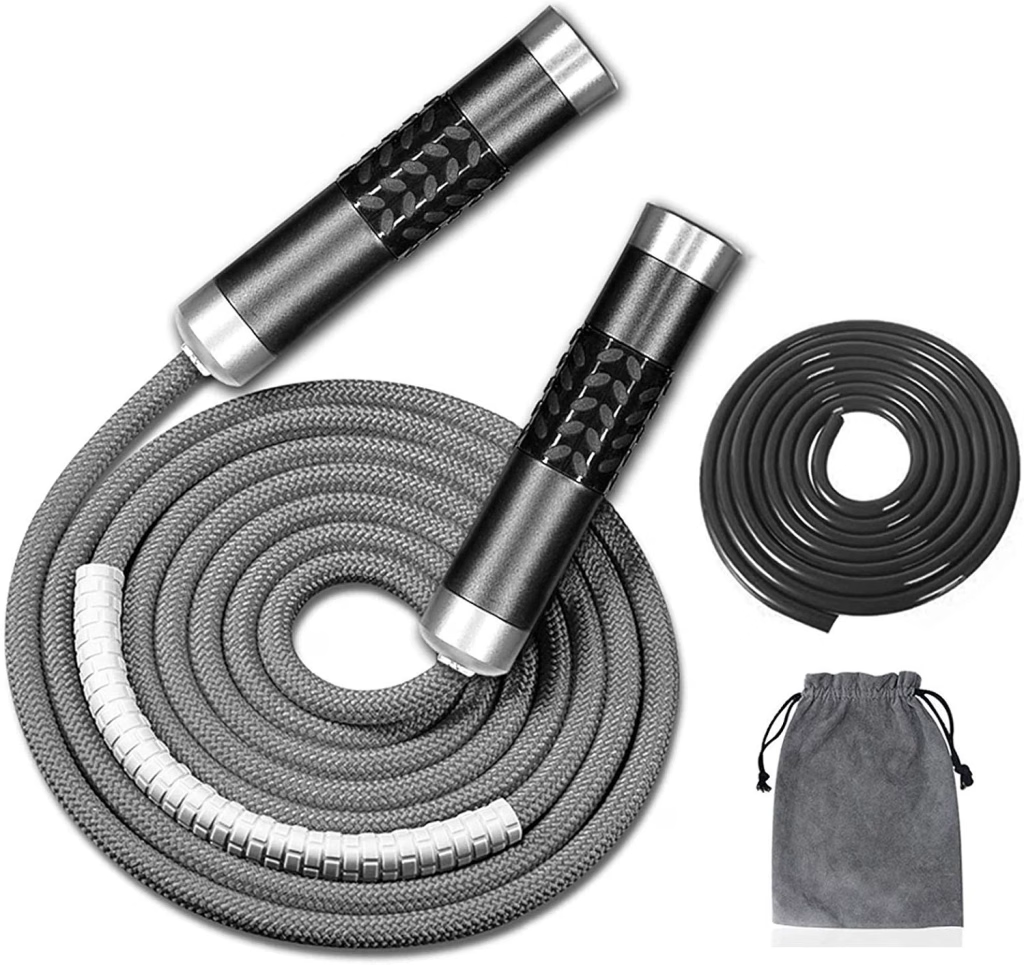
A jump rope used with ceiling clearance confirmed provides the highest cardiovascular intensity available in the smallest possible footprint — and is completely silent on a rubber mat zone at any intensity level. If the ceiling height allows the full arc of the rope at the athlete’s normal tempo the jump rope belongs in every spare bedroom Athlete Cave conditioning session regardless of the other conditioning tools present.
Training Setup 3: Bodybuilding and Hypertrophy
For the reader whose primary training goal is muscle development and physique improvement — choosing the spare bedroom Athlete Cave for the complete privacy and focused atmosphere that serious hypertrophy training benefits from most.

The hypertrophy setup is the spare bedroom Athlete Cave’s most complete version with nearly all of the character of its garage and basement equivalents. Hypertrophy training — dumbbell pressing and pulling, cable isolation movements, controlled rep tempos, the accessory volume that builds the physique outcomes this training approach produces — is inherently quieter, less impact-heavy, and less floor-space-dependent than powerlifting or conditioning work. The acoustic constraints that shape the powerlifting and conditioning setups matter less here. The floor space limitations of the spare bedroom also matter less. The ceiling height considerations that govern rack selection in the powerlifting setup- don’t apply here.
The Equipment
For the rack a compact power rack with cable attachment is the centerpiece of this setup. The cable attachment handles lat pulldowns, seated cable rows, face pulls, cable flyes, and tricep pushdowns — the isolation and cable work that hypertrophy programming requires alongside its compound barbell foundation — without an individual cable machine taking up unnecessary space.

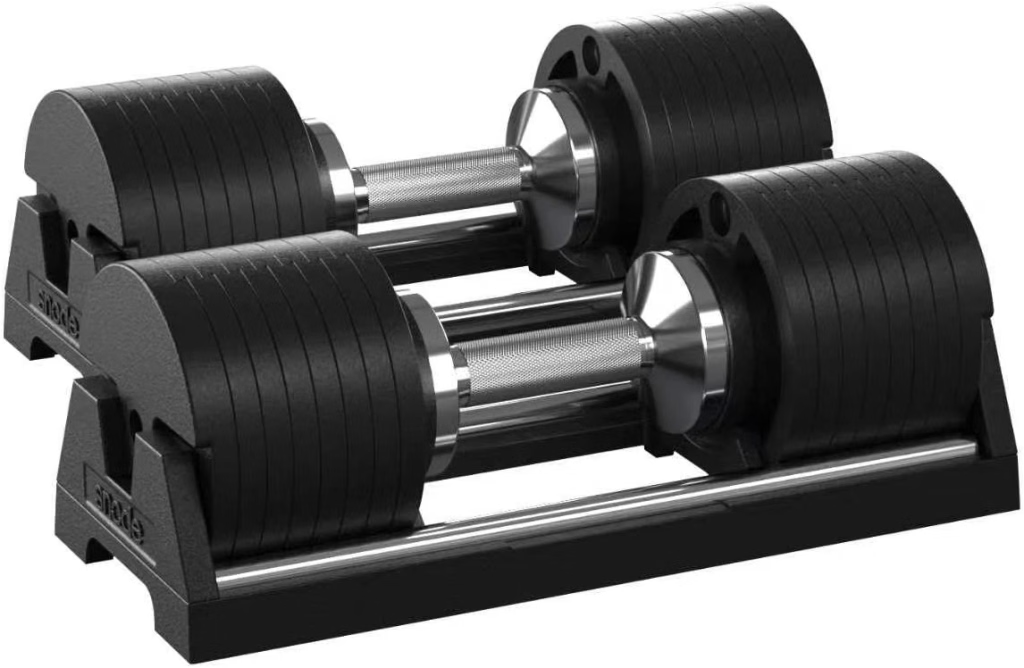
Adjustable dumbbells in a dark or matte finish — compact format in a footprint appropriate for the spare bedroom’s available floor space. In the Athlete Cave the dumbbell finish matters as much as the rack finish. Chrome dumbbells against dark charcoal walls break the visual language of the space in a way that dark or matte finish dumbbells don’t. Choose the finish that belongs in the room rather than the one that was on sale.
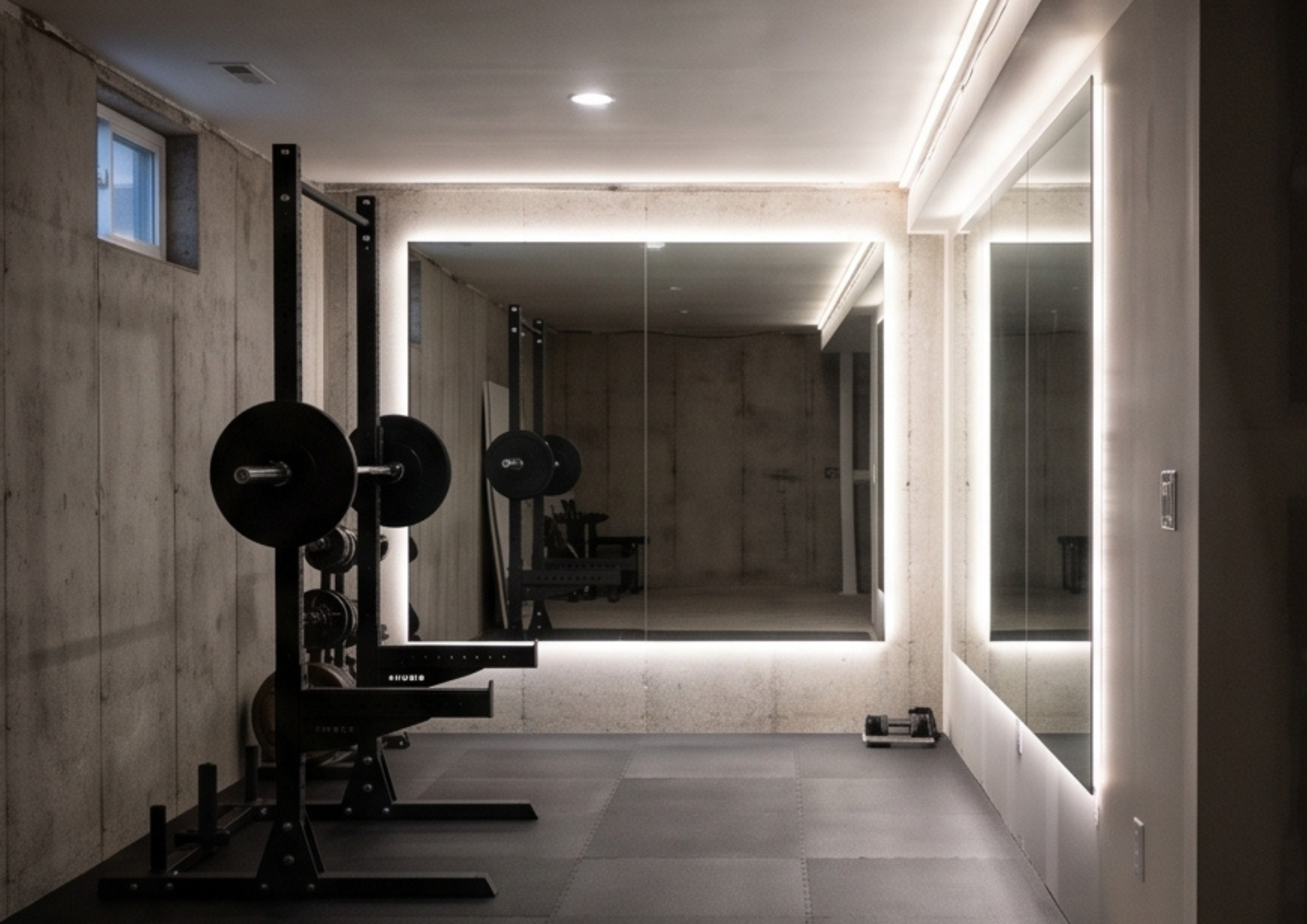
The mirror in the spare bedroom Athlete Cave hypertrophy setup is the most visually dramatic design element available in this configuration. A full-length frameless mirror mounted flush against the darkest wall of the training zone — reflecting the warm amber pendant light and the dark equipment and the dark rubber floor in a continuous visual depth that makes the ten by twelve room feel like a significantly more serious facility than its square footage suggests.

Training Setup 4: Functional Fitness and CrossFit-Style Training
For the reader who trains with functional fitness methodology and wants the Athlete Cave atmosphere in a spare bedroom context — with honest acknowledgment of what adapts in this configuration and what does not.

The functional fitness setup is the most adapted of the four in the spare bedroom Athlete Cave — and the article owes the reader who identifies with this training style a direct statement of what that adaptation means before anything else.
The full expression of functional fitness programming — the run piece, the outdoor carry, the assault bike interval, the rope climb, the barbell cycling at maximum acoustic output — is not available in a spare bedroom above a living room. This is not a limitation of the Athlete Cave aesthetic. It is a limitation of the room type.
The Equipment
For the rack a folding wall-mounted squat rack is more appropriate for the functional fitness spare bedroom than a full power cage — the floor space that the cage permanently occupies is floor space that functional fitness programming needs for conditioning movements and floor work between barbell sets. The folding rack deploys from the wall for barbell work and returns to the wall for conditioning sessions — giving the spare bedroom functional fitness athlete the full floor space their program requires without permanently sacrificing it to static equipment.

Gymnastics rings from a ceiling anchor — if the ceiling structure supports the installation — add the ring work that completes the gymnastics component of functional fitness programming. A ceiling joist anchor in a spare bedroom requires confirmation of the joist position with a stud finder and a load-rated anchor bolt — the same installation process as any ceiling-mounted fixture rated for dynamic load. If the ceiling structure is appropriate the rings install in thirty minutes and add a training capacity that the garage version’s rack-mounted rings provide less cleanly.

A rowing machine in dark matte finish for conditioning. Cast iron kettlebells for swings and complexes. A speed jump rope if ceiling height allows. The program that uses all of these tools within the Athlete Cave spare bedroom’s constraints delivers the metabolic demand, the movement variety, and the training adaptation of functional fitness programming — in a dark room with amber light and a closed door that the garage gym can match in equipment but not in atmosphere.
The Athlete Cave That Was Always There
There is a version of this story that ends with the serious athlete deciding the spare bedroom isn’t the right room and waiting — months, sometimes years — for the garage, the basement, the dedicated training space that will finally justify the serious training environment they’ve been imagining.
This is not that story.
The spare bedroom Athlete Cave is built in the room that is available with the tools that the room type supports. Dark charcoal walls that took a Saturday and transformed the room’s entire psychological character before the first piece of equipment arrived. Plug-in Edison pendants that created the warm amber atmosphere in an afternoon without a single electrical modification. Dark rubber tiles over the existing hardwood floor that established the training zone and the Athlete Cave visual language simultaneously. A compact rack against the back wall. A platform in the primary lifting zone. Acoustic panels on the shared walls. The door painted dark and closed at 5am against everything that isn’t the session.
The Athlete Cave spare bedroom is not at the perimeter of the house the way the garage and basement versions are. It is at the heart of it — adjacent to the bedroom, at the end of the hallway, close enough to the life that the training is improving that the walk from bed to training room is thirty seconds rather than a flight of stairs or a walk across a driveway in the dark.
That proximity — the Athlete Cave at the center of the household rather than at its edge — is the spare bedroom’s most distinctive quality. The training doesn’t happen in the margins of the house. It happens in the middle of it.
Build it like it was always supposed to be there.
Because it was.
If you’re still exploring the five home gym aesthetics and deciding which one reflects who you are in your training life the free SOMA Dream Gym Style Guide walks you through all of them — with mood boards equipment guides and the framework for finding the space that feels like yours.
Leave a Reply