
The garage has one quality that no other room in the house has.
It doesn’t need to be anything else.
Nobody needs to sleep in it. No family needs to gather in it. No aesthetic compromise is required to make it function for two purposes simultaneously. The garage exists to be used — seriously, consistently, without apology — and the Athlete Cave is the aesthetic that honors that quality most completely.
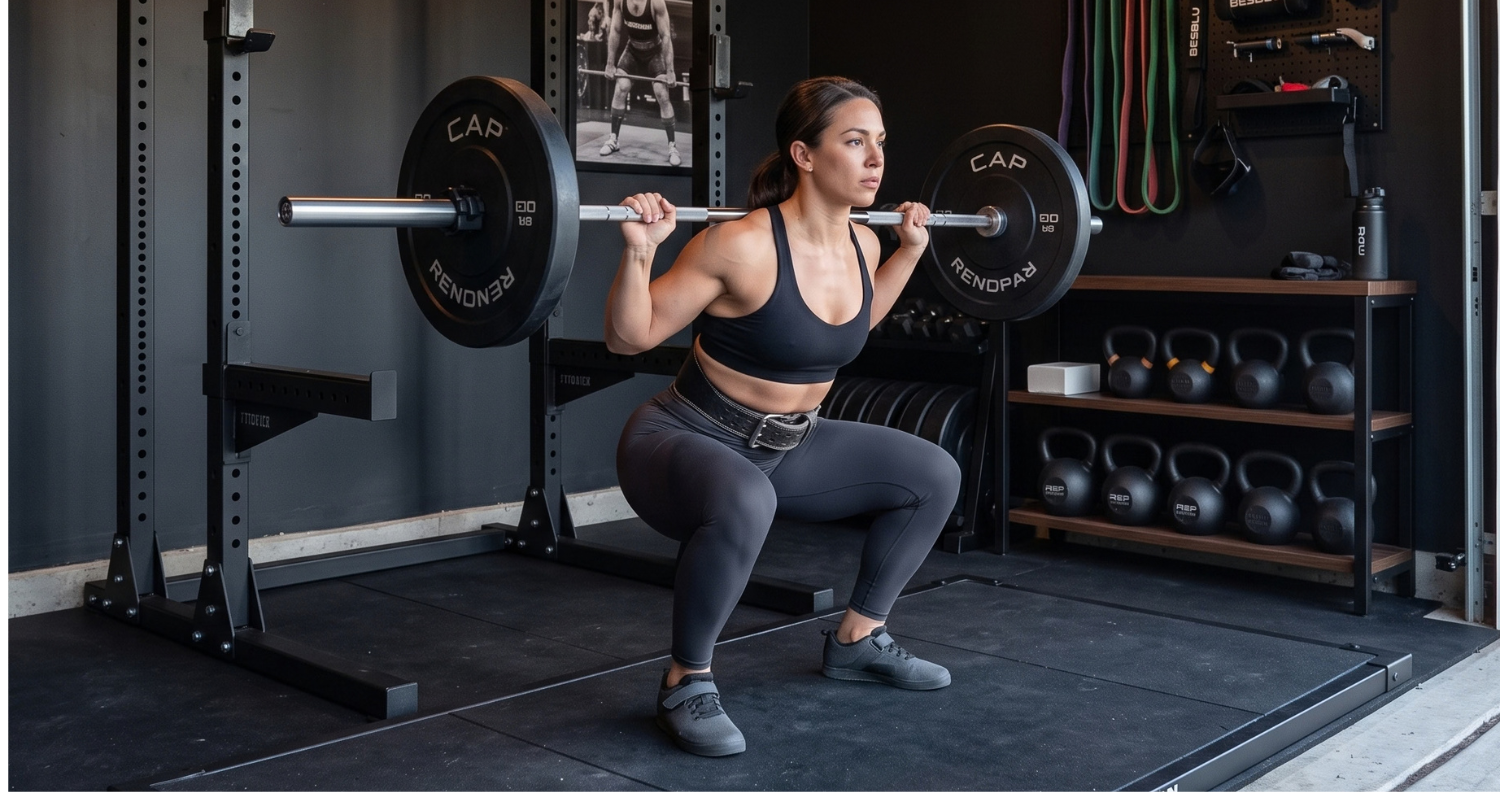
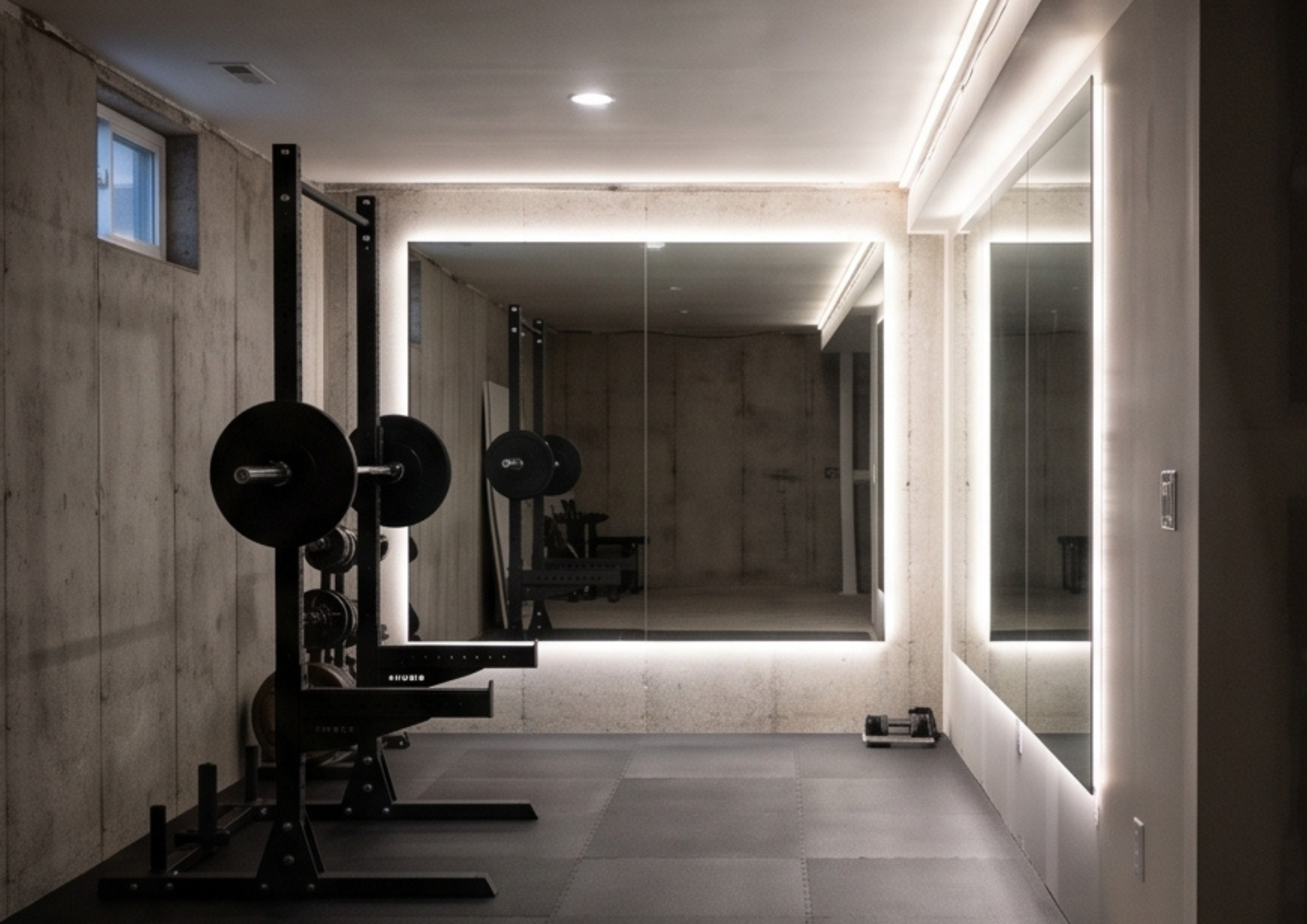
Dark charcoal walls that absorb light and eliminate distraction. Rubber flooring that protects a concrete base designed to handle exactly this kind of load. Industrial pendant lights casting warm amber pools over the equipment. A rack against the back wall loaded and ready. The garage door cracked open during conditioning sessions — fresh air, the sounds of early morning, the outdoor world present at the edge of a training session that has nothing to do with the outdoor world.
This is not a guide to putting equipment in a garage. Most people can figure that out. This is a guide to building a specific training environment with a specific identity — one designed for the version of you that shows up before the rest of the house wakes up, trains without an audience, and measures a good session not by how it looked but by what it demanded.
The Athlete Cave garage gym is the most uncompromising home gym configuration in this guide. Here is everything you need to build it right.
What Makes the Athlete Cave Garage Gym Different

Walk into a well-built Athlete Cave garage gym and three things register immediately — the darkness, the focus, and the sense that serious work happens here. None of these qualities arrived accidentally. All three were designed in from the beginning.
The darkness is functional before it is aesthetic. Dark charcoal or near-black walls in a garage training space eliminate visual distraction in a way that pale walls never can. When the walls disappear into shadow everything that remains visible is the equipment, the floor, and the task at hand. The focused, tunnel-like quality of a dark-walled garage gym is not a style choice. It is a training environment engineered to put you in the right psychological state before the first rep begins.
The communication of equipment
The equipment communicates seriousness through its material language. Every piece in the Athlete Cave garage gym was chosen by answering one question: does this make me better? Chrome finishes, bright colors, and decorative elements that don’t serve a training function have no place here. The visual vocabulary is matte black, raw steel, dark rubber, and cast iron — materials that are honest about what they are and what they’re for. The equipment doesn’t perform for anyone who walks past the door. Neither does the person training inside it.
The space performs at the level that no indoor room can match. The garage is the only room type in this guide where serious barbell training, heavy conditioning work, dropped bumpers, chalk use, and the full acoustic expression of maximum effort are all fully appropriate. The Athlete Cave garage gym is the only configuration in the schedule where the complete range of serious athletic training is possible without acoustic, structural, or aesthetic compromise. The concrete floor was built for this. The ceiling was built for this. The door opens to the outside when the air needs to move. Nothing in this space is borrowed from somewhere else.
Related Post: How to Set Up a Home Gym- Complete Guide
The Space Setup: Design, Flooring, Lighting, Storage, and Mistakes to Avoid
The garage gym setup section covers terrain that no other room type in this guide requires — ceiling height management, concrete floor preparation, temperature and ventilation planning, and the specific sequencing of installation decisions that the garage environment demands. Get these right before anything else arrives and every subsequent decision becomes easier. Get them wrong and some of them cannot be undone without significant effort.
Wall color
Dark charcoal or near-black throughout — Benjamin Moore Wrought Iron or Sherwin-Williams Peppercorn are both specifically correct for this aesthetic. Both read as a deep, focused dark tone that absorbs light rather than reflecting it. Both have enough warmth in their undertone to prevent the space from feeling cold or clinical — the Athlete Cave is raw and serious but it is never unwelcoming.
Flat or matte finish is essential. Flat finish absorbs the light from the Edison pendant fixtures rather than reflecting it — which is what creates the focused, atmospheric quality of the lighting in this space. Satin or eggshell finish on dark walls creates scattered reflections that dilute the precise quality of the pendant light pools. Paint the walls flat.

Consider painting the ceiling the same dark tone as the walls. A dark ceiling on a dark-walled garage creates a completely contained, focused environment — the tunnel effect that makes the Athlete Cave feel psychologically sealed from the rest of the house and the rest of the day. It is a bold decision and the right one for a space that is serious about what happens inside it.
The garage door presents a choice. Painting it the same dark color as the walls creates maximum visual coherence when the door is closed. Leaving it in its original color is a reasonable alternative when the door mechanism and the door material make painting impractical. The decision matters less than the wall color because the garage door is typically open during training sessions and its color is a secondary element when the ambient lighting is doing its job.
Flooring
Horse stall mats. Three-quarter inch thickness. Dark charcoal or black rubber. Full bay coverage before any equipment arrives.
The sequence matters: flooring goes down before the paint goes up. Not before the equipment arrives — before the walls are painted. Paint the concrete walls, allow them to dry completely, then lay the mats. This sequence prevents the two most common installation errors — paint drips on the mat surface that cannot be removed, and the discovery that the mat edge positioning relative to the wall base requires trimming that damages a finished paint edge.
For complete installation guidance including cutting, seam placement, smell reduction, and maintenance — the dedicated flooring article covers every detail in full.
Related Post: Horse Stall Mats for Home Gym Garage Flooring
The lifting platform is worth planning for before the mats are fully laid. A platform — two layers of three-quarter inch plywood topped with a section of horse stall mat — sits on top of the main mat flooring and defines the primary lifting zone. It provides additional impact absorption for barbell drops, protects the base mat from the concentrated point load of heavy deadlifts, and creates a deliberate architectural element within the space — a stage that communicates where the serious work happens. Plan the platform position before the first mat is cut to size.
Lighting
The Athlete Cave garage gym requires two lighting systems working simultaneously — one for atmosphere and one for function. Attempting to achieve both with a single fixture type produces a space that is either atmospherically correct but insufficiently bright for safe heavy training or functionally bright but visually flat and stripped of the quality that makes this space worth building.
Edison pendant lights — the aesthetic layer. Two to three pendants on adjustable chains suspended from the ceiling joists or a mounting track, positioned directly over the primary training zone and the rack. Warm amber filament bulbs. The warm pool of light these fixtures produce over the lifting platform against a dark-walled garage is the defining visual image of the Athlete Cave and the detail most responsible for making the space feel intentional rather than merely functional.
LED shop lights — the functional layer. Two mounted on the ceiling joists and aimed specifically at the rack zone and the floor of the primary training area. Warm white — 3000K — rather than cool white, to maintain visual coherence with the Edison pendant warmth. These fixtures provide the lumens needed to see bar path clearly during heavy squats, check form during complex movements, and read equipment markings under load. They are the safety layer that makes the aesthetic lighting layer possible.
The overhead fluorescent tube fixtures that most garages come equipped with should be replaced or bypassed entirely. Flat fluorescent lighting on a dark-walled ceiling produces the least atmospheric and least functional lighting result available to the Athlete Cave garage gym. The investment in Edison pendants and warm LED shop lights — under $200 combined — is the highest return per dollar upgrade available to a garage gym that currently has nothing but fluorescent overhead tubes.
Storage
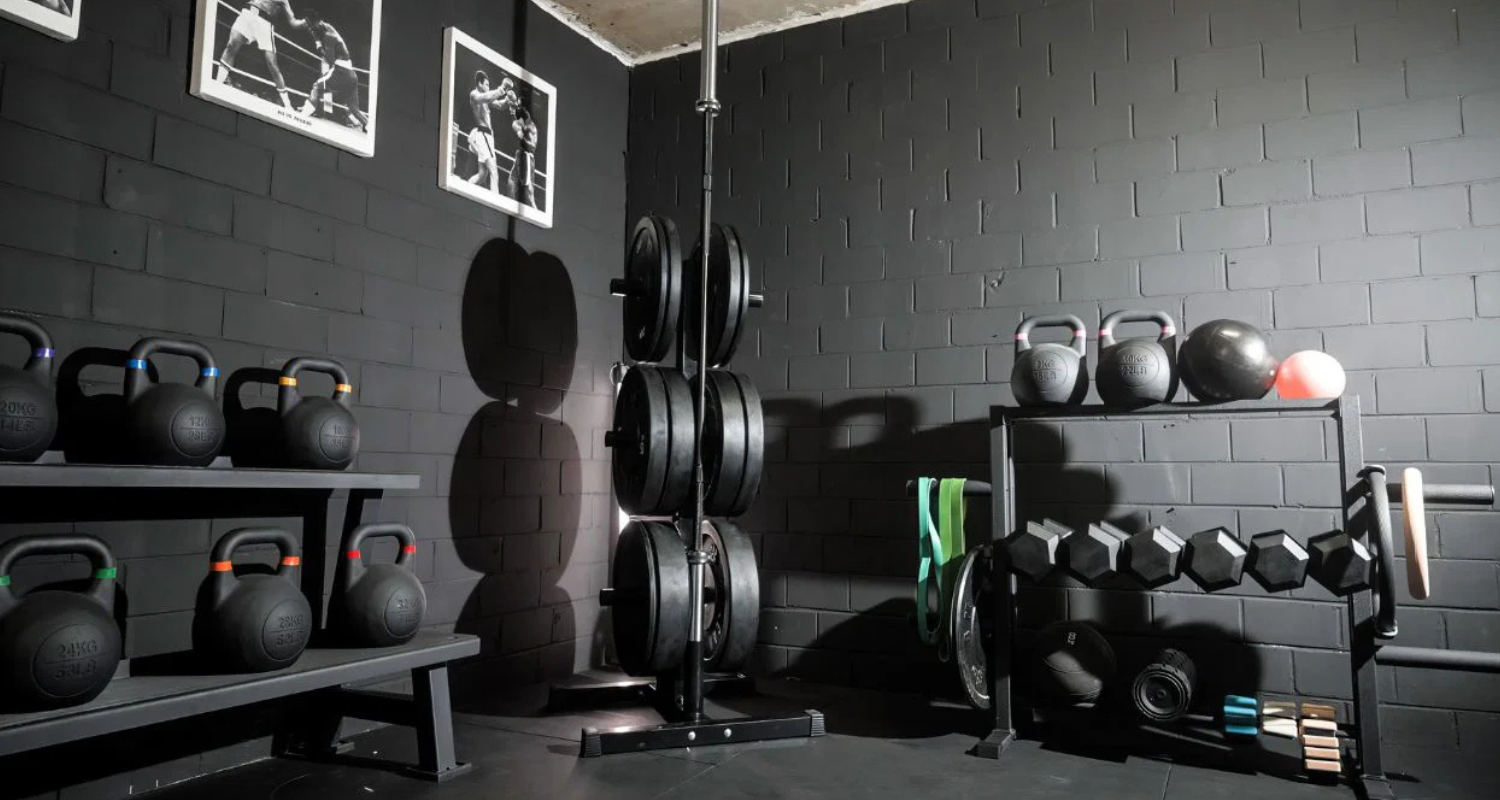
Storage in the Athlete Cave garage gym is organized, visible, and honest about what it is. This is not a space where equipment is hidden behind cabinet doors or tucked into corners. The organized display of serious training equipment is part of the visual identity of the space — the kettlebells on the shelf, the plates on the tree, the barbells on their hooks communicate what happens here before a single session begins.
Raw wood shelving on the primary storage wall — two to three shelves of rough-sawn lumber in dark walnut stain mounted on heavy matte black steel brackets. The lower shelf holds kettlebells in ascending size. The upper shelf holds chalk, a training journal, a matte black water bottle, and small accessories. The shelf profile — dark stained wood on matte black steel against a dark wall — is the Industrial-adjacent storage detail that reads as Athlete Cave rather than any other aesthetic.
A matte black vertical plate tree beside the rack holds bumper plates in descending size — the largest plates at the bottom, the smaller plates above them. A wall-mounted barbell holder — two heavy steel J-hooks at chest height on the wall beside the rack — keeps the secondary barbell off the floor when not in use. A matte black pegboard panel above the shelving handles resistance bands, lifting straps, collars, and chalk accessories on steel hooks organized by frequency of use.
Related Post: Home Gym Storage Ideas- How to Organize Any Space for Serious Training
Ventilation and temperature — the section most garage gym builders wish they had read first
The garage gym that is unusable in summer or unbearable in winter is the gym that gets abandoned. Temperature and ventilation management in a garage training space is not a secondary consideration to be addressed after the aesthetic decisions are made. It is a primary design decision that should be planned before the first training session and addressed before the first uncomfortable one.
In summer, an enclosed garage during peak heat hours can reach temperatures that compromise both performance and safety. The three-part summer solution is a wall-mounted exhaust fan that draws hot air out of the space during training, a portable evaporative cooler positioned to direct airflow across the training zone, and a training schedule adjusted to early morning or early evening hours when ambient temperature is lowest. The garage door cracked open during training — approximately twelve to eighteen inches at the base — creates the cross-ventilation that makes the fan and cooler most effective. Do not train in a sealed, unventilated garage when ambient outdoor temperature exceeds 85 degrees without active cooling in place.
In winter, a wall-mounted electric or propane heater at ceiling height — never at floor level where it can be knocked over during training — brings a single-car garage bay from near-freezing to a workable training temperature in twenty to thirty minutes. Turn it on before changing into training clothes. The garage is ready when you are. Budget $100 to $250 for a quality wall-mounted unit and install it before the first cold morning training session rather than after. Cold steel equipment, cold rubber flooring, and cold air combine to increase injury risk in ways that extend the warm-up time required for safe heavy training — the heater addresses all three simultaneously.
Related Post: How to Ventilate Your Garage Gym in Summer
The three mistakes specific to the Athlete Cave garage gym

The first mistake is painting after the equipment is installed. The rack goes in first because it’s the heaviest and most logistically demanding piece. The walls get painted around it because painting before the rack seemed premature. The result is unpainted sections behind the rack uprights, paint drips on the rubber flooring, and the low-level visual imprecision that accumulates in a space where every decision was made reactively rather than sequentially. Paint first. Allow the paint to dry completely. Then move the rack in. The sequence takes the same total time and produces a completely different result.
The second mistake is installing fluorescent lighting and treating it as temporary. It is never temporary. The fluorescent tubes that were there when the garage was built will be there in three years if they are not replaced before the first session — because every session after the first is happening in a space that is already in use and already has an established lighting setup that would require effort to change. Address the lighting before the first session. Not after the first year of training under flat fluorescent tubes while the Edison pendants remain on a someday list.
The third mistake is skipping ventilation planning and discovering the problem in July. The garage gym that gets abandoned is almost always the one that became unusable in summer before a ventilation solution was installed. The window for addressing this before it becomes a training disruption is the weeks before the first hot weather session — not the day of. Identify the ventilation solution before the weather requires it.
Training Setup 1: Barbell Strength and Powerlifting
For the reader whose primary training goal is maximal strength development using the barbell as the primary tool — squats, deadlifts, bench press, overhead press, and barbell rows as the foundation of every training week.

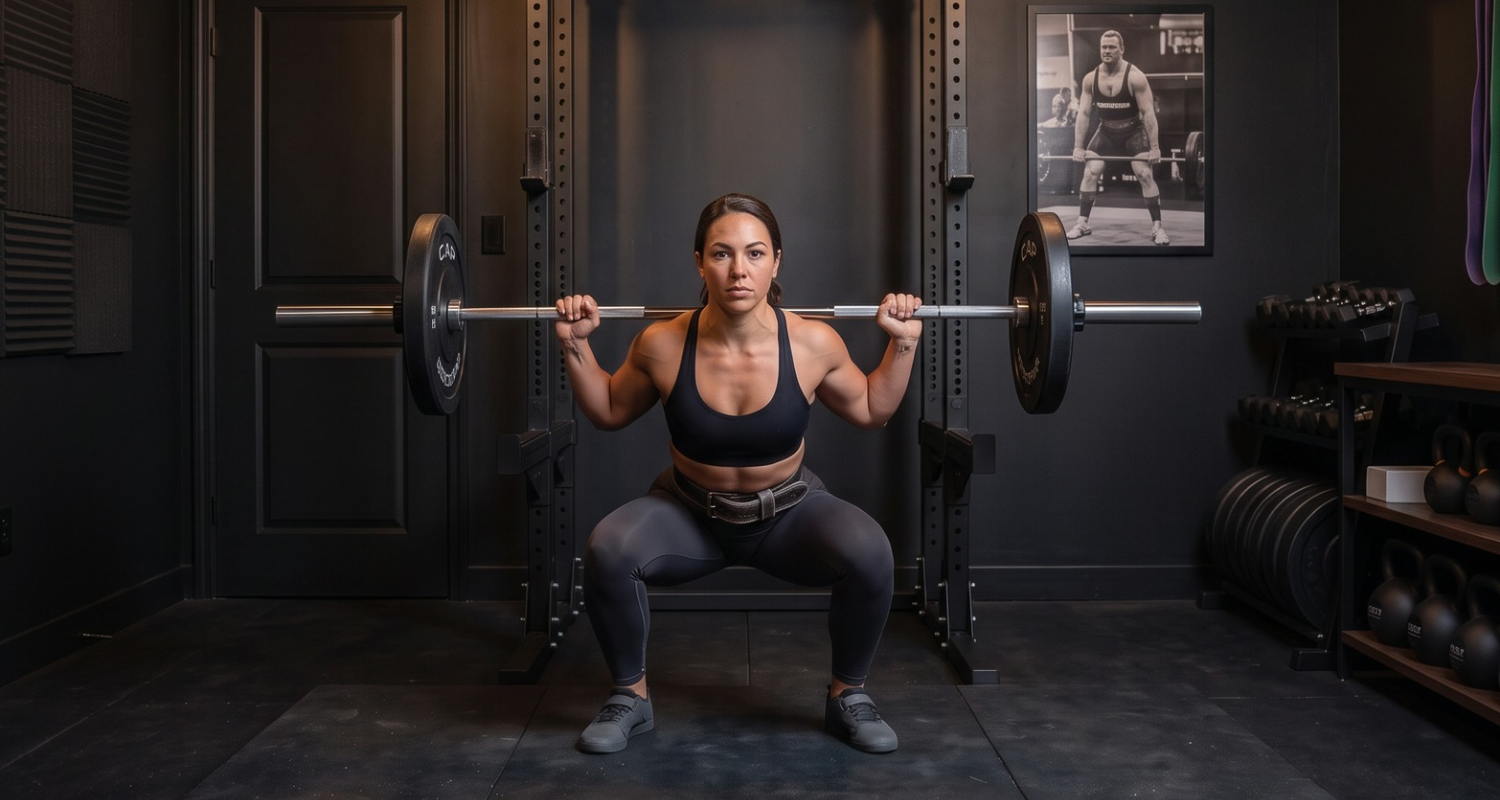
The barbell strength and powerlifting setup is the training configuration that the Athlete Cave garage gym was most fundamentally designed to support. Every other element of this space — the dark walls, the rubber floor, the focused lighting, the plate tree beside the rack — exists in service of this specific training approach. The loaded barbell on the rack is the central image of the Athlete Cave and the reason most people who choose this aesthetic choose it.
For the rack, look for a full power rack in matte black or raw steel powder coat — not chrome, not any finish that reads as commercial or recreational. The rack should feel like it belongs in this space the way the dark walls do — serious, present, completely at home. Confirm ceiling height clearance before purchasing any specific rack model — a full power rack with an integrated pull-up bar typically requires a minimum of 90 inches of ceiling clearance with the bar in the highest position. Measure before ordering. Safety arms, j-hooks, and an integrated pull-up bar are the minimum specifications. Cable attachment compatibility should be considered at purchase rather than retrofitted later.
C1-V4 Power Cage
The anchor piece of the Athlete Cave. Full cage construction with safety arms, j-hooks, and integrated pull-up bar — everything a serious barbell program requires in a matte black finish that belongs in this space.

Mikolo 2″ x 2″ Folding Wall Mounted Squat Rack
The space-efficient alternative for garage setups where floor footprint matters. Folds completely flat against the wall when not in use and deploys into a full squat and pressing station in seconds — serious function without permanent floor occupation

For the barbell, look for a raw steel or black oxide finish — not stainless, not chrome. A raw steel barbell develops a subtle patina over months of use — chalk marks, slight surface variation, the honest evidence of consistent training — that fits the Athlete Cave aesthetic in a way that a polished bar never does. The knurling should be aggressive enough for heavy deadlifts and confident enough for Olympic movements if that training is part of the program.
CAP Olympic Barbell
A reliable workhorse barbell at an accessible price point. Handles squats, deadlifts, bench press, and rows without the premium cost of specialty bars — the right first barbell for an Athlete Cave build focused on progressive strength development.

Bumper plates in black — not colored, not iron for the primary set. Black bumper plates on a dark rubber floor against a dark wall create the most visually coherent equipment arrangement in the Athlete Cave aesthetic. The absence of color in the plate selection is not a cost consideration. It is an aesthetic decision that maintains the visual language of the space.
Rendpas 2-Inch Olympic Bumper Plates
Black bumper plates in the correct diameter for Olympic lifting and barbell drops. The matte black finish maintains the visual language of the Athlete Cave while the rubber construction protects both the floor and the bar on every rep that doesn’t go exactly as planned.

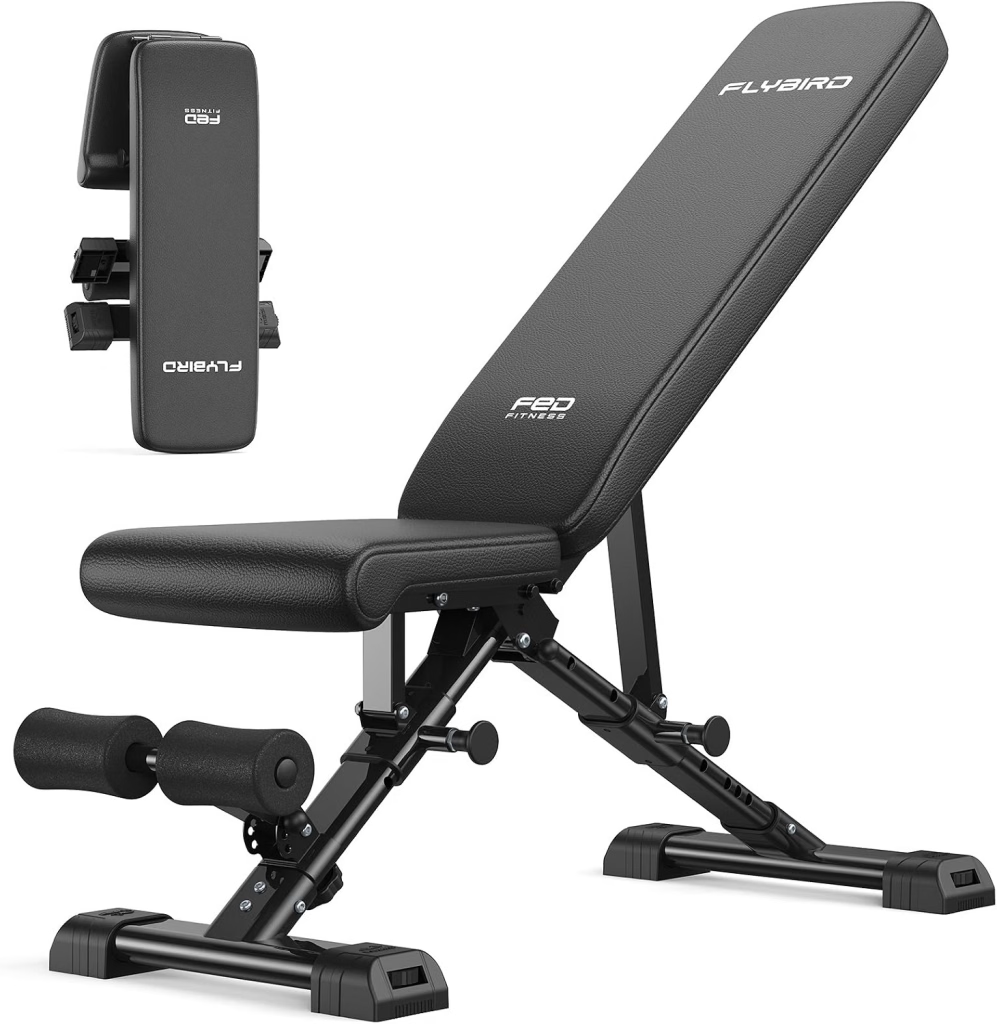
A flat or adjustable bench in dark grey or charcoal upholstery with a matte black or dark steel frame completes the pressing setup. Choose a bench that handles both flat pressing and incline work — the adjustable bench serves both the powerlifting program and the hypertrophy accessory work that most serious strength athletes incorporate alongside their primary compound movements.
FLYBIRD WB5 Weight Bench — ASTM-Certified 800LBS Adjustable
ASTM-certified to 800 pounds with a full range of incline adjustments. The bench that handles both the flat pressing foundation of a powerlifting program and the incline work that hypertrophy programming adds on top of it — built to the load rating that serious training demands.
Chalk. A chalk block on the upper shelf of the storage wall is as essential to the Athlete Cave identity as the rack. It is the accessory that most signals the difference between a gym where serious lifting happens and a room where equipment was assembled.
A four day per week upper-lower or push-pull training split built around barbell squat, deadlift, bench press, overhead press, and row variations produces the most complete strength development available to a home gym athlete. The Athlete Cave garage gym is the only configuration in this guide fully equipped to run this program without compromise or substitution.
Training Setup 2: Conditioning and Athletic Performance
For the reader training for athletic performance, functional fitness, or the combination of strength and cardiovascular capacity that demands the same space handle both heavy compound lifting and high-intensity conditioning work without either compromising the other.

The Athlete Cave garage gym is the most naturally suited home gym configuration for conditioning and athletic performance training of any setup in this guide — and by a significant margin. The concrete floor handles sled pushes and loaded carries without surface damage. The open garage door creates direct access to the driveway and outdoor training environment. The ceiling height accommodates rope climbs, box jumps, and overhead work. The rubber flooring absorbs the impact of kettlebell drops, box jump landings, and the dynamic ground contact of conditioning work that would damage a residential floor.
For the primary conditioning anchor piece, look for an assault bike or rowing machine in a dark or matte finish — dark casing, no bright accent colors, a finish that communicates serious equipment rather than recreational cardio. The assault bike specifically is the conditioning tool most associated with the Athlete Cave aesthetic and the training culture that surrounds it — full-body, brutally honest about effort, impossible to cheat, and completely appropriate in a dark garage gym in a way that a light grey treadmill simply is not.
Wenoker Exercise Bike
A compact stationary bike for the conditioning sessions that complement strength training without requiring the floor footprint of a full assault bike. Quiet enough for early morning sessions and space-efficient enough for a garage layout where the rack and platform occupy the primary training zone.

Cast iron kettlebells in one to three weights handle the swings, loaded carries, and conditioning complexes that combine cardiovascular demand with functional strength in the same movement. In the Athlete Cave these bells live on the dark walnut shelf — they are visible and accessible and their raw cast iron surface reads as correctly in this space as the dark rubber floor does.
REP Fitness Kettlebell Set
A matched set of cast iron kettlebells covering the weight range that swings, carries, and conditioning complexes require. Rep Fitness quality at a price point that makes building a complete set practical rather than aspirational — the conditioning arsenal that completes the Athlete Cave without compromising the budget for the primary barbell equipment.

A plyo box in dark wood or black provides the step-up and box jump platform for lower body power development and the elevated surface for deficit work and incline push-up variations. A set of battle ropes anchored to the rack base or a dedicated wall anchor adds the upper body conditioning work that the assault bike and kettlebell program benefits from on higher-volume days.
CAP Barbell 3-in-1 Plyometric Box
Three heights in one box — 20, 24, and 30 inches — for step-ups, box jumps, box squats, and deficit work. Solid wood construction with a non-slip surface handles the dynamic loading of functional fitness training without the instability that foam plyometric boxes introduce under heavy use.

The outdoor training extension is most naturally available to the Athlete Cave garage gym of any configuration in this guide. Sled pushes on the concrete driveway apron. Sprint intervals from the garage door. Farmer carries around the property perimeter. The garage door open during conditioning sessions makes the outdoor environment a natural part of the training space — which in the Athlete Cave is not a design compromise. It is the training environment operating at its fullest capacity.
Training Setup 3: Bodybuilding and Hypertrophy
For the reader whose primary training goal is muscle development and physique improvement — structured progressive overload with sufficient volume, exercise variety, and the isolation work that hypertrophy programming requires alongside its compound foundation.

The Athlete Cave aesthetic is as appropriate for the bodybuilder as it is for the powerlifter. The focused, private, zero-distraction environment of this space supports the concentration and training volume that hypertrophy work demands — and the visual identity of the space communicates the same intentionality that a serious physique training program requires.
The hypertrophy setup differs from the powerlifting setup in one significant way — equipment variety. Where the powerlifting program runs on a barbell and a rack, the hypertrophy program requires the full range of cable, dumbbell, and specialty bar work that drives the accessory volume responsible for the aesthetic outcomes this training approach produces. The cable attachment on the power rack becomes essential here rather than optional.
Look for a power rack that accepts a cable attachment as a genuine functional addition rather than an afterthought — one whose pulley system handles lat pulldowns, seated cable rows, face pulls, cable flyes, and tricep pushdowns with smooth consistent resistance throughout the full range of motion. This single addition transforms the rack from a squatting and pressing station into a complete training system that can serve every major muscle group without a dedicated cable machine.
POOBOO Multi-Functional Machine Power Cage
A complete training station that combines the rack, cable system, and accessory attachment points in a single footprint. For the Athlete Cave builder who wants the full cable and strength training system without sourcing a rack and cable attachment separately — everything in one piece of equipment.

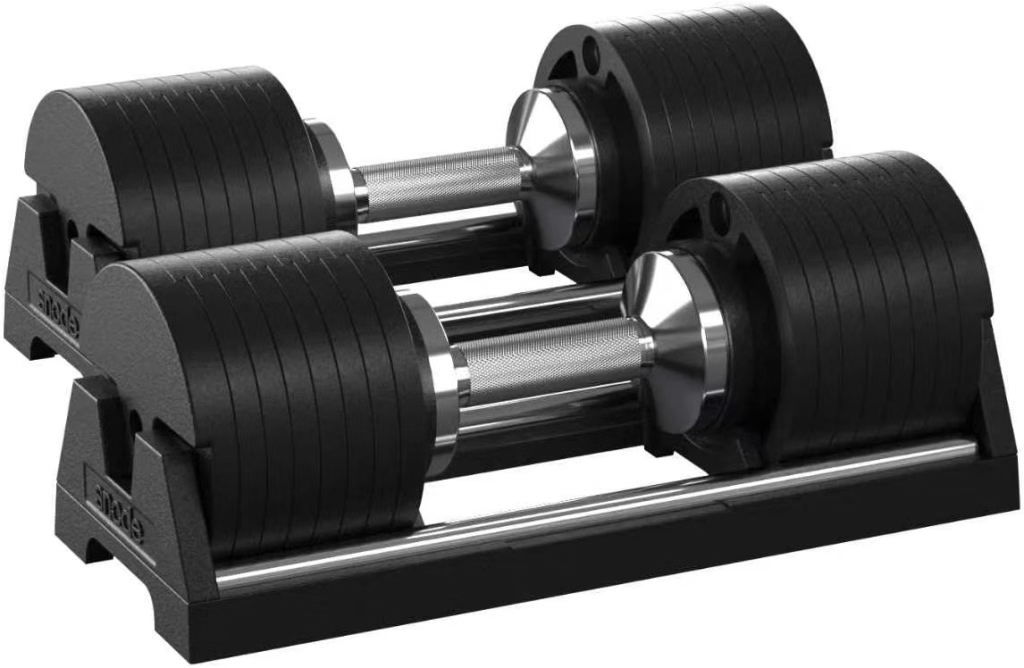
Adjustable dumbbells in a dark or matte finish — not chrome, not the standard silver that most adjustable sets ship in — serve the unilateral and isolation work that hypertrophy programming stacks on top of its compound foundation. In the Athlete Cave the finish of the dumbbells matters. A chrome dumbbell set against a dark wall beside a matte black rack reads as a visual inconsistency that a dark or matte finish eliminates.
SNODE Adjustable Dumbbell
A compact adjustable set that handles the unilateral and isolation work that hypertrophy programming stacks on top of its barbell foundation. Space-efficient, simple to adjust between weights, and available in a finish that reads correctly in the Athlete Cave without the chrome that would work against the aesthetic.
An adjustable bench with dark upholstery handles the full range of incline, flat, and decline pressing variations that complete chest and shoulder development requires.
A flat bench built for the load that serious pressing work places on it. Clean matte finish, stable under maximum effort, and compact enough to position in front of the rack without consuming the floor space that conditioning work requires in the same session.

An EZ curl bar or specialty bar for bicep, tricep, and shoulder accessory work rounds out the isolation capacity of the setup. Resistance bands stored on the pegboard in organized sets handle warm-up work, shoulder health movements, and the high-repetition finisher work that hypertrophy programs use to drive additional volume at the end of sessions.
A complete resistance set for warm-up work, shoulder health maintenance, and the high-repetition finisher work that serious training programs use to drive additional volume. Stored on the pegboard hooks between sessions — organized, accessible, and the most space-efficient training tool in the Athlete Cave.

A five day per week push-pull-legs or body part split using barbell compound movements as the strength foundation and cable, dumbbell, and band work for accessory volume produces the most complete hypertrophy stimulus available to a home gym athlete with this equipment profile. The Athlete Cave garage gym handles this program completely — and the focused, private environment it provides is the one in which the quality of attention required for genuine hypertrophy training is most naturally sustained.
Training Setup 4: Functional Fitness and CrossFit-Style Training
For the reader who trains with constantly varied functional movements at high intensity — the athlete whose program demands that the same space handle Olympic lifting, gymnastics movements, barbell conditioning, and cardiovascular work in the same session.

The garage gym is where CrossFit began.
Not in a purpose-built facility. Not in a commercial gym. In dark, utilitarian garage spaces where the training was the only point and the environment reflected that without apology. The Athlete Cave aesthetic is not a style choice for the functional fitness athlete. It is the origin of the training culture that produced functional fitness as a methodology — the understanding that serious training deserves a serious environment and that seriousness looks like dark walls, rubber floors, raw equipment, and zero audience.
For the foundational equipment profile, the functional fitness setup uses the same rack, barbell, and bumper plates as the powerlifting setup — Olympic lifting variations including cleans, snatches, and jerks add to the barbell work that heavy strength movements established. The pull-up bar integrated into the rack serves strict pull-ups, kipping variations, toes-to-bar, and the bar muscle-up for athletes whose training includes gymnastics skill work. Gymnastics rings suspended from the ceiling joists or a dedicated ceiling anchor add ring dips, ring rows, ring muscle-ups, and the bodyweight pulling and pressing movements that complete the gymnastics component of functional fitness programming.
Titan Fitness Full Deadlift Platform- 8FT x 4FT
A dedicated lifting platform that defines the primary pulling zone and protects both the floor and the barbell on heavy deadlift sessions. Eight by four feet of platform surface handles the full stance width of any pulling variation — the structural foundation that serious deadlift training deserves.

GHB Gymnastic Rings Wooden Gym Rings 1.25″
Wooden rings suspended from the ceiling joists or rack anchor bring ring dips, ring rows, ring muscle-ups, and the full gymnastics pulling and pressing library into the Athlete Cave functional fitness setup. The 1.25-inch diameter matches the grip width of most pull-up bar training — a natural transition between bar and ring work.

Kettlebells for swings, cleans, and snatches. An assault bike or rowing machine for the cardiovascular conditioning pieces that anchor most functional fitness programming. A speed jump rope for double-under work. These pieces complete the equipment profile without adding anything that doesn’t earn its place by answering the Athlete Cave’s foundational question: does this make me better?
The garage door’s role in functional fitness training is more significant than in any other setup in this article. Run pieces begin at the garage threshold and continue down the driveway or the street. Sled pushes happen on the concrete apron. Farmer carries and sandbag carries move through the outdoor space adjacent to the training zone. The Athlete Cave garage gym for functional fitness training is not contained by its four walls. It extends through the open door into the outdoor environment that functional fitness programming was always designed to use.
The dark, focused, zero-distraction atmosphere of the Athlete Cave is the most appropriate aesthetic expression of functional fitness training available in a home gym context. The training is intense, varied, and demanding. The environment should be honest about that. The Athlete Cave garage gym is.
The Garage That Finally Became What It Was Always Meant to Be
Most garages accumulate things.
Boxes that were supposed to be temporary. Equipment from hobbies that didn’t stick. The organizational systems that were going to be installed after the move that never quite happened. The garage becomes the room that holds everything that doesn’t belong anywhere else — useful, functional, and genuinely underestimated.
The Athlete Cave garage gym is the decision to stop underestimating it.
Dark charcoal walls that took a Saturday afternoon and transformed the entire spatial experience. Rubber mats that cover the floor and make every session safer and more productive. Focused lighting that turns a functional storage space into an environment with genuine atmosphere. A rack against the back wall that answers the question of what this room is for before the first session begins.
The garage that becomes an Athlete Cave doesn’t just become a gym. It becomes the most important room in the house — the room where the version of you that trains before the rest of the world wakes up does the work that compounds quietly over months and years into outcomes that motivated people who train in comfortable gyms with audiences and mirrors never quite reach.
That version of you deserves a serious environment.
Does this make me better? The Athlete Cave asks this question of everything inside it and everything that happens inside it. Build it with that standard in mind and the answer every morning will be the same.
Yes.
If you’re still exploring the five home gym aesthetics and deciding which one reflects who you are in your training life, the free SOMA Dream Gym Style Guide walks you through all of them — with mood boards, equipment guides, and the framework for finding the space that feels like yours.
Leave a Reply