

You finally talked your partner into it. Or maybe they talked you into it. Either way, you’re both standing in your garage — or staring into a spare room — trying to decide how to navigate the fragile dance of transforming this space into a win-win for both parties.
It sounds easy enough at first– “you buy what piece(s) of equipment you like and I’ll buy what I want” you might say.
This is where most home gym for couples plans fall apart before a single piece of equipment gets ordered.
Stop and think for a moment about how your partner is built and trains. Maybe one of you lifts heavy religiously and is dying to buy a rack. Maybe you want to get toned and build a solid lower body, so you want resistance bands and a cardio machine. You may be 5’4” with a smaller frame, your partner could be 6’2” and built like a tank. The point is; both of you naturally have different body types and goals, and may need varying types of equipment as a result.
But budgets are real. And square footage is real. And at the end of the day there’s only so much money and space for a home gym. If the space ends up working more for one of you than the other, the room won’t be a place for mutual growth but a point of bitter contention later on.
You don’t want that. Nobody wants that, but unfortunately I’ve seen it happen.
I’ve had this exact conversation with clients several times. The couples who build home gyms that actually stick aren’t the ones who bought the most equipment. They’re the ones who planned for both people from the beginning — prioritizing adjustability, shared movements, and a layout that doesn’t require one partner to work around the other.
This guide is built around that approach. We’re going to walk through the common mistakes couples make when planning a shared gym, how to think about your space (specifically garages and spare rooms), and which equipment categories — and specific pieces — actually make a dual-use setup work.
The Mistake That Tanks Most Shared Home Gyms Before Day One
Here’s usually what I see happen: one of you takes the driver’s seat for planning, your training style dominates the purchasing decisions, and the imbalance begins.
Three months in and one of you is energized and consistent. The other “uses” the gym occasionally, but without the equipment they need aren’t nearly as invested. As a result the imbalance leaks into the results too; one of you starting to see the results your consistency and equipment helped produce, and the other looking the same as they did 3 months ago. Why? Because the space wasn’t designed to deliver you both equal results– not fully.
The fix isn’t complicated, but you need to have a real conversation before anything gets added to a cart:
What does both of your training look like right now? Not what you wish it looked like, just what you actually do.
What movements do you both use? What equipment do you use, and what would you both need to complete full workouts at home without compromise?
If you both write down separate lists and stay honest with your assessments, you’ll be well on your way to a great home gym for both of you. Once you’ve finished, compare lists. The equipment that serves both of you is your priority tier. Equipment that only serves one person is secondary — you can always add them later when and if space permits.
Planning Your Space: Garages and Spare Rooms Are Not the Same Problem

Related Article: How to Set Up a Home Gym- The Complete Beginner’s Guide
While creating a list and comparing equipment choices is a great place to start, always be aware of the space you’re working with. The square footage will have a profound impact on what equipment actually makes sense. It will also help ground your wishlist in reality with the use of practical space planning– always accounting for the amount of equipment in the space and the potential for two people navigating the room at once.
Garages
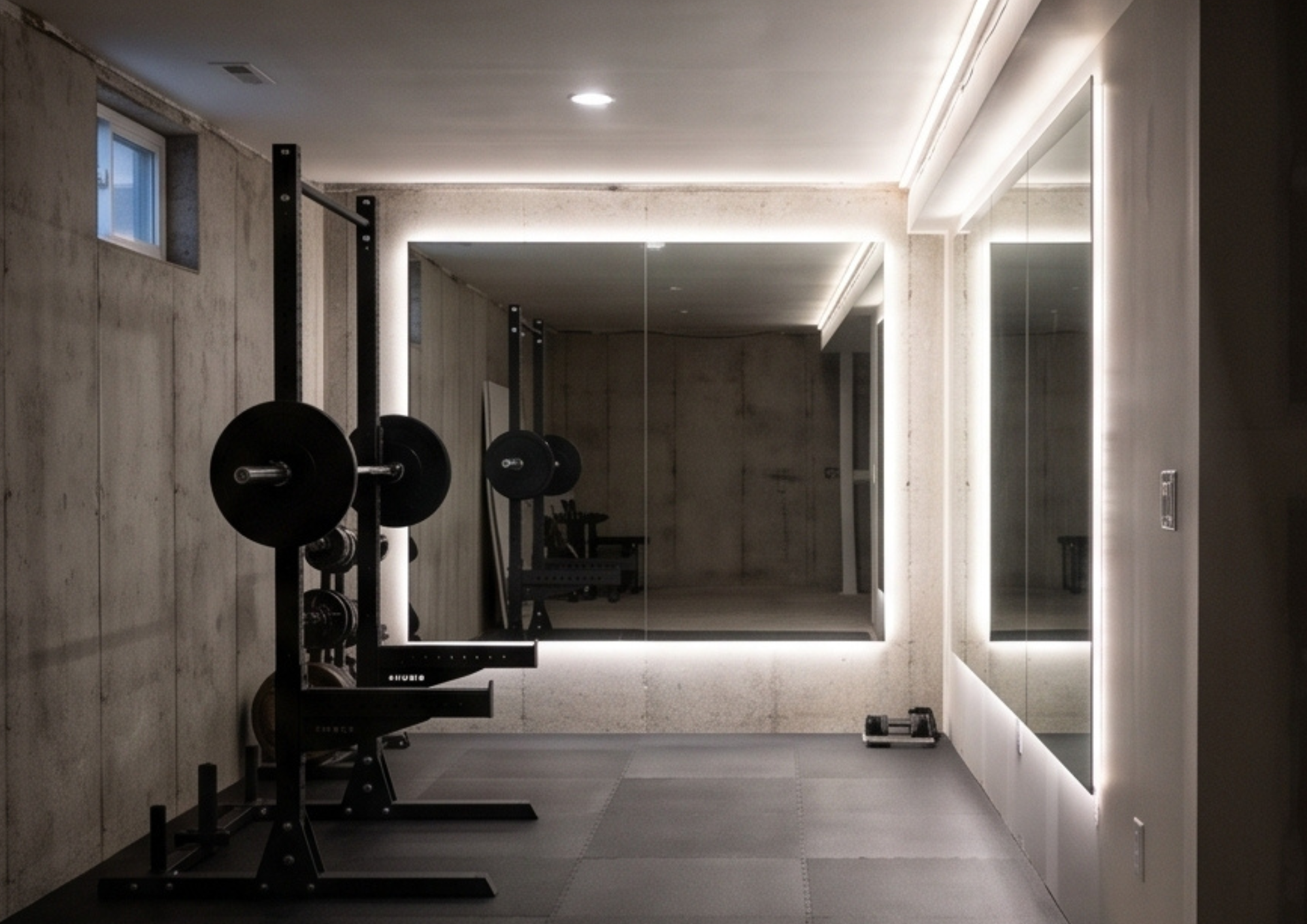
Garages are the most forgiving for couples. A standard two-car garage gives you 400–440 square feet. Even a single-car garage (200–250 sq ft) can house a functional shared gym if you’re intentional. The ceiling height (typically 10–12 feet) gives you room for a full power rack. Concrete floors handle weight well but need rubber flooring for comfort and noise dampening — budget for at least 3/4″ thick horse stall mats or interlocking rubber tiles covering your primary lifting zone.
Spare rooms
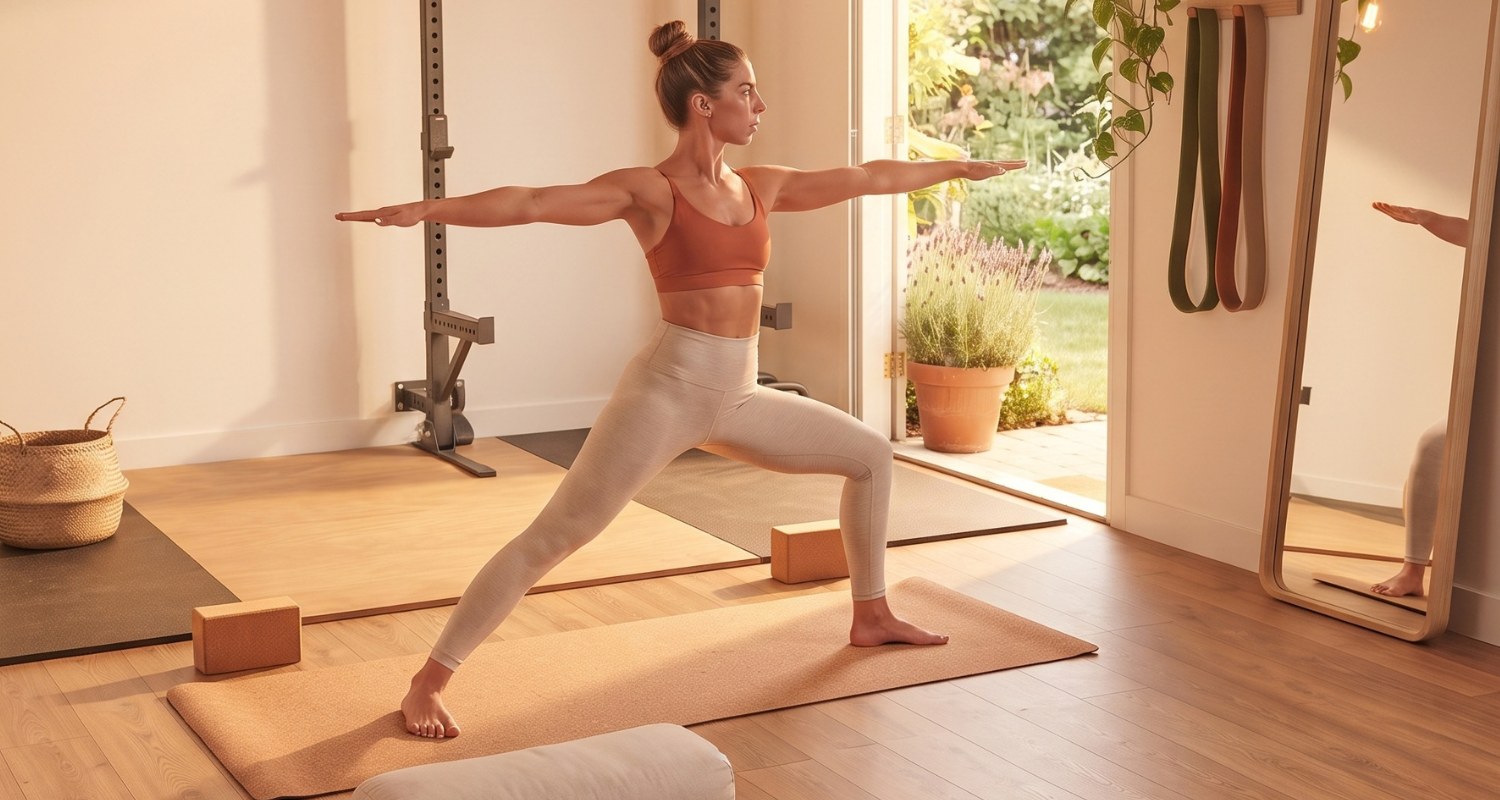
Spare rooms require more restraint. A 10×12 room (120 sq ft) sounds small, but it’s workable if your layout prioritizes multi-use equipment and keeps footprint tight. Ceiling height is your limiting factor here — most power racks require 7.5 to 8+ feet of clearance for the uprights, plus pull-up bar usage. Measure before you order.
In either space, the single most useful planning exercise is drawing a floor plan to scale before you buy. Use graph paper or a free tool like Roomstyler. Place your largest piece (the rack or bench) first, then build outward. Leave at minimum 3 feet of clear space on each working side of any major equipment. For couples, add another 18–24 inches — you need room to not be literally in each other’s way when training simultaneously.
What you can do today
The best thing you can do immediately is measure your space. Check the floor dimensions, ceiling height, door clearance. Write it down. Every equipment decision that follows should be filtered through those numbers.
The Equipment That Actually Works for Two Different Bodies and Training Styles
Keep in mind, this list makes up pieces of equipment I would recommend in a home gym for couples– it’s not set in stone. However, after nearly a decade working in gyms intimately, and occupying a shared home gym for nearly as long, I’d like to think I have a pretty good idea of what your space might need– but again, take what I say with a grain of salt.
1) Adjustable Dumbbells: The Non-Negotiable Foundation for a Shared Setup
Related Article: Best Adjustable Dumbbells For Home Gyms (2026 Review)
Fixed dumbbell sets are a financial and spatial nightmare for couples. If she curls 15 lbs and he rows 70 lbs, you’re either looking at a rack full of dumbbells or someone consistently under-equipped. That’s a lose-lose however you slice it.
The solution is a quality adjustable dumbbell system with a weight range wide enough to serve both partners across all their movements. The problem I see clients run into is buying adjustable dumbbells that max out too low — 50 lbs sounds like a lot until one partner is ready to do heavy Romanian deadlifts or weighted lunges.
The NUOBELL Adjustable Dumbbell Pair (5–80 lbs per dumbbell) is one of the cleaner solutions I’ve seen for a couple with different training levels. The 5 lb floor means she’s not starting too heavy on isolation work; the 80 lb ceiling means he’s not outgrowing them within six months. The selector dial system adjusts quickly — important when you’re both training in the same session and swapping equipment.
What I tell my clients: don’t think of adjustable dumbbells as a “starter” purchase. At this weight range, they’re a long-term tool. Every pressing, hinging, pulling, and isolation movement either of you does can be built around one pair. That’s an enormous amount of programming flexibility for two people in a small footprint.
Practical takeaway
When you order, immediately establish a labeling or notation system for each person’s working weights. Nothing derails a good workout like re-dialing a dumbbell from scratch. A simple whiteboard on the wall with each person’s working weights per exercise saves minutes and frustration.
2) The Adjustable Bench: Small Detail, Major Impact for Different Body Sizes
The bench is an afterthought for a lot of home gym buyers. It shouldn’t be — especially in a couple’s gym.
A fixed flat bench eliminates incline pressing entirely, which matters for chest and shoulder development. More importantly for a shared gym: bench height affects everything from step-up height to dumbbell row mechanics to seated pressing form. A partner who is significantly shorter or taller will feel the difference immediately.
The REP Fitness Adjustable Weight Bench solves this well. It adjusts across multiple back pad positions (from flat to fully upright) and is rated to 620 lbs, so it’s not going anywhere under load. More practically, the compact footprint (it folds for storage) makes it viable even in a spare room setup where every square foot counts.
In a garage, you can leave it set up in your primary working zone. In a spare room, the fold capability means it doesn’t dominate the floor plan on rest days or when you need the room for other movement work.
Practical takeaway
When the bench arrives, both partners should run through their full bench-based workout and note their preferred incline and flat positions. Mark them with a small piece of tape or a Sharpie on the adjustment mechanism. No guessing mid-session.
3) The Power Rack with Smith Machine: Where Both Training Styles Finally Meet
This is the conversation piece in most couples’ gym planning discussions — and for good reason. A power rack usually represents the biggest single investment, takes up the most floor space, and most directly reflects one style of training if you pick wrong.
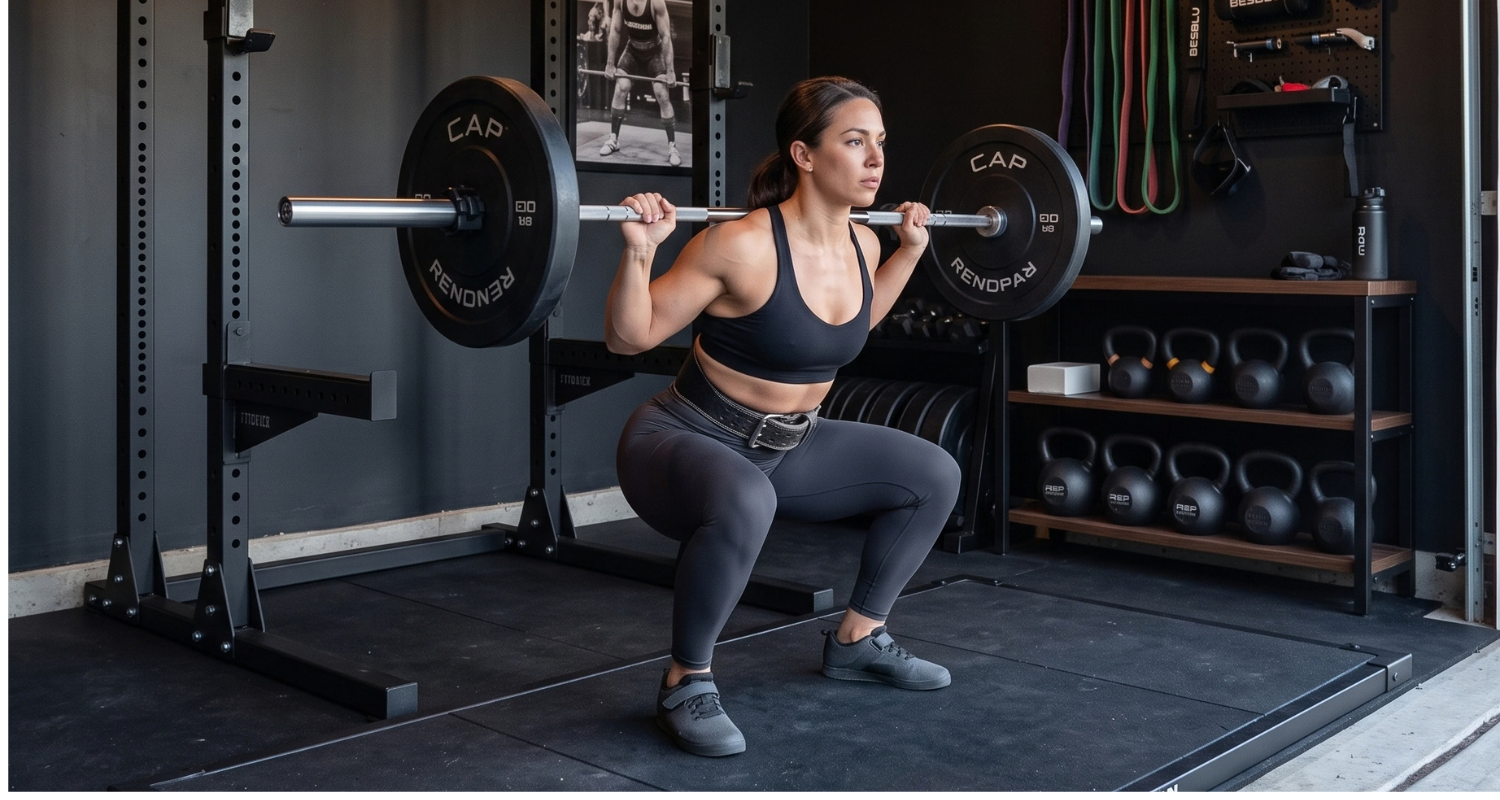
A traditional power rack rewards free-barbell training. Heavy squats, bench press, overhead press, rack pulls. It’s excellent — if both partners are comfortable with free barbell work, and if safety isn’t a concern when one person is training alone.
The power of the power rack + smith machine
Here’s what I tell couples who are at different experience levels with barbell work, or where one partner wants the confidence of guided movement: a power rack with an integrated smith machine removes a genuine barrier to entry without sacrificing the full rack functionality for the more experienced partner.
The RitFit M1 Pro Smith Machine/Power Rack combo is a serious piece of equipment — it’s not a budget compromise. The integrated cable pulley system gives both partners access to lat pulldowns, cable rows, tricep pushdowns, chest flies, and dozens of other cable-based exercises that are otherwise impossible without a separate functional trainer. For a partner whose training is more resistance and isolation-focused, the cable system alone justifies the purchase.
The Smith machine component provides a fixed barbell path, which is genuinely useful for: training alone safely without a spotter, learning squat and press mechanics, hip thrusts (which load better on a Smith machine for many people), great leg workouts that isolate and grow the quads, hamstrings, and glutes, and building confidence with heavier weights before transitioning to free bar work.
In a garage, this unit needs roughly 7×7 feet of footprint with working clearance on all sides — call it a 9×9 zone. In a spare room, measure your ceiling height first. You need 8 feet minimum for most racks; check the RitFit specs against your ceiling before ordering.
Practical takeaway
Before the rack arrives, decide who is the “primary” user for each function — rack for him, Smith machine for her, cable system shared. Build a simple workout template for each function so neither partner has a blank slate when they walk in.
4) Resistance Bands: The Most Underestimated Tool in a Shared Gym

Resistance bands don’t get enough credit in serious training environments. In a couple’s gym, they’re not supplemental — they’re essential infrastructure.
Here’s why: bands serve different functions for different training styles simultaneously. For a strength-focused partner, they add accommodating resistance to barbell movements (more tension at the top of a squat or press, where the movement is easiest). For a partner focused on glute, hip, and upper-back development, bands are often the primary tool for activation work, banded hip thrusts, pull-aparts, face pulls, and lateral band walks.
A quality set of long resistance bands — the 41-inch loop style — is what you want. The Tribe Lifting Resistance Bands set in a full range of resistance levels gives both partners usable tools without anyone compromising on tension. Lighter bands for activation and warm-up work, heavier bands for assistance on pull-ups or as primary resistance on loaded movements.
They store in a drawer, they travel, and require zero floor space when not in use. In a couple’s gym, there is no downside.
Practical takeaway
Hang a simple pegboard or hook rail near your rack. Bands loop cleanly on hooks and take up zero floor space. Label hooks by resistance level and you’ll actually use them consistently instead of digging through a pile.
5) Cardio Equipment: Choose One, Choose It Together
Cardio is where couples’ gym plans most often devolve into nobody getting what they want. She wants a treadmill. He doesn’t care about cardio. She concedes. Six months later, she’s doing all her conditioning work outside and wishing the money went elsewhere.
My recommendation: have the honest conversation about what cardio actually looks like in each person’s training. If one partner does cardio five days a week and the other does it once, the person doing it five days gets veto power on the equipment type — as long as it fits the space and budget.
For garages, a commercial-quality folding treadmill or a fan bike is the most practical. Fan bikes — like the Assault AirBike or Concept2 BikeErg — serve both partners without adjustment, provide genuine high-intensity conditioning, and take up roughly 4 square feet of floor space. They’re brutal in the best way, and because they’re self-regulating (you get out what you put in), both a beginner and an experienced partner can use the same machine effectively.
For spare rooms, a folding treadmill is the most space-conscious option, but verify unfolded dimensions against your room before ordering. A compact rowing machine (the Concept2 RowErg stores vertically) is another excellent shared option that builds both conditioning and upper back strength — useful for both training profiles.
Practical takeaway: Decide on cardio equipment after you’ve placed the rack and bench in your floor plan. Cardio equipment is what fills remaining space — not what gets planned around. If a treadmill doesn’t fit cleanly after your primary equipment is placed, it doesn’t fit.
Related Article: Best Cardio Machines for Small Home Gyms
The Shared Gym Ground Rules Nobody Talks About
Equipment is the easy part. The harder part is creating a gym culture in your own home that keeps both partners motivated and consistent.
A few things that work:
Train together when you can, but plan for training separately
The gym needs to function on a Tuesday morning when only one of you has time. Don’t build a setup that requires a spotter for every meaningful movement.
Designate zones, not equipment
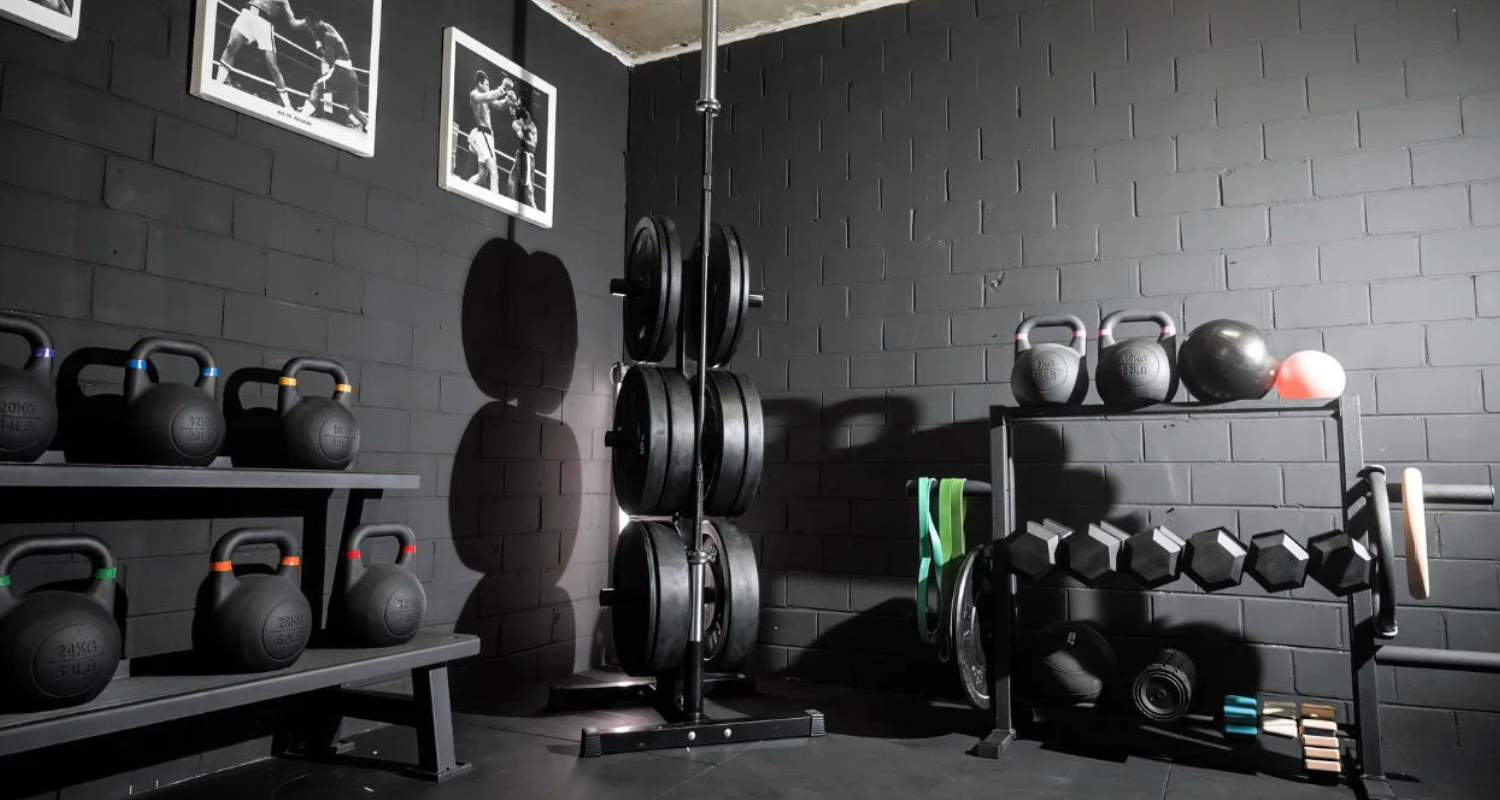
Instead of “his rack, her bands,” think: strength zone (rack and bench), functional zone (bands and cables), and conditioning zone (cardio equipment). Both partners can move through all zones — it prevents the gym from psychologically becoming one person’s space.
Shared programming is optional, not required
You can train in the same space with completely different programs. Many couples find that parallel training (same gym, different workouts) is more sustainable than trying to do the same program in sync.
Plan for the schedule conflict
If both partners are early morning trainers, decide in advance how you handle it when you both want the rack at the same time. Options: build alternating schedules, or structure programs so one person is on the cable/smith machine while the other is on the free rack.
Building This Space Is Building Something Bigger
Here’s what I’ve seen happen when couples build a home gym that genuinely works for both people: it changes the default in their household. Exercise stops being something you have to find time for and starts being something the environment makes easy.
Your home gym for couples isn’t just a convenience — it’s the physical declaration that your health and your partner’s health are a priority worth investing in. Not a gym membership you might cancel. Not equipment that ends up being a coat rack. A dedicated space, intentionally built, that meets both of you where you are and grows with you as you get stronger.

That takes planning. It takes honesty about how each of you actually trains. And it takes choosing equipment that’s adjustable, durable, and versatile enough to serve two different bodies and two different goals simultaneously.
The adjustable dumbbells. The height-adjustable bench. The power rack with smith machine and cable pulley. The resistance bands. And cardio equipment you both agreed on. That’s the foundation.
Everything else — the flooring, the lighting, the mirror, the playlist arguments — that’s the details. Get the foundation right first.
Ready to Build? Start with a Plan.
The single biggest mistake couples make with home gym planning isn’t buying the wrong equipment — it’s starting without a plan at all. A floor layout, a shared equipment list, a budget framework, and a clear sense of both people’s training needs before a single purchase is made.
That’s exactly what the free SOMA Home Gym Planning Checklist is built for. It walks you through space measurement, equipment priority ranking, layout planning, and budget allocation — everything you need to build a shared home gym that works for both of you from day one. Download it, fill it out together, and then go shopping.
Because the gym you build is the foundation you train on. Make it worthy of what both of you are capable of becoming.
Related Article: Essential Home Gym Equipment vs Optional: What to Buy First
Leave a Reply