
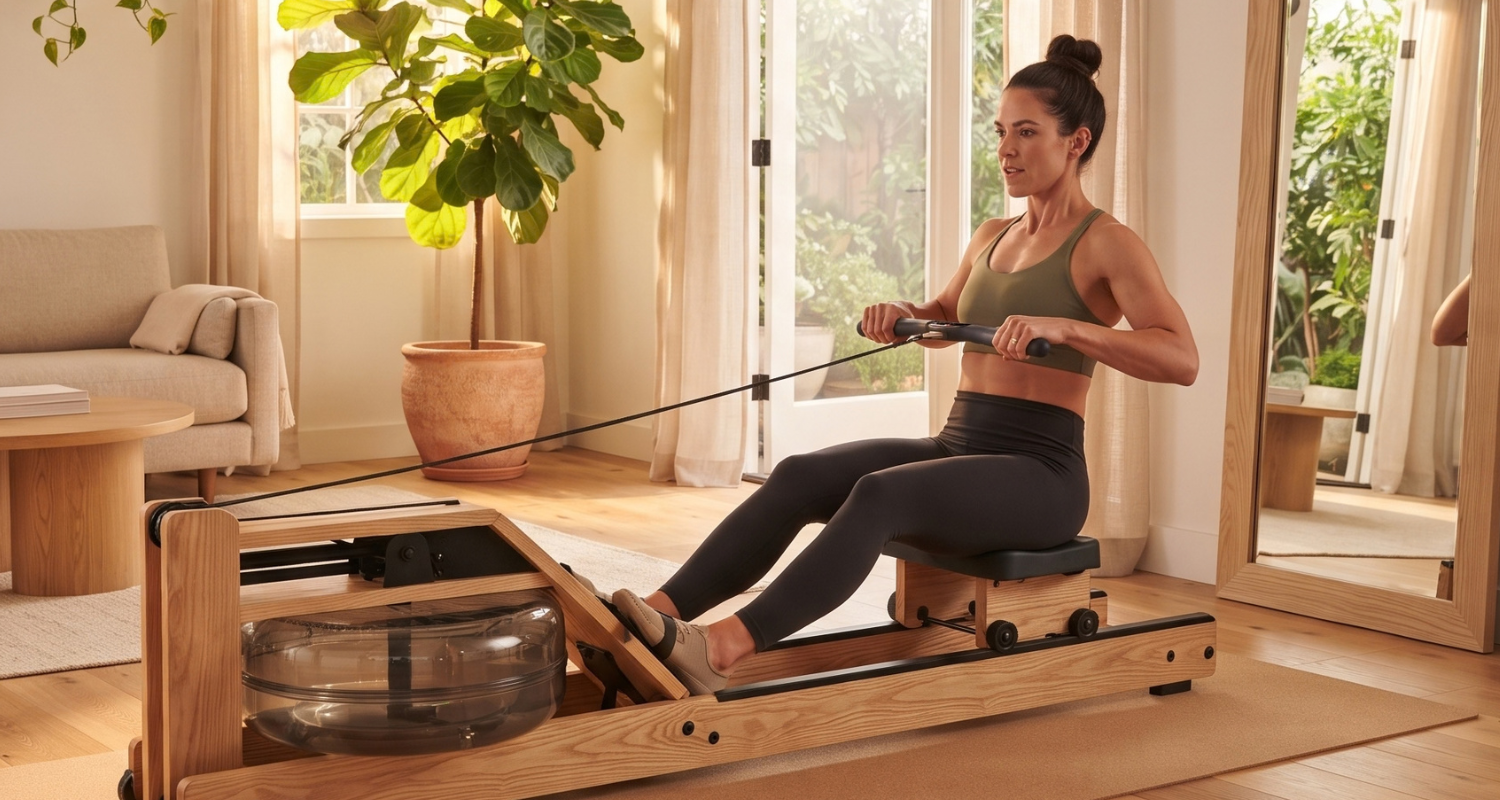
The living room is the room most people live in most consciously.
It is the room they return to at the end of the day. The room they arrange with the most care. The place where quality light matters and the warmth of the materials is felt and not just seen. In a well-designed home the living room reflects a set of values about how a life should feel — unhurried, connected, grounded in natural things.
The Naturalist living room gym aligns itself with that philosophy and then some- because it asks it to become more of what it already is.
More alive. Connected to the natural world just outside the windows. Deliberate in the way every surface and every material contributes to the quality of being in the space. The training zone that occupies one wall of the living room in this aesthetic is not a gym that landed in the wrong room. It is the natural continuation of a design philosophy that was already present before the first piece of training equipment arrived — the same warm wood, the same living plants, the same quality of natural light, extended into a zone that also happens to develop strength, cardiovascular fitness, and the kind of body awareness that training in an intentional environment produces over time.
This is not the compromise version of a home gym. It is the most integrated version of one.
Here is everything you need to recreate it.
Why the Living Room Works for the Naturalist Gym
The living room has three qualities that the spare bedroom rarely matches — and all three matter more for the Naturalist aesthetic than for any other archetype in this guide.
Natural light
The first is natural light from multiple directions. Most living rooms have windows on two or more walls. A living room with morning light from the east and afternoon light from the south provides a changing quality of natural illumination throughout the day that transforms the training environment depending on when sessions happen. The morning yoga practitioner and the afternoon strength trainer are training in the same room with fundamentally different light — and in the Naturalist gym that difference is not incidental. It shapes the quality of every session it touches.
Outdoor connection
The second is the outdoor connection. Living rooms more commonly open directly to gardens, patios, terraces, and balconies than spare bedrooms do. The Naturalist gym’s relationship with the outside environment — the open door or window, the sounds of the outdoor world present at the edge of a training session, the genuinely permeable boundary between interior training and exterior space — is more naturally and more completely available in a living room than almost anywhere else in a home. This quality cannot be manufactured. It can only be built into a gym that is positioned where the outdoor connection already exists.
Organic warmth
The third is the existing organic warmth. A well-designed Naturalist living room already has everything this aesthetic requires before the first piece of training equipment arrives. Warm wood floors. Natural fiber rugs. Living plants that have been maintained for months or years. Organic material furniture in warm neutral tones. The training zone doesn’t need to create the Naturalist atmosphere — it needs to join it. That distinction makes the living room the easiest room in the house to build a Naturalist gym in and the hardest room to build one badly in. The aesthetic foundation is already there. The training zone either honors it or contradicts it. There is very little middle ground.
Related Post: 7 Small Home Gym Design Ideas That Make Any Space Feel Like a Real Gym
The Space Setup: Layout, Flooring, Lighting, Plants, Storage, and Mistakes to Avoid
The Naturalist living room setup section covers more ground than the equivalent Clean Minimalist section because the Naturalist gym requires plant guidance alongside every other setup decision — and the plant guidance for a living room with multiple windows and a potential outdoor connection is meaningfully different from the plant guidance for a spare bedroom with one window. Both the opportunities and the responsibilities are larger in the living room.
Layout — the training zone within a lived-in space
The mat zone goes against the wall with the best natural light and the strongest outdoor connection — which isn’t necessarily the wall that is least visible from the sofa.
This layout decision creates an intangible quality that separates the Naturalist living room gym from other living room gym approaches. The Clean Minimalist places the mat zone against the most visually appropriate wall. The Naturalist sets up against the wall that’s most alive — close to the best window, close to the garden door, close to the natural light source that makes both the training and the plants perform at their best.
If that wall is directly in the sightline from the primary seating area, don’t worry about it. A well-designed Naturalist training zone is worth looking at from the sofa. A wall composition of cast iron kettlebells on a natural wood shelf, earth tone resistance bands hanging in a warm gradient on natural wood hooks, a trailing pothos spilling over a floating shelf, and a leaning mirror with a natural wood frame is not a visual intrusion on the living room. It is a design element that compliments the space- growing plants, growing bodies, growing connections.
Positioning
Position the mat zone so the athlete faces the natural light source and the outdoor connection during training — not the television or the primary seating arrangement. The directional quality of morning light from an east-facing window, even the warmth of late afternoon light from the south, reaching the athlete during a training session is the Naturalist living room gym’s most distinctive environmental asset. Orient the training zone to receive it.
The natural fiber area rug that defines the living area — sisal, jute, or seagrass in a warm neutral tone — can serve as the visual boundary between the living zone and the training zone. The rug ends where the mat begins. That material transition from natural fiber to natural rubber is the design detail that makes the two zones feel like deliberate choices rather than an accident of furniture arrangement.
Flooring
Ideally, the room thrives with warm wood or engineered hardwood throughout the living area with a natural rubber mat overlay in the training zone only. Pretty much the same principle as the spare bedroom — preserve the warm natural floor material everywhere except the specific zone that requires protection and grip for training.
The natural fiber area rug in the living area serves double duty in the Naturalist living room gym. It defines the living zone visually, provides warmth and acoustic absorption underfoot in the seating area, and creates the material contrast with the rubber training mat that makes both zones feel intentional. Choose a rug large enough that its outer edge aligns cleanly with the training mat zone boundary — the transition from natural fiber to rubber should read as a considered design decision rather than an accidental edge.
Do not cover the entire living room floor with rubber tiles. The Naturalist living room loses its defining character the moment the warm wood and natural fiber disappear beneath a uniform rubber surface. The floor outside the training zone is as important to the aesthetic as the equipment inside it.

Lighting
The living room’s multiple windows are the most generous natural light source available to any Naturalist gym configuration. Use them deliberately rather than incidentally.
Position the training zone to receive the best natural light during the most common training hours. Morning training sessions benefit most from east-facing window light — warm, directional, low-angle light that arrives early and creates the specific quality of illumination that morning movement practice thrives in. Afternoon and evening sessions benefit from south or west-facing light — warmer, more golden, the light quality that makes the living room feel its most welcoming.
Sheer linen curtains on all windows adjacent to the training zone rather than heavier panels that block light. The diffusion of natural light through linen fabric is the Naturalist living room’s most characteristic visual quality — the light that enters the space is soft and warm and alive in a way that direct unfiltered sunlight and artificial light both fail to replicate.
For early morning and evening training when natural light is insufficient, a floor lamp with a warm-toned bulb — 2700K — positioned in the corner of the training zone provides supplemental illumination that reads as domestic and warm rather than clinical and gym-like. In a living room context a floor lamp is a natural design element. Its presence in or beside the training zone doesn’t signal gym — it signals a well-lit corner of a well-considered room.
Plants — the living room advantage
The Naturalist living room gym supports a more ambitious plant presence than the spare bedroom can typically sustain — and that ambition is one of the most visually distinctive qualities this configuration offers.
Multiple windows with different orientations create the varied light conditions that different plant species require. The large east-facing window receives the direct morning light that a fiddle leaf fig or bird of paradise needs to thrive. The south-facing window provides the strong indirect light throughout the day that a monstera uses to produce the large dramatic leaves that make it the most photographed plant in Naturalist gym reference images. The north-facing corner near the training zone — lower light, more consistent temperature — is where the pothos trails from its shelf and the ZZ plant stands architecturally without needing the light that the more demanding species require.
Extensive plant mapping
This light mapping approach — assigning plants to positions based on the actual light available rather than the aesthetic position desired — is what separates a Naturalist living room gym that maintains its plant health over years from one that looks correct in September and is struggling by February. The monstera goes where the light is strong enough for a monstera. The pothos goes where the light is not.
The outdoor connection creates one plant opportunity unique to the living room gym. Plants that benefit from outdoor summer conditions — more direct light, natural rainfall, the humidity of outdoor air — can spend warmer months on the patio or in the garden and return to the living room training zone in autumn. A bird of paradise that summers outdoors and winters near a south-facing living room window is a healthier, more dramatic, more Naturalist plant than one that remains indoors year-round. If the outdoor space adjacent to the living room allows it, this seasonal transition is worth building into the plant maintenance routine.
Two plant positions are specific to the Naturalist living room training zone. The statement plant near the training zone’s primary window — the largest, most dramatic plant in the space, positioned to receive the best light and serve as the visual anchor of the training zone’s connection to the natural world. And the trailing plant on the natural wood floating shelf above the equipment wall — a pothos or similar species with long trailing vines that spill over the shelf edge and soften the visual weight of the equipment below it. These two positions together create the plant presence that distinguishes a Naturalist training zone from a gym that happens to have a plant in the corner.
Storage
Three storage elements in the Naturalist living room training zone. The same material discipline as the spare bedroom — natural wood, natural fiber, warm earth tones — with the additional requirement that everything visible from the sofa must read as a living room design element rather than gym storage.
Natural wood floating shelf
A natural wood floating shelf above the equipment positions at standing height — the shelf that holds the trailing plant, the ceramic water vessel, and a small accessory item. This shelf visible from the sofa reads as a living room shelf. The trailing pothos that spills from it reads as a living room plant. Only the cast iron kettlebells on the storage surface below — and the earth tone bands on the hooks beside them — signal that training happens at this wall.
Natural fiber basket
Natural fiber baskets — seagrass, jute, or woven cotton in warm neutral tones — for accessory storage at floor level or on a secondary shelf. Baskets that could plausibly be in the living room for a reason unrelated to the gym. Their material and color should match something already present in the living room — a matching basket in the seating area, a complementary natural fiber material in the area rug.
Dowel hook
Natural wood dowel hooks for resistance band storage — the same earth tone gradient as the spare bedroom, organized from lightest to heaviest. From the sofa this wall reads as a considered arrangement of warm-toned objects on natural wood hooks. The fact that they are resistance bands rather than decorative objects is secondary to the visual quality they contribute to the wall they occupy.
Related Post: Home Gym Storage Ideas- How to organize any space for serious training
The three mistakes specific to the Naturalist living room gym

1) Sacrificing zone placement for the sake of furniture
The first mistake is placing the training zone away from the natural light to keep it out of the main sightline from the sofa. This is the most consequential layout error in the Naturalist living room gym and the one with the most direct effect on both the training quality and the plant health. The training zone belongs where the light is best — even if that position is more visible from the primary seating area than feels initially comfortable. A well-designed Naturalist training zone at a well-lit wall is a more beautiful thing to look at from the sofa than a gym corner tucked into the darkest part of the room.
2) Choosing plants based on the feeling of light
The second mistake is choosing plants based on the light the living room feels like it provides rather than the light it actually provides. The living room with multiple windows feels brighter than most spare bedrooms — and it is. But the specific light requirements of the most dramatic plant species are more demanding than the general brightness of a well-windowed living room. A fiddle leaf fig requires several hours of bright indirect light daily. An east-facing window in a city apartment partially shaded by adjacent buildings may not provide that. Assess the light honestly before the plant is purchased rather than after it begins to decline.
3) Separating the training zone from the rest of the living room
The third mistake is treating the training zone as a separate aesthetic from the living room rather than a continuation of it. The Naturalist living room gym fails completely when the training zone looks like a different room landed in the living room — different material language, incompatible color palette, plants that don’t match the species and pots already present in the living area. Every element of the training zone should speak the same visual language as the living room surrounding it. The natural wood of the floating shelf matches the natural wood of the coffee table. The terracotta plant pots in the training zone echo the terracotta accents in the living area. The earth tone resistance bands complement the natural fiber rug. The training zone is not an interruption of the living room. It is its continuation.
Training Setup 1: Cardio and Conditioning
For the reader whose primary training goal is cardiovascular fitness, endurance, or conditioning work — drawn to the Naturalist aesthetic and the specific quality of training in a warm, plant-filled, naturally ventilated living space with a direct connection to the outdoor environment.

The Naturalist living room cardio setup has the most distinctive training environment of any cardio configuration in this guide. Not because of the equipment — the equipment is broadly similar to the spare bedroom version. Because of what the living room’s outdoor connection makes possible that no other room type can offer.
A living room that opens directly to a garden, patio, or outdoor space creates the most genuinely Naturalist cardio training environment available anywhere in a home gym context. The warm-up walk begins on the mat zone and continues through the open door into the garden. The interval work happens inside with the door fully open — outdoor air moving through the training zone, the sounds of the garden present, the boundary between interior and exterior training dissolved. The cool-down stretch happens at the threshold — half inside, half outside, the best of both environments simultaneously.
This outdoor transition is not a secondary feature of the Naturalist living room cardio setup. It is its defining characteristic. The athlete who trains with the garden door open in a warm, plant-filled living room with morning light from multiple windows is having a training experience that no sealed gym, regardless of its equipment inventory or its aesthetic quality, can replicate.
The equipment
For the primary cardio equipment look for a compact folding option in a warm neutral or light finish — white, warm grey, or light natural tone — that stores completely under the sofa or flat against the training zone wall between sessions. The visual quality of the cardio equipment matters more in the living room than in the spare bedroom because it is occasionally visible from the primary seating area during use. A walking pad in a warm light finish deployed in a Naturalist living room with the garden door open reads as a considered piece of the space. The same walking pad in matte black reads as a commercial gym piece that arrived in the wrong room.
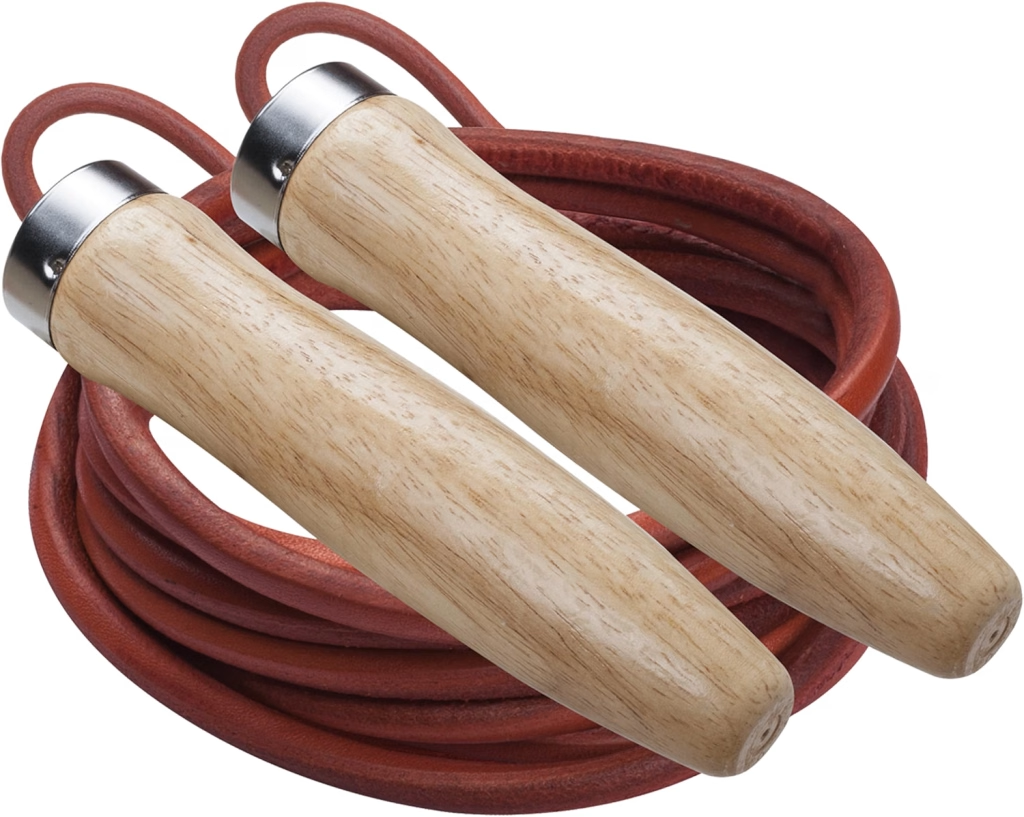
A jump rope in a natural or earth tone colorway on a natural wood hook adds high-intensity interval work with zero equipment footprint when stored and zero visual disruption when deployed. Used at the open garden door — or outside on the patio in warmer months — the jump rope becomes the most outdoor-connected piece of training equipment available to any home gym athlete.
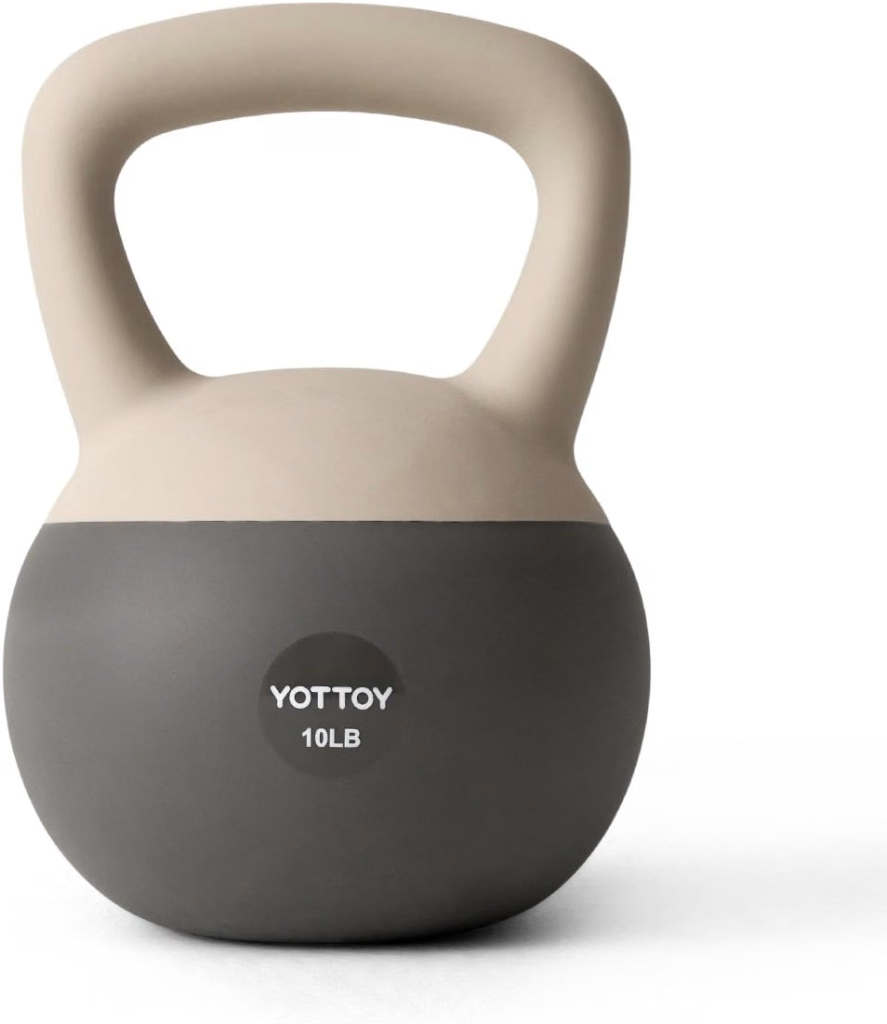
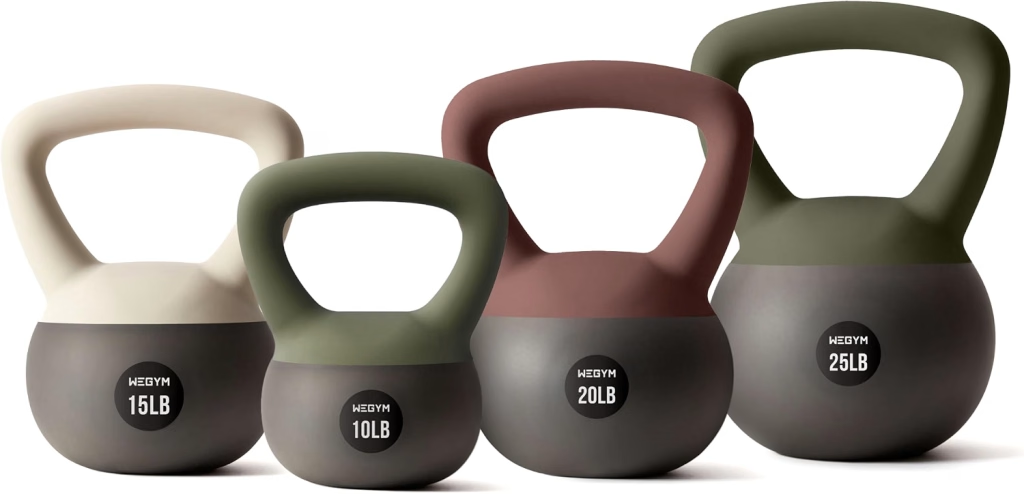
Kettlebells for conditioning circuits that demand both cardiovascular capacity and functional strength simultaneously. In the Naturalist living room these bells live on the natural wood shelf of the training zone wall — they are visible from the sofa, they contribute to the visual composition of the training zone wall, and they move to the mat zone for use in swings, carries, and complexes that challenge the cardiovascular and muscular systems in the same session.
Wenoker Foldable Wooden Row Machine

Champion Sports Wood Handle Jump Rope
pro tip
Plan conditioning sessions for the times when the outdoor environment is at its best. Early morning with birdsong present at the open door. Late afternoon with warm golden light from the west-facing window. The specific quality of training in a Naturalist living room at these hours is the Iron Paradise not as an ideal but as a daily reality.
[LINK: Naturalist Spare Bedroom Gym]
Training Setup 2: Resistance and Functional Strength
For the reader who wants a complete functional strength program using kettlebells, resistance bands, and bodyweight as primary tools in a shared living space that maintains its Naturalist aesthetic integrity during and between every training session.

The Naturalist living room functional strength setup has one quality that distinguishes it from the spare bedroom version in a way that matters as much aesthetically as practically. In the living room the back wall of the training zone is visible from the primary seating area during sessions — which means the arrangement of kettlebells on natural wood shelving, the earth tone resistance band gradient on natural wood hooks, and the trailing pothos above the equipment needs to read as a considered wall composition from across the room as much as a functional storage system for training equipment.
This dual function — wall composition and equipment storage simultaneously — is the Naturalist living room functional strength setup’s most distinctive design challenge and its most rewarding design achievement. A wall that looks like a considered arrangement of beautiful objects from the sofa and reveals itself as a complete functional strength training system when you approach it is the Naturalist philosophy made completely visible.
The equipment
For the kettlebells, a set with a matte finish on a natural wood shelf or low-profile rack. One or two bells at weights that serve the primary movement patterns — swings, presses, rows, Turkish get-ups, and loaded carries.
The earth tone resistance band gradient — olive, terracotta, sand, warm grey, and dark brown on natural wood dowel hooks in order from lightest to heaviest — creates a warm color composition on the training zone wall that reads as intentional design from across the room. This is the storage arrangement in this guide that most completely solves the problem of making gym equipment look like it belongs in a living room. Warm earth tones on natural wood hooks are not gym equipment from ten feet away. They are a considered arrangement of warm objects that happens to contain everything needed for a complete resistance training program.

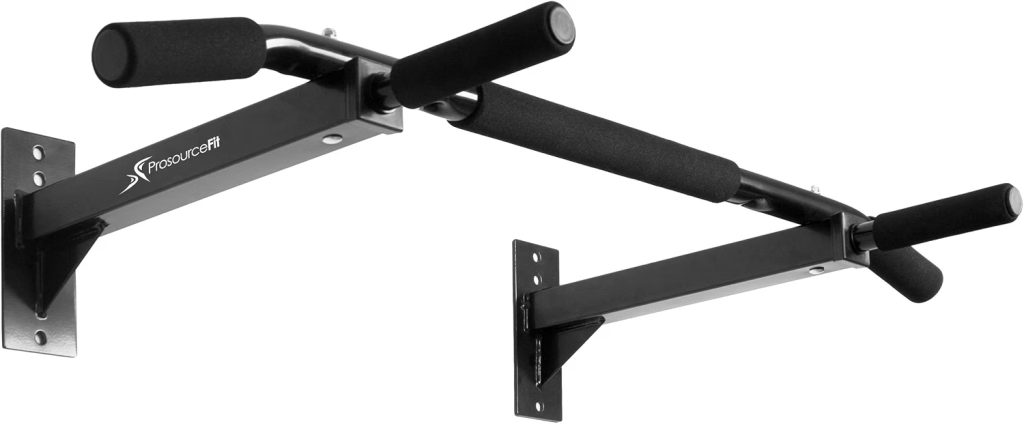
ProsourceFit Wall-Mounted Pull-Up / Chin-Up Bar
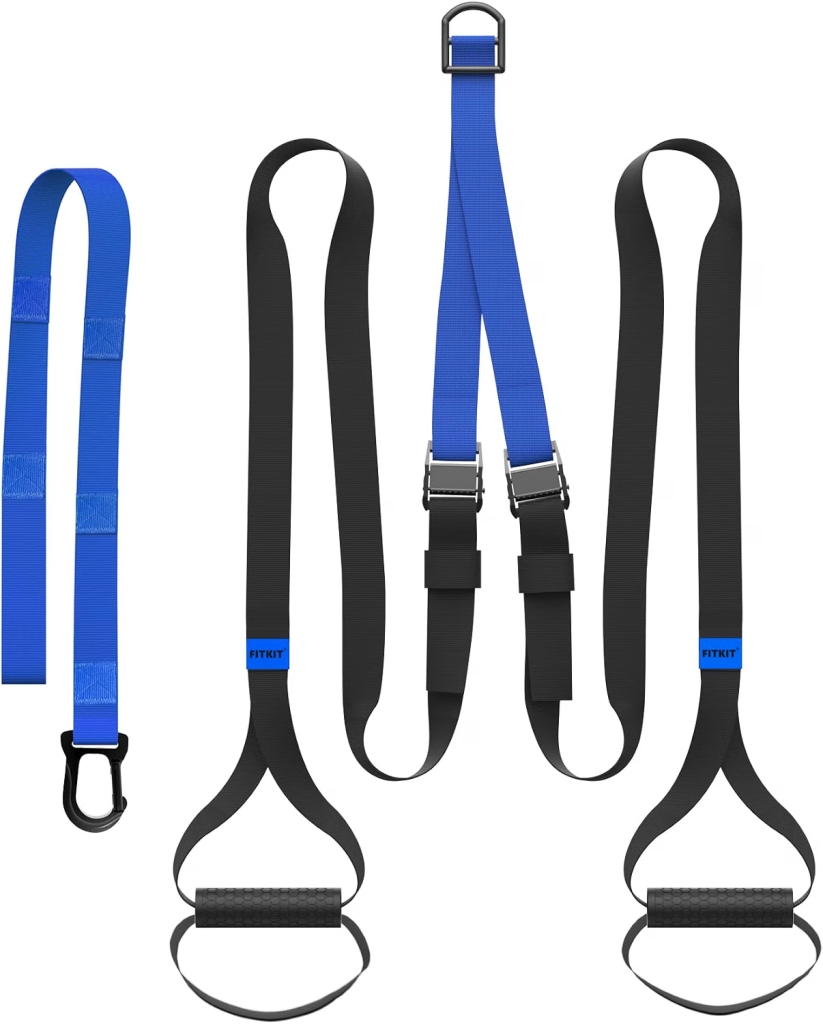
FITKIT Suspension Fitness Trainer System
Additional pieces
A suspension trainer on a wall-mounted pull-up bar in warm brushed steel adds pulling movements and core work that kettlebell and band training alone doesn’t fully cover. Stored on the anchor point between sessions it reads as a pair of straps hanging on a wall — present but minimal, requiring no dedicated storage solution.
The cork or natural rubber mat deployed in the training zone during sessions covers the warm wood floor for floor work and ground-based movements. Rolled and stored at the edge of the training zone wall when not in use — visible but neat, reading as a natural material object rather than gym equipment.
Training Setup 3: Yoga and Mindful Movement
For the reader whose primary training modality is yoga, mobility work, or mindfulness-based movement practice — choosing the living room specifically because its multiple windows, connection to outdoor space, and existing organic warmth create the most genuinely alive training environment available for this practice.

The Naturalist living room is the most complete yoga and mindful movement environment available in any home gym context in this guide. Not because it resembles a yoga studio — it is warmer and more domestic than any studio. But because the combination of elements it naturally possesses — multiple windows providing varied directional light, living plants in abundance, natural fiber and wood materials underfoot and on every surface, a door that opens to outdoor space — creates the specific sensory conditions that support a mindfulness-based practice with a depth that even a carefully designed private room rarely achieves.
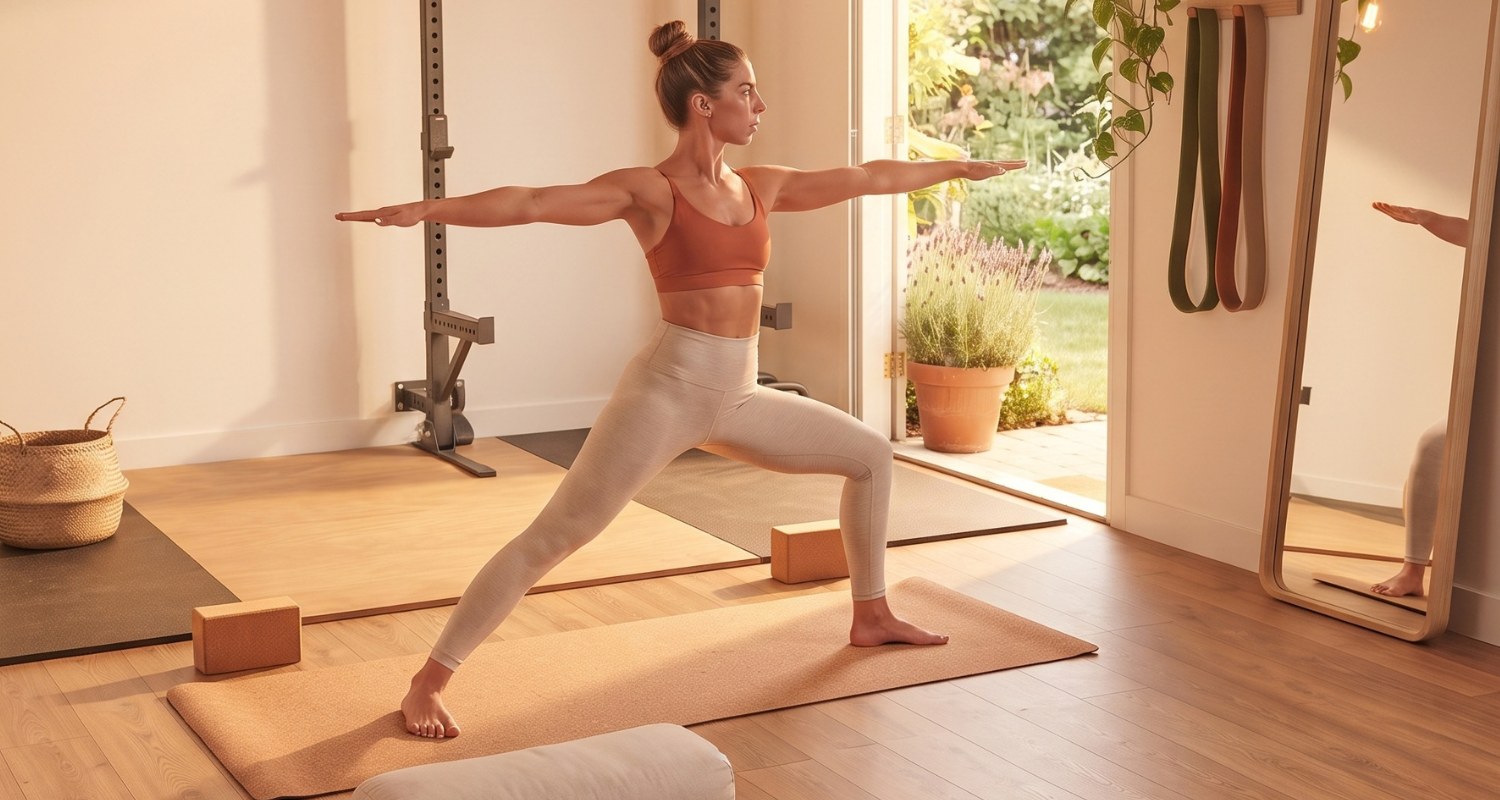
A yoga session in a living room with morning light entering from two windows, a large monstera catching that light in the corner, the faint sound of the garden coming through an open door, and a cork mat warm underfoot on a honey wood floor is not just a yoga session. It is the Naturalist training experience at its most complete.
The equipment
For the mat, cork or natural rubber in a warm neutral colorway — the same reasoning as the spare bedroom. Cork is the most Naturalist-appropriate mat material available and its visual contribution to a warm wood-floored living room in morning light is genuinely beautiful. A warm tan cork mat on honey wood floor with a monstera in the corner is an image that photographs itself — which is why this configuration appears in more home gym editorial images than any other yoga setup.
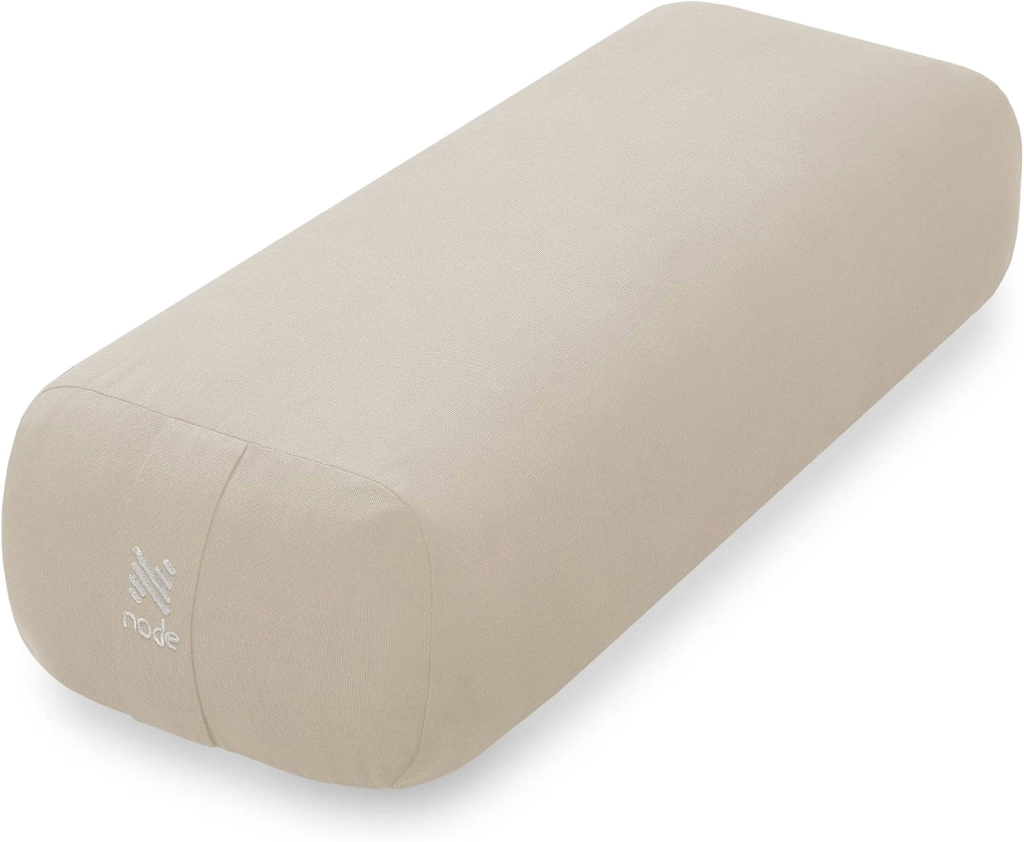
Two cork yoga blocks matching the mat material sit at the top of the mat during practice and store in the natural fiber basket at the mat zone edge between sessions. A natural linen bolster stores in the same basket — its fabric texture reading as a domestic textile rather than gym equipment from across the room. Earth tone resistance bands in the lightest resistances serve the mobility work and assisted stretching that bridges yoga and active recovery.
The multiple window advantage for yoga in the living room creates a scheduling opportunity the spare bedroom rarely offers. Morning practice catches east light — energizing, directional, alive. Late morning practice catches south light — fuller, warmer, more sustained. Afternoon restorative practice catches the softer quality of west light in decline. The living room yoga practitioner has a different environmental training partner at every hour of the day. Schedule sessions around the light as much as around the clock and the Naturalist living room gym gives back something that no piece of equipment can provide.


Node Fitness Yoga Meditation Cushion
Additional pieces
A ceramic diffuser with eucalyptus or peppermint oil running during sessions is more appropriate in the living room than in the bedroom — the living room is a daytime active space rather than a sleeping environment and the subtle performance-enhancing qualities of both scents — eucalyptus supporting breathing practice, peppermint reducing perceived exertion — are worth using in a space designed for waking movement rather than rest.
Training Setup 4: Pilates, Barre, and Low-Impact Training
For the reader whose training priorities are toning, flexibility, postural strength, and the functional physique that Pilates and barre training produces — choosing the living room specifically because its multiple windows, generous natural light, existing organic warmth, and potential outdoor connection create the studio atmosphere this training style benefits from most.

The Naturalist living room Pilates and barre setup is the most visually striking training configuration in this entire guide. A natural wood Pilates reformer deployed in a warm plant-filled living room with afternoon light from two windows and an open door to a garden is an image that belongs in an interior design publication as much as in a home gym article. The aesthetic alignment between this training modality, this aesthetic, and this room type is complete in a way that no other combination in the guide achieves quite as fully.
Pilates and barre training have a specific relationship with environment that most other training modalities don’t share as directly. The quality of the space — its light, its warmth, its visual calm, the sense that the room is alive and present alongside the practice — directly affects the quality of attention and body awareness the practice produces. A Pilates session in a warm, naturally lit, plant-filled living room with an open garden door produces a quality of internal focus and physical presence that the same session in a sealed, artificially lit room does not.
The equipment
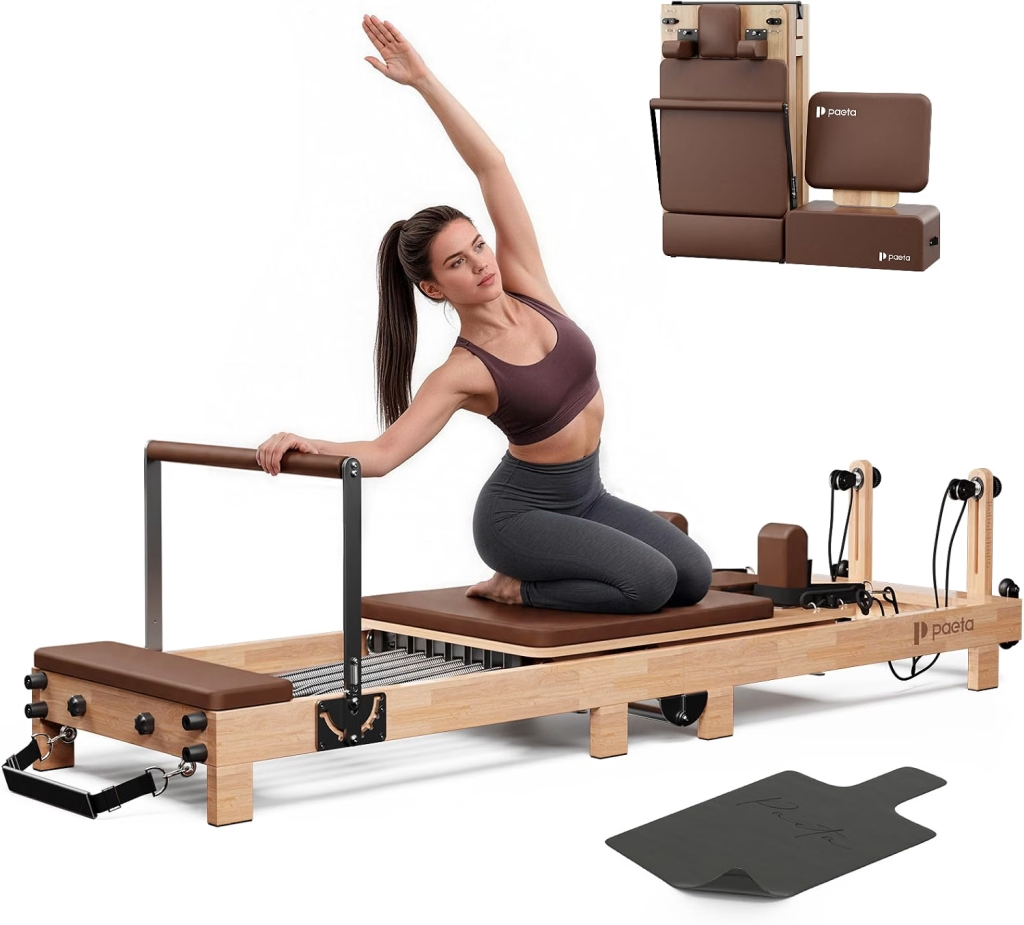
For the reformer, natural wood construction with warm neutral upholstery is the selection criterion that matters most in the Naturalist living room. A reformer with a natural wood frame — warm oak or ash grain visible in the construction — deploys in the center of the mat zone and reads as a piece of considered furniture in the living room during use. From the sofa, a natural wood reformer in a warm plant-filled living room with afternoon light is a beautiful object to look at. The same reformer in aluminum and black upholstery in the same room is a commercial gym piece in the wrong space. The material choice determines whether the Pilates session in the living room enhances the room or disrupts it.
A wall-mounted barre in natural ash wood at hip height on the training zone wall serves the standing barre work and doubles as the most architecturally appropriate gym element available in a Naturalist living room. From the seating area a natural wood barre on a warm white or sage green wall reads as a considered architectural detail. Its function as training equipment is secondary to its visual contribution to the wall it occupies — which is exactly the quality every element of the Naturalist training zone should aim for.
A cork or natural rubber mat for mat Pilates floor work. Light resistance bands in sand and warm grey on the natural wood dowel hooks for Pilates accessory and barre conditioning work. The natural fiber basket at the mat zone edge holds the linen bolster for the restorative and cool-down work that completes a Pilates session.
Pilates Reformer — PAETA 92″ Wooden Pilates Reformer Machine
VITA Barre Wall-Mounted Single Ballet Barre

The Room That Was Always This
The living room that now accommodates a complete training facility — cardio conditioning, functional strength, yoga practice, Pilates and barre — did not become something different when the training zone arrived. It became more itself.
The natural wood shelf with the trailing pothos and the cast iron kettlebells. The earth tone resistance bands on their natural wood hooks. The cork mat unrolled in the morning light from two windows. The garden door open during the conditioning session with the outdoor air moving through the space. These elements did not arrive from outside the room’s aesthetic. They grew from it — the natural continuation of a design philosophy that was already present in the warm wood floor, the natural fiber rug, the living plants that were here before the training began.
This is what the Iron Paradise looks like when it breathes. Not a sealed room built for performance and nothing else. A living room that performs — that is genuinely alive, genuinely connected to the natural world just outside its windows, and genuinely capable of developing every dimension of physical fitness in a person who shows up to it consistently.
The gym that breathes is not a room you escape to for training. It is the room you already live in. And the training that happens inside it is better for exactly that reason.
If you’re still exploring the five home gym aesthetics and deciding which one reflects how you want to live and train, the free SOMA Dream Gym Style Guide walks you through all of them — with mood boards, equipment guides, and the framework for finding the space that feels like yours.
Leave a Reply