
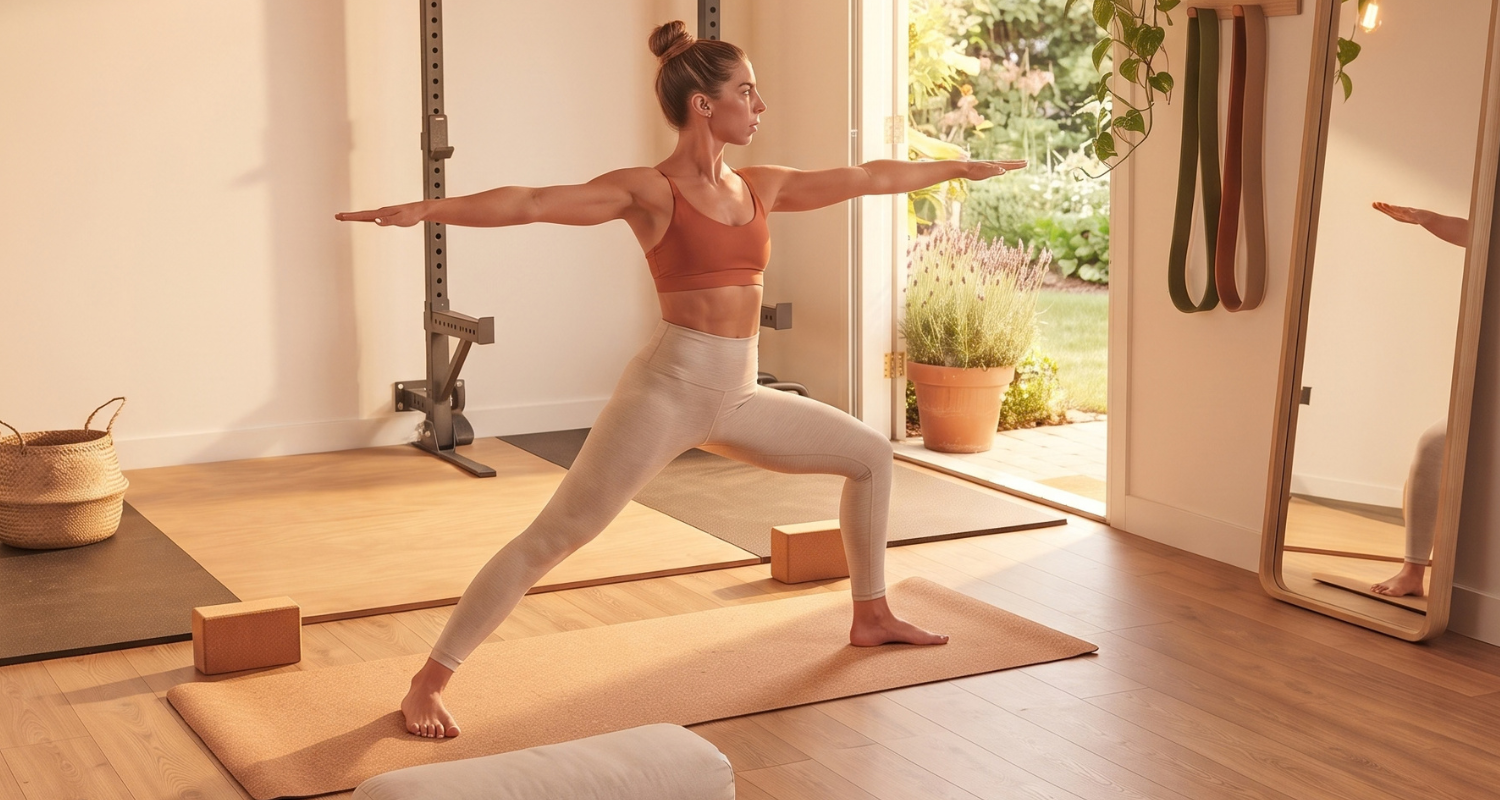
Every other garage gym aesthetic works with the garage as it is.
The Athlete Cave seals it, darkens it, and turns its industrial bones into a focused training fortress. The Industrial Loft exposes its raw materials and builds around them. The Clean Minimalist whitens it and edits it into submission. Each of these approaches accepts the garage as a fundamentally interior space and designs accordingly.
The Naturalist garage gym does something none of them attempt.
It opens the door.
Not for ventilation. Not for fresh air during conditioning sessions. Not as a practical concession to summer heat. The Naturalist garage gym opens its door because the outdoor environment beyond it — the garden, the morning light, the outdoor air, the sounds of the natural world at the edge of a training session — is the most important design element in the space. The inside and the outside become one thing for the duration of the training session. The boundary between the gym and the garden dissolves. The natural world that training was always in conversation with becomes physically present in the space where the training happens.
This is the only garage gym aesthetic in this guide where the open door is not a feature. It is the point.
Here is everything you need to build it.
What Makes the Naturalist Garage Gym Different
The Naturalist garage gym is not the Athlete Cave with plants added. It is not a softened version of the Industrial Loft with warmer materials. It is a fundamentally different approach to the garage training environment — one that begins with a completely different answer to the question of what a garage gym is for.
Three characteristics define it specifically.
The open door is the primary design element — not a secondary quality, not an operational consideration, but the central design decision around which every other element in the space is arranged. In the Athlete Cave the garage door stays cracked for ventilation. In the Naturalist garage gym the door opens fully — or as fully as the weather and the training session allow — because the outdoor environment is not a supplement to the training space. It is the training space’s most important feature. The garden visible beyond the threshold, the outdoor air moving through the space during every session, the sounds of the natural world present at the edge of every movement — these are not incidental qualities. They are the reason this aesthetic works in a garage when the garage seems like the least likely home for it.
The material language is warm rather than raw. The Athlete Cave uses dark rubber, matte black steel, and cast iron because honest industrial materials are the right expression of that training identity. The Naturalist garage uses warm wood, natural fiber, earth tone finishes, and living plants because warmth and organic quality are the right expression of this one. The same concrete floor and the same metal walls become completely different environments depending entirely on what materials are layered over them and what door is left open at the front.
The outdoor connection creates training opportunities no other garage gym aesthetic accesses. The Naturalist garage extends into the garden, the patio, the outdoor space adjacent to it — not for sled pushes and sprint intervals in the Athlete Cave sense but for the warm-up walk that begins inside and continues outside, the cool-down stretch in morning light that the interior space can only partially replicate, the yoga flow at the threshold where the inside and outside exist simultaneously.
Related Post: The Naturalist Living Room Gym: Training in a Space That Breathes
Related Post: The Naturalist Spare Bedroom Gym: Design, Setup, and Training Guides
The Space Setup: Design, Flooring, Lighting, Plants, Storage, and Mistakes to Avoid
The Naturalist garage setup section is the longest in this guide because the garage presents specific challenges for the Naturalist aesthetic that indoor rooms don’t. Concrete floors resist warmth. Metal walls resist organic material language. The climate exposure of a garage affects plants more dramatically than any indoor environment. Addressing each of these before the first piece of training equipment arrives is the work that makes this aesthetic possible in a space that was not designed for it.

Wall color
Warm white throughout — not the dark charcoal of the Athlete Cave, not the raw concrete of the Industrial Loft. Warm white painted walls in a garage create the clean, light-filled backdrop that the Naturalist aesthetic requires before any other element can do its work. The concrete block or drywall of a garage wall accepts flat paint cleanly — the same warm white principles that apply to the indoor Naturalist configurations apply here with one modification.
In a garage that receives direct sunlight through the open door, slightly warmer undertones prevent the walls from reading as stark or clinical when strong outdoor light enters and illuminates them directly. Benjamin Moore White Dove and Sherwin-Williams Alabaster are both specifically correct — warm enough to feel considered, neutral enough to let the plants and the natural light do the aesthetic work without the wall color competing with them.
The ceiling — warm white, the same tone as the walls. No dark ceiling in the Naturalist garage. The ceiling should feel like a continuation of the open sky quality the open door introduces rather than a lid pressing down. Exposed ceiling joists or beams in their existing wood tone — or painted in a warm natural wood color if they are metal — are an architectural detail worth preserving rather than hiding. A warm wood beam against a warm white ceiling is an organic material contrast that fits the Naturalist identity precisely.
Flooring
The garage flooring challenge for the Naturalist aesthetic is the most significant design problem in this article — and the one with the most direct impact on whether the aesthetic succeeds or fails in this room type. Concrete is the least natural-feeling floor material available. Cold, grey, hard, and completely resistant to the warm organic quality the Naturalist aesthetic requires. The floor must be addressed before any other design decision because no amount of warm wall color, natural plants, or earth tone equipment can overcome the sensory dominance of bare concrete underfoot.
Three solutions at different investment levels — choose the one that matches the budget and the commitment level of the build.
THE NATURALIST GARAGE FLOOR — WHERE TO START
The flooring decision shapes everything that follows. Three options in order of completeness.
Warm wood floating floor
engineered hardwood rated for garage temperature variation, installed directly over concrete without adhesive or permanent modification. The most complete Naturalist floor solution available. The warm wood grain on a garage floor transforms the entire sensory quality of the space and makes every subsequent design decision easier.

Natural fiber area rug over rubber mat
a large sisal or jute rug in warm tan covering the living and transition zone, with a warm-toned natural rubber mat in the training zone. The natural fiber reads as warm and organic from above while the rubber provides the grip and protection the training zone requires beneath it. Achievable at significantly lower cost than a full floating floor with strong aesthetic results.

Warm-toned natural rubber mat in the training zone
the minimum effective Naturalist floor treatment. Dark charcoal rubber mat on bare concrete without any surrounding warm material is an Athlete Cave floor. A warm sand or slate natural rubber mat with a visible concrete border — or a warm-toned interlocking rubber tile in the training zone only — moves the floor material away from the industrial and toward the organic.

Lighting
The open garage door is the primary light source in the Naturalist garage gym and the one that no artificial system replicates. Morning sessions with the door fully open receive the specific quality of outdoor morning light — warm, directional, alive in a way that changes with the season and the hour — that defines the sensory character of this training environment. Position the training zone to receive this light directly during the most common training hours. Face the primary training movements toward the open door rather than away from it.
For closed-door sessions or lower-light conditions, warm Edison pendant lights on natural rope or jute cord hanging from exposed ceiling joists are the specific fixture type that shifts the garage lighting from Industrial Loft to Naturalist. The cord material — natural rope or jute rather than metal chain — is the detail that makes the difference. Warm amber filament bulbs at 2700K. Two pendants positioned over the primary training zone.

No fluorescent tubes. No cool white LEDs. No lighting that reads as garage infrastructure rather than considered design. The Naturalist garage lit by warm Edison pendants and morning light from the open door is a genuinely beautiful training environment. The same garage lit by overhead fluorescents is not.
Plants — the garage challenge and its solution
The Naturalist garage presents the most demanding plant environment in the guide. Garages experience temperature extremes — significantly hotter than indoor spaces in summer, significantly colder in winter — and the variable humidity of a space that opens to the outside during training sessions. Most indoor tropical plants cannot tolerate these conditions across a full year.
The Naturalist garage plant strategy is therefore different from the indoor Naturalist configurations in one fundamental way — it uses outdoor plants borrowed temporarily rather than permanent indoor plants maintained year-round.
For permanent indoor plants that survive garage temperature variation: cast iron plant — named precisely for its resilience — pothos in any variety, snake plant, and ZZ plant. These species handle temperature swings, occasional cold drafts from the open door, and the variable humidity of a garage environment without the decline that tropical statement plants experience in the same conditions.
For seasonal plant presence that produces the most dramatic Naturalist visual impact: large potted outdoor plants — ornamental grasses, lavender, rosemary, hardy ferns, potted olive trees — can spend training sessions inside the garage near the open door during warmer months and return to the garden when the session ends. These plants are not permanent gym elements. They are borrowed from the garden for the duration of the session.
The threshold plant — a large potted outdoor plant positioned at the open garage door, half inside the training space and half in the outdoor light — is the most visually distinctive element in the Naturalist garage gym. It physically dissolves the boundary between interior and exterior, brings genuine outdoor plant presence into the training zone without requiring it to survive garage conditions permanently, and creates the most photographable Naturalist garage image available. One large terracotta pot with a healthy outdoor plant at the threshold accomplishes what no permanent indoor plant in a garage environment can.
Storage
Natural wood floating shelves on the warm white walls — light finish, rough-sawn edge, warm oak or ash tone on heavy natural steel brackets rather than the matte black steel of the Athlete Cave. Natural fiber baskets — seagrass or jute — for accessory storage. Natural wood dowel hooks for earth tone resistance bands.
One addition specific to the Naturalist garage — a dedicated storage position for outdoor training gear. The jump rope used outside. The gardening gloves repurposed for loaded carries. The trail running shoes worn for the warm-up that begins inside and continues into the garden. The Naturalist garage storage system acknowledges that this gym extends beyond its four walls and equips the athlete for training on both sides of the open door.
The Three Mistakes Specific to the Naturalist Garage Gym
The first mistake is leaving the concrete floor bare and expecting plants and warm walls to carry the aesthetic. They cannot. The concrete floor is the most powerful sensory element in the garage — colder, harder, and more industrial than any wall color or plant selection can overcome on its own. Address the floor before any other design decision. Warm wood floating floor, natural fiber rug over rubber mat, or warm-toned natural rubber mat in the training zone as a minimum. The floor must speak the same material language as the rest of the space before the rest of the space can do its work.
The second mistake is choosing permanent indoor plants that cannot survive the garage’s temperature extremes. A fiddle leaf fig near an open garage door in October in a northern climate is a plant that will be declining by November and dead by January. The outdoor temperature entering through the open door during training sessions exposes plants near the threshold to conditions that most tropical species cannot tolerate. Use the outdoor plant borrowing strategy for dramatic plant presence near the threshold. Reserve the permanent indoor plants for the hardy species that genuinely survive garage conditions year-round.
The third mistake is keeping the garage door closed during training sessions because the outdoor conditions feel imperfect. A Naturalist garage with the door closed is a pleasant warm white training environment. A Naturalist garage with the door fully open to a garden in morning light is a genuinely distinctive training experience that no other home gym configuration in this guide can replicate. The door is the difference. Open it — even partially, even in cooler weather with a warm layer on — and let the space become what it was built to be.
Training Setup 1: Cardio and Conditioning
For the reader whose primary training goal is cardiovascular fitness, endurance, or conditioning work — drawn to the Naturalist garage specifically because the open door, the outdoor air, and the garden-adjacent training environment create the most genuinely outdoor-connected cardio experience available in a home gym context.

The Naturalist garage cardio setup has one quality that no other training configuration in this guide at any archetype or room type combination can match — the training extends outdoors without the athlete having to leave the gym. The open garage door is not a boundary. It is a threshold. The conditioning session moves through it in both directions and the gym moves with it.
The equipment
For the primary cardio anchor, a wood-frame rowing machine is the most aesthetically appropriate and most functionally complete choice for the Naturalist garage. The natural wood frame — warm ash or oak grain, genuine wood construction — is the single piece of cardio equipment that belongs in this space the way a cast iron kettlebell belongs in the Athlete Cave. Position the rower to face the open door so the athlete rows toward the garden and the outdoor light during every session. The specific experience of rowing toward morning light with outdoor air moving through the garage is the Naturalist cardio training experience at its most distinctive.

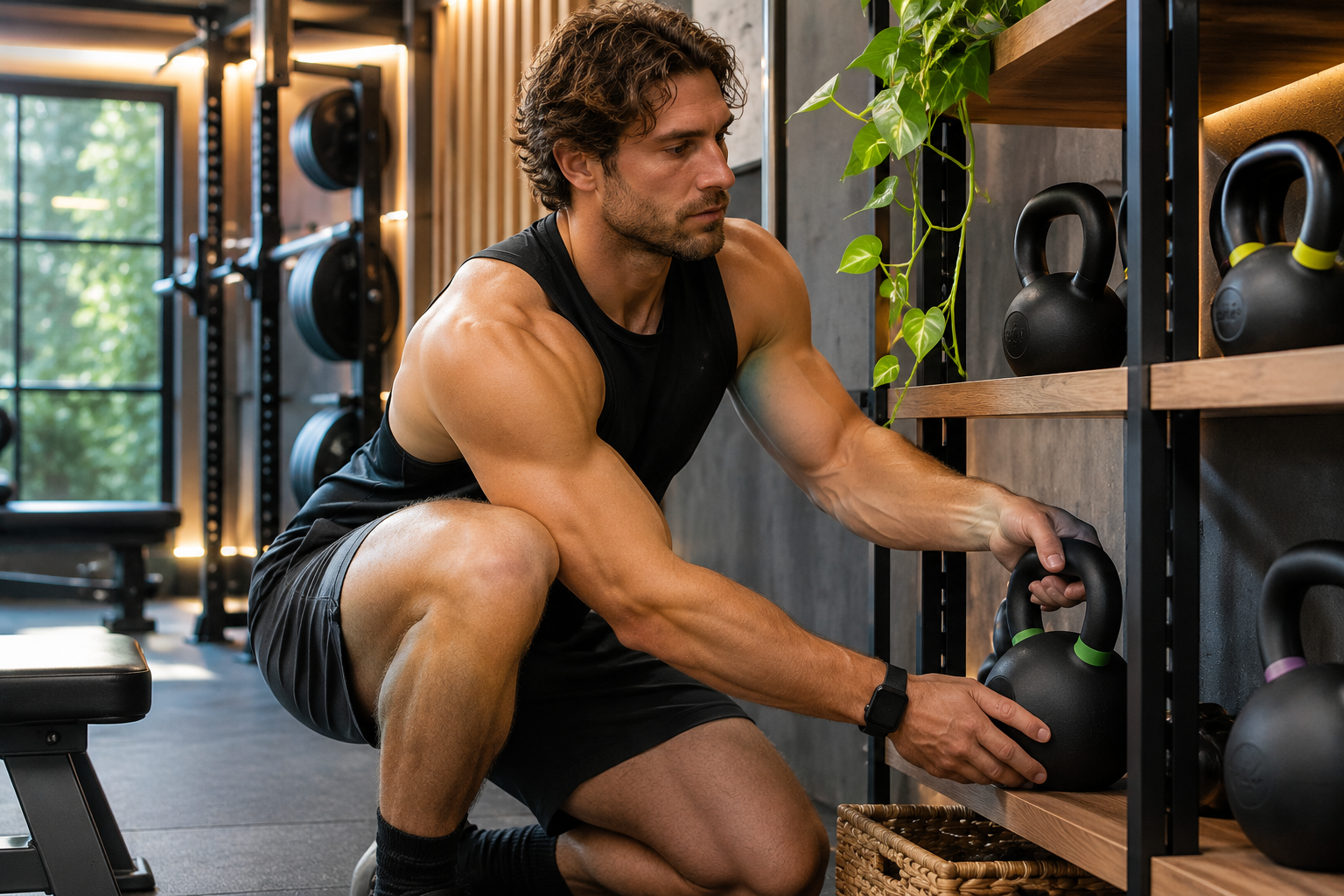
Cast iron kettlebells handle the conditioning complexes and loaded carries that develop cardiovascular capacity and functional strength simultaneously in the same session. One or two bells at the appropriate working weights for swings, carries, and complexes stored on the natural wood shelf — their raw iron surface visible and accessible from the training zone.

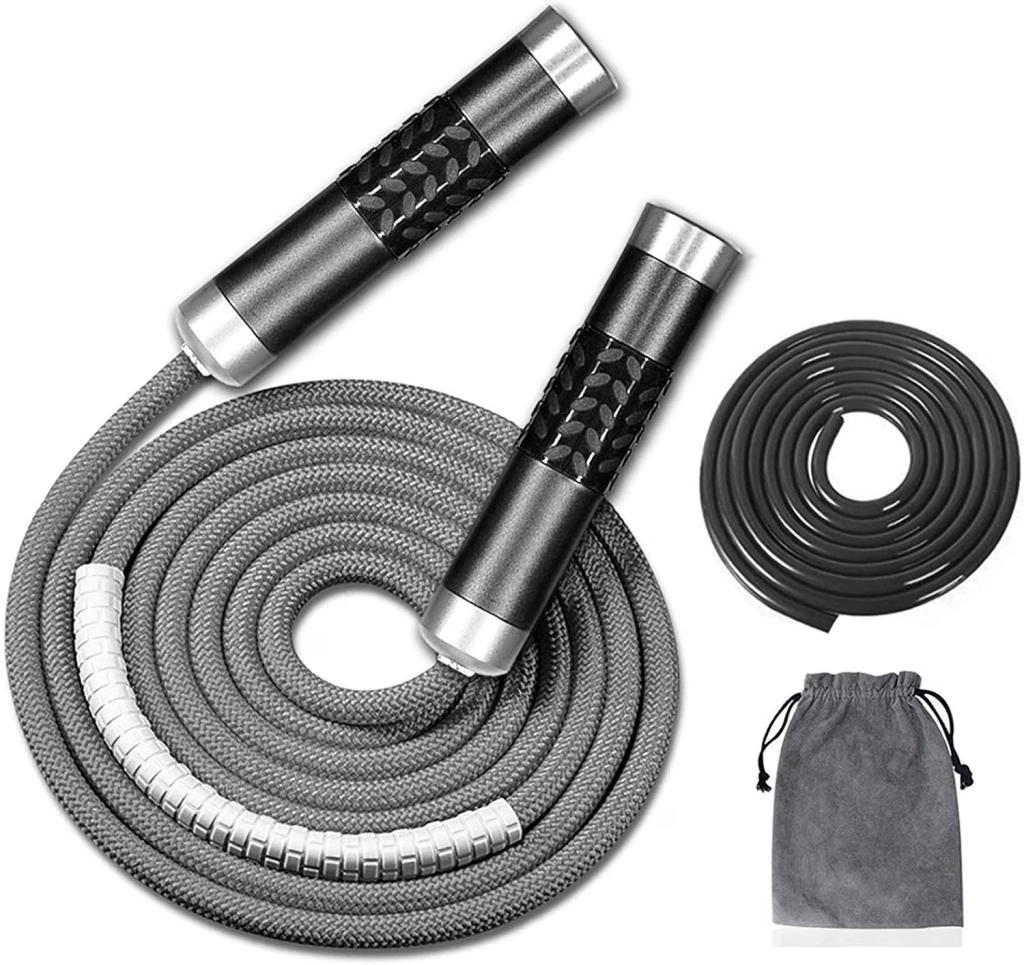
A jump rope in natural or earth tone colorway on a natural wood hook serves outdoor interval work at the garage threshold or on the driveway apron — or in the garden itself when the weather allows. The jump rope is the Naturalist garage’s most outdoor-connected training tool and the one that most naturally extends the session beyond the four walls of the space.
Earth tone resistance bands for circuit work that combines cardiovascular demand and resistance training within the training zone.
The outdoor extension — the quality that makes this setup genuinely distinctive — should be built into the program structure rather than treated as a weather-dependent bonus. Warm-up walk from the mat zone through the open door into the garden and back. Conditioning circuits that use the driveway apron for carries and the garage floor for the barbell and rower pieces. Cool-down stretch outside in natural light with the garden present. The Naturalist garage conditioning session begins inside and ends outside and the boundary between those two things is exactly as permeable as the open door makes it.
Related Post: The Athlete Cave Basement Gym: Design, Setup, and Training Guides
Training Setup 2: Strength and Natural Movement
For the reader whose primary training goal is functional strength development using compound movements and natural movement patterns — drawn to the Naturalist aesthetic because the warm, outdoor-connected environment supports a more body-aware and connected approach to lifting than a dark sealed gym does.

The Naturalist garage strength setup is the configuration where the rack orientation principle matters most. In the Athlete Cave the rack faces the back wall — the athlete squats away from the door, focused inward. In the Naturalist garage the rack faces the door — the athlete squats toward the garden and the morning light, the outdoor environment in the sightline during the most demanding movements of the session. This is not a trivial sensory distinction. The difference between squatting toward a dark wall and squatting toward a garden in morning light is the difference between the Athlete Cave training experience and the Naturalist one — and it is available to any garage gym that makes the deliberate choice to orient the equipment toward the open door.
The equipment
For the rack, a folding wall-mounted squat rack in raw steel or a warm powder coat finish is more appropriate for the Naturalist garage than a full matte black power cage. The wall-mounted format preserves the floor space that this aesthetic needs for its natural movement work — the kettlebell swings, the carries, the yoga and mobility practice that share the training zone with the barbell work. Raw steel that will develop a natural patina over months of use is more Naturalist than powder-coated black — the material developing character over time rather than maintaining an artificially consistent finish.

A barbell in raw steel finish — the same material philosophy. The natural metal developing a subtle surface character with use, chalk marks accumulating in the knurling, the honest evidence of consistent training becoming visible on the bar over months.

Cast iron kettlebells in one to three weights handle the swings, Turkish get-ups, goblet squats, and loaded carries that form the functional movement foundation of this training approach. In the Naturalist garage these bells live on the natural wood shelf — their raw iron surface one of the most visually honest materials in the space alongside the warm wood that holds them.

Adjustable dumbbells in a warm earth tone matte finish serve the unilateral and accessory work alongside the barbell and kettlebell program.

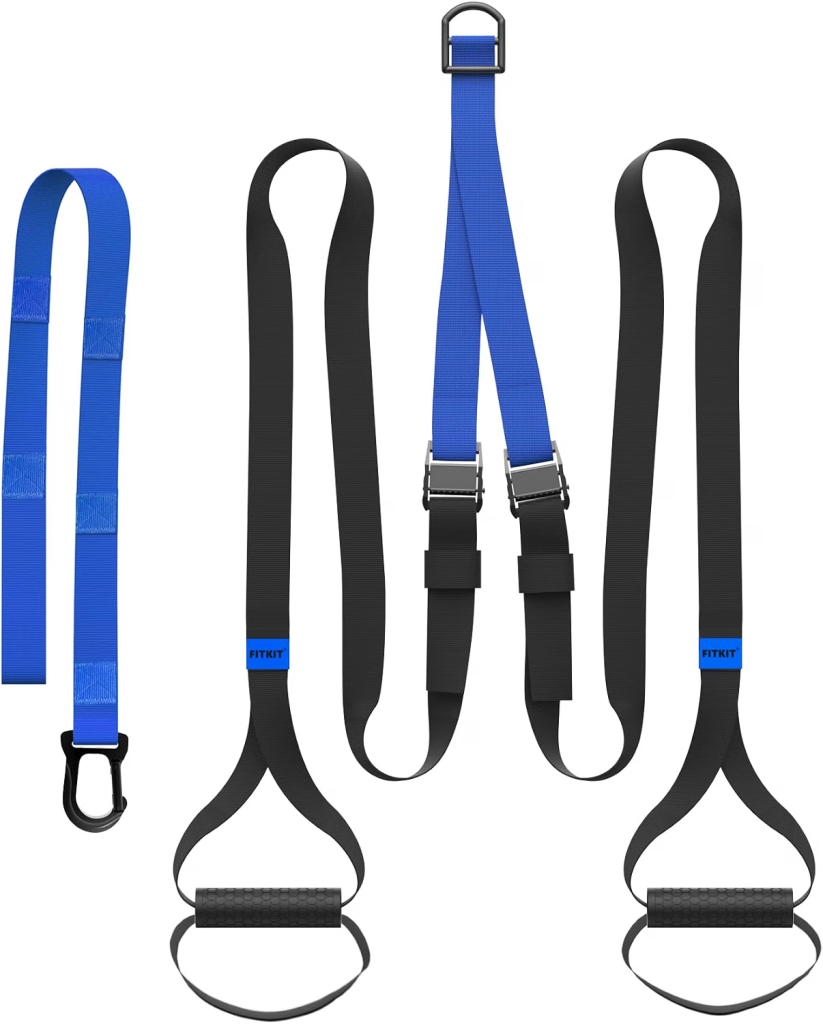
A suspension trainer on the rack anchor point or a dedicated ceiling mount adds pulling movements, core work, and the bodyweight training that requires only an anchor point and body weight — the simplest and most natural training tools available.
A wall-mounted pull-up bar in warm brushed steel rather than matte black completes the pulling station. The brushed steel finish — warmer and less industrial than matte black — maintains the Naturalist material language while providing the permanent, structural anchor point that serious pulling work requires.
Related Post: Best Power Rack for Home Gyms in 2026: Trainer-Tested Picks
Training Setup 3: Yoga, Mobility, and Mindful Movement
For the reader whose primary training modality is yoga or mindfulness-based movement practice — choosing the Naturalist garage specifically because the open door, the outdoor air, and the garden beyond the threshold create a practice environment that no indoor room fully replicates.

The Naturalist garage yoga setup is the closest thing to outdoor yoga available in a home gym context without being fully outdoor yoga. With the door open, the cork mat positioned to face the garden, seasonal plants at the threshold, and morning light entering from outside — the practice happens at the precise intersection of inside and outside where the Naturalist training philosophy is most completely expressed.
The equipment
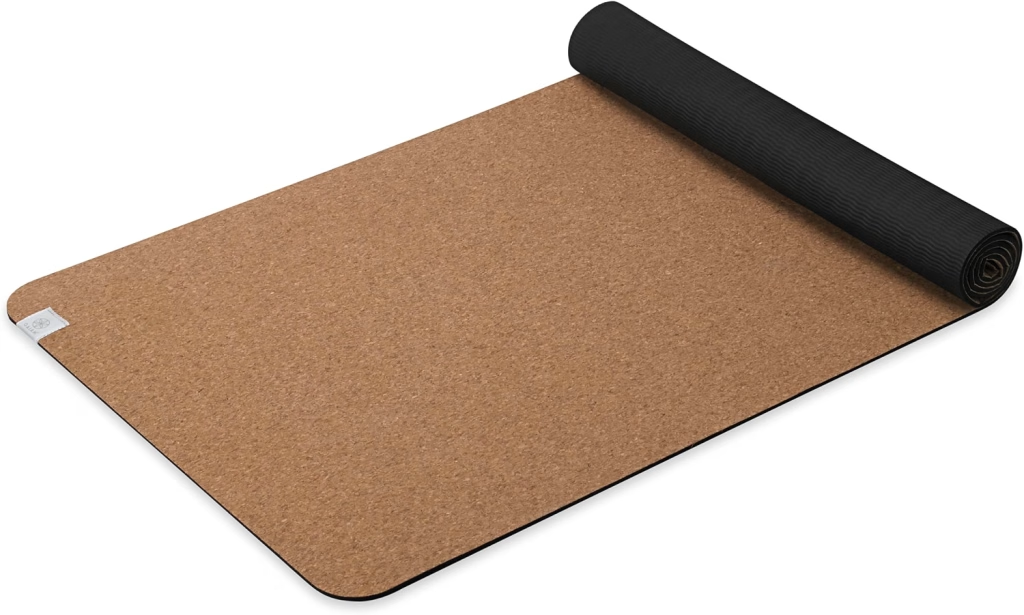
A premium cork yoga mat in warm natural tan is the primary training surface and the most visually important material choice in this setup. Cork is the most Naturalist-appropriate mat material available — organic in origin, warm in color, naturally antimicrobial, and textured in a way that catches the morning light from the open door in the characteristic way that cork surfaces do. Position the mat to face the open door directly — the outdoor light should fall across the cork surface from ahead rather than from the side.

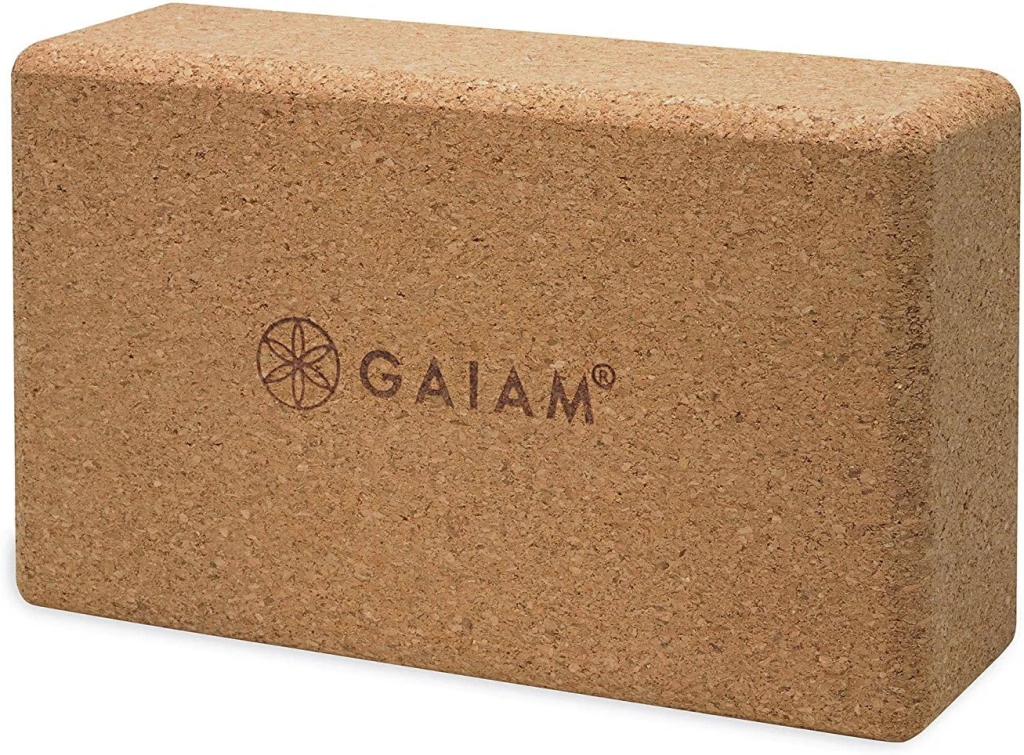
Two cork yoga blocks in matching warm tan complete the practice foundation.
A natural linen or cotton bolster in a warm neutral colorway stored in the natural fiber basket at the mat zone edge enables the restorative and yin practice that makes the yoga and recovery session genuinely complete rather than a stretching session with a mat.
Earth tone resistance bands in the lightest resistances for mobility and assisted stretching work — the banded hip openers, shoulder mobility sequences, and hamstring work that bridge yoga and active recovery.
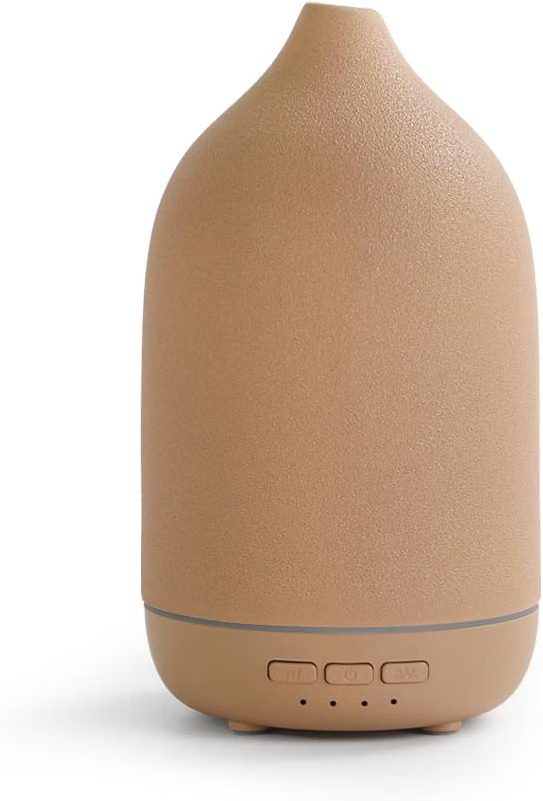
A ceramic diffuser near the training zone for eucalyptus or peppermint during closed-door sessions — the scent consideration that the Naturalist configuration uniquely supports and that adds a genuine performance dimension alongside its atmospheric contribution.
The seasonal outdoor extension for yoga — in warmer months the practice begins inside on the cork mat and extends outside to the garden or patio for final restorative poses. The threshold plant borrowed from the garden for the session sits at the open door catching the same morning light the practice is oriented toward. The inside and the outside are the same practice space for the duration of the session. This is the Naturalist garage yoga experience at its most complete — and the experience that no indoor room, however beautifully designed, can provide.
Training Setup 4: Pilates, Barre, and Low-Impact Training
For the reader whose training priorities are toning, flexibility, and postural strength through Pilates and barre work — choosing the garage specifically because its generous floor space allows the reformer to be fully deployed with complete movement clearance in a way that most spare bedrooms and living rooms cannot match.

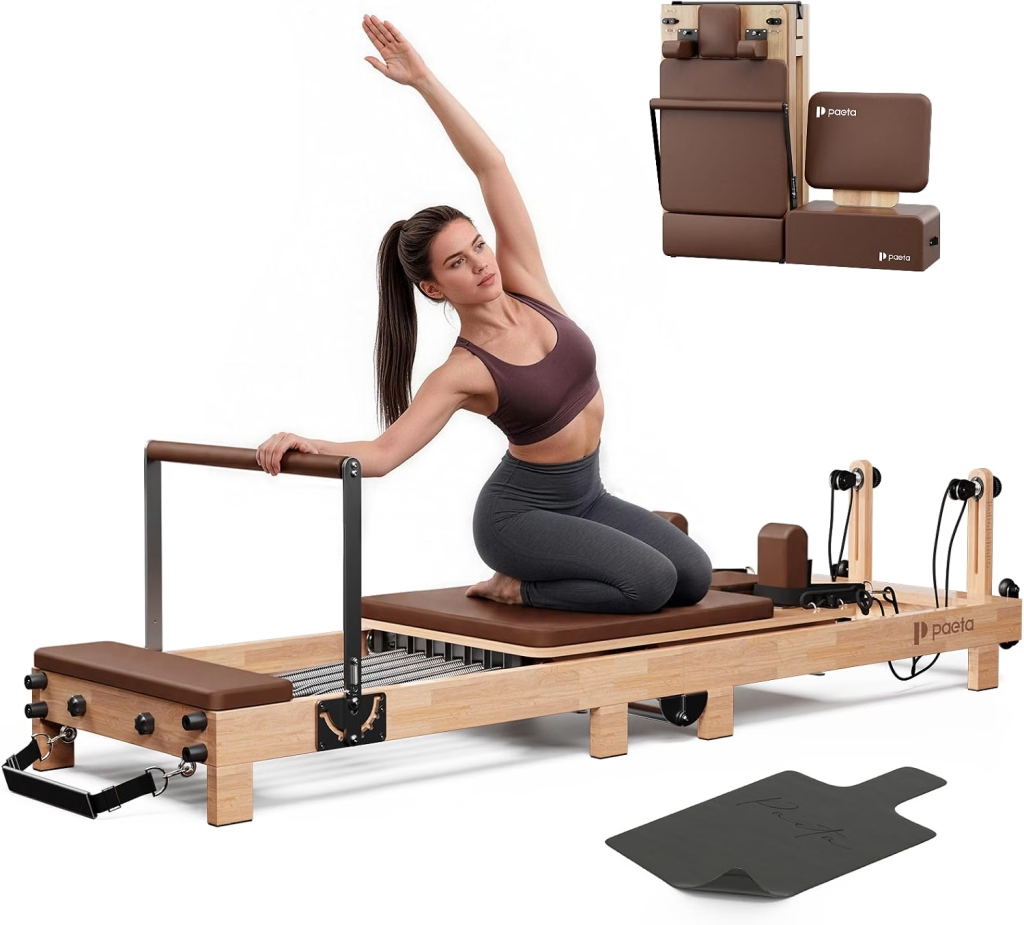
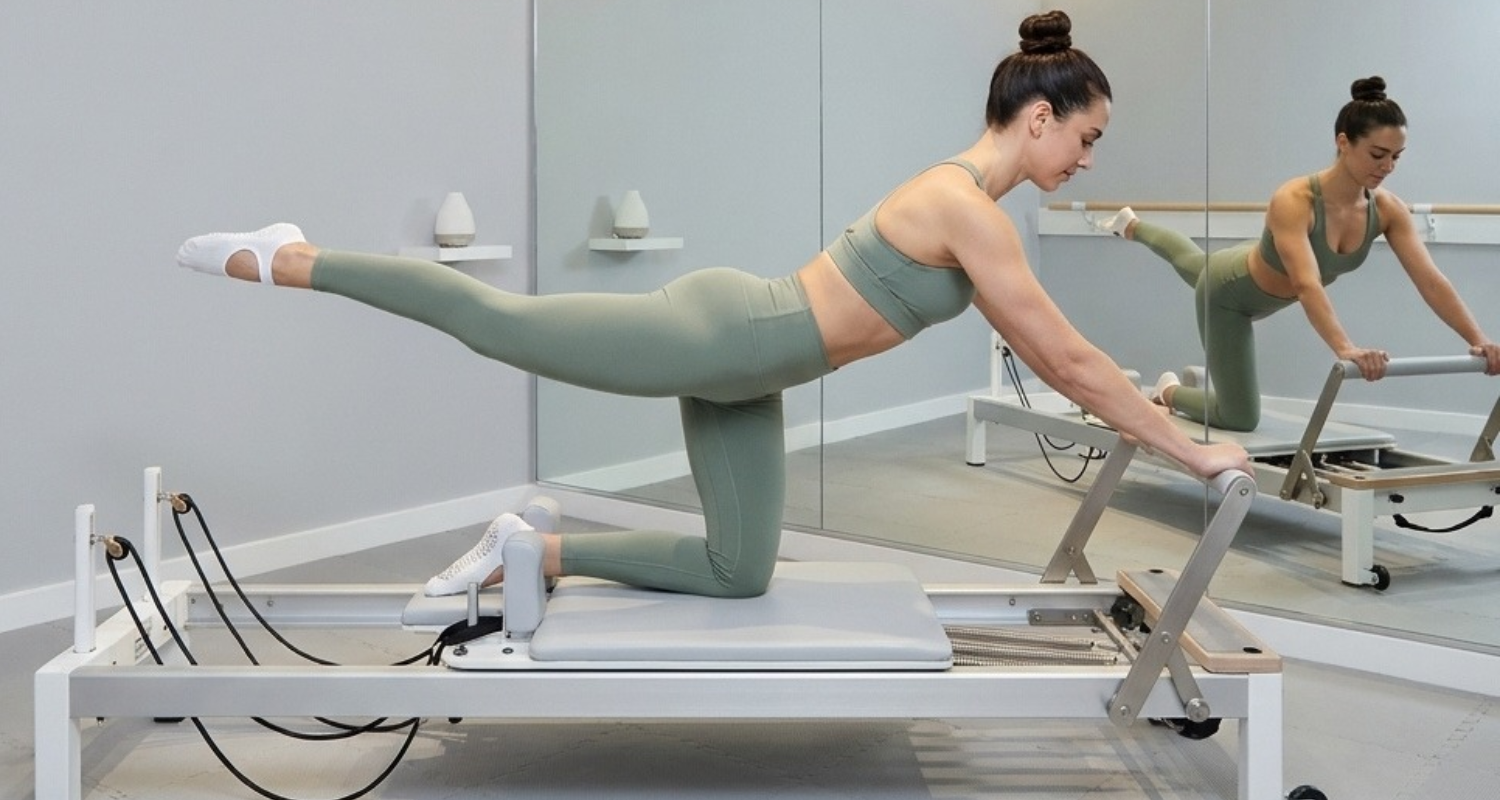
The Naturalist garage Pilates setup’s defining advantage over every indoor Naturalist configuration is floor space. A single car garage bay provides approximately 200 square feet of training zone — more than enough for a fully deployed Pilates reformer with complete clearance on all sides, a dedicated barre wall, mat Pilates floor space, and a comfortable transition zone between the indoor training area and the open door beyond. The indoor Naturalist configurations require careful furniture choreography to accommodate a reformer. The garage provides the space to use it without compromise and without asking any other piece of equipment to temporarily vacate the space during the session.
The equipment
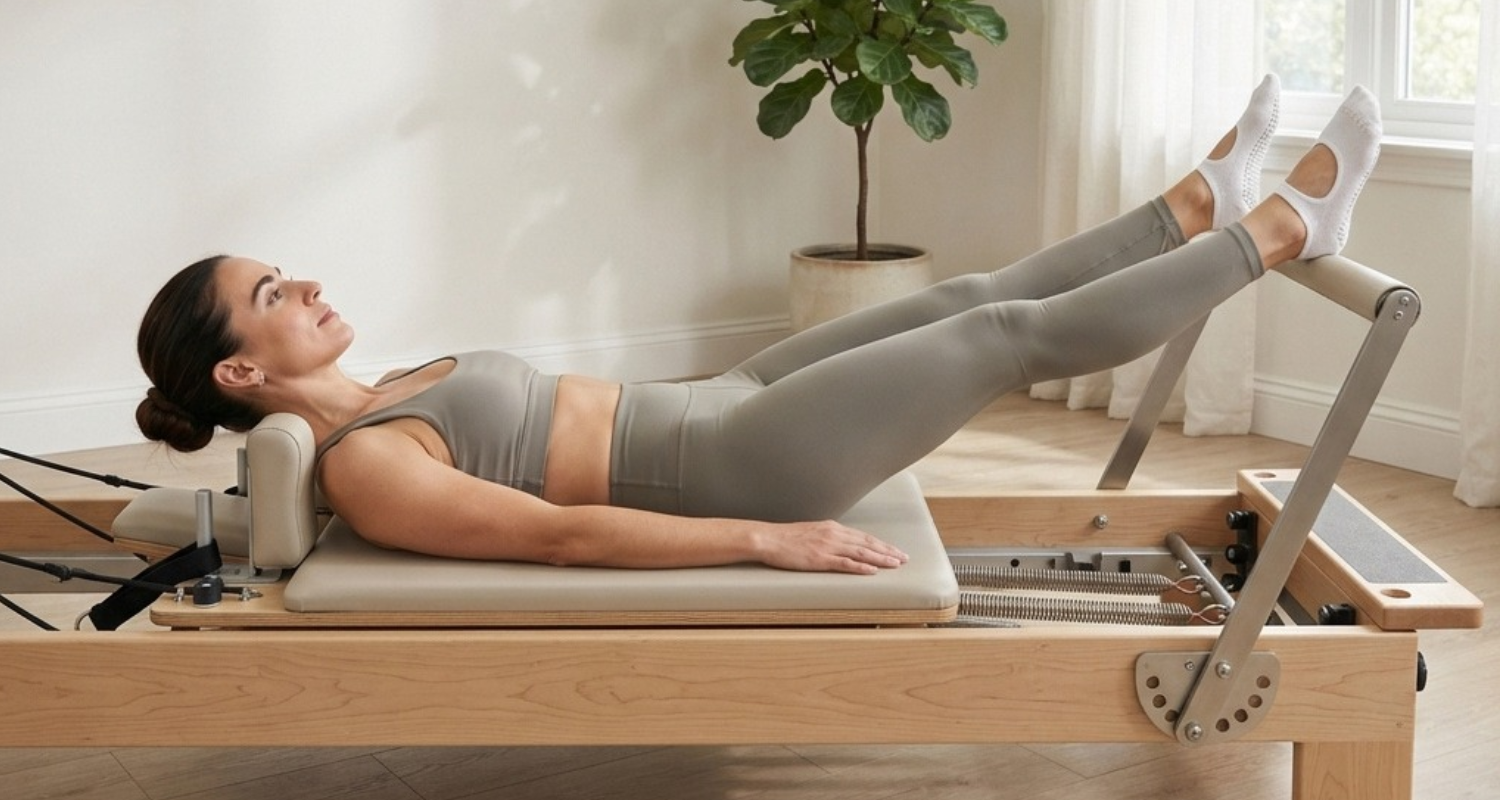
For the reformer, natural wood construction with warm neutral upholstery is the selection criterion that matters most in the Naturalist garage specifically. A reformer with a natural wood frame — warm oak or ash grain visible in the construction — positioned to face the open door brings the reformer’s organic material quality into direct conversation with the garden and the outdoor light beyond the threshold. The reformer facing the garden during a footwork series or a long spine series is an image that belongs in an interior design editorial as much as in a home gym guide.
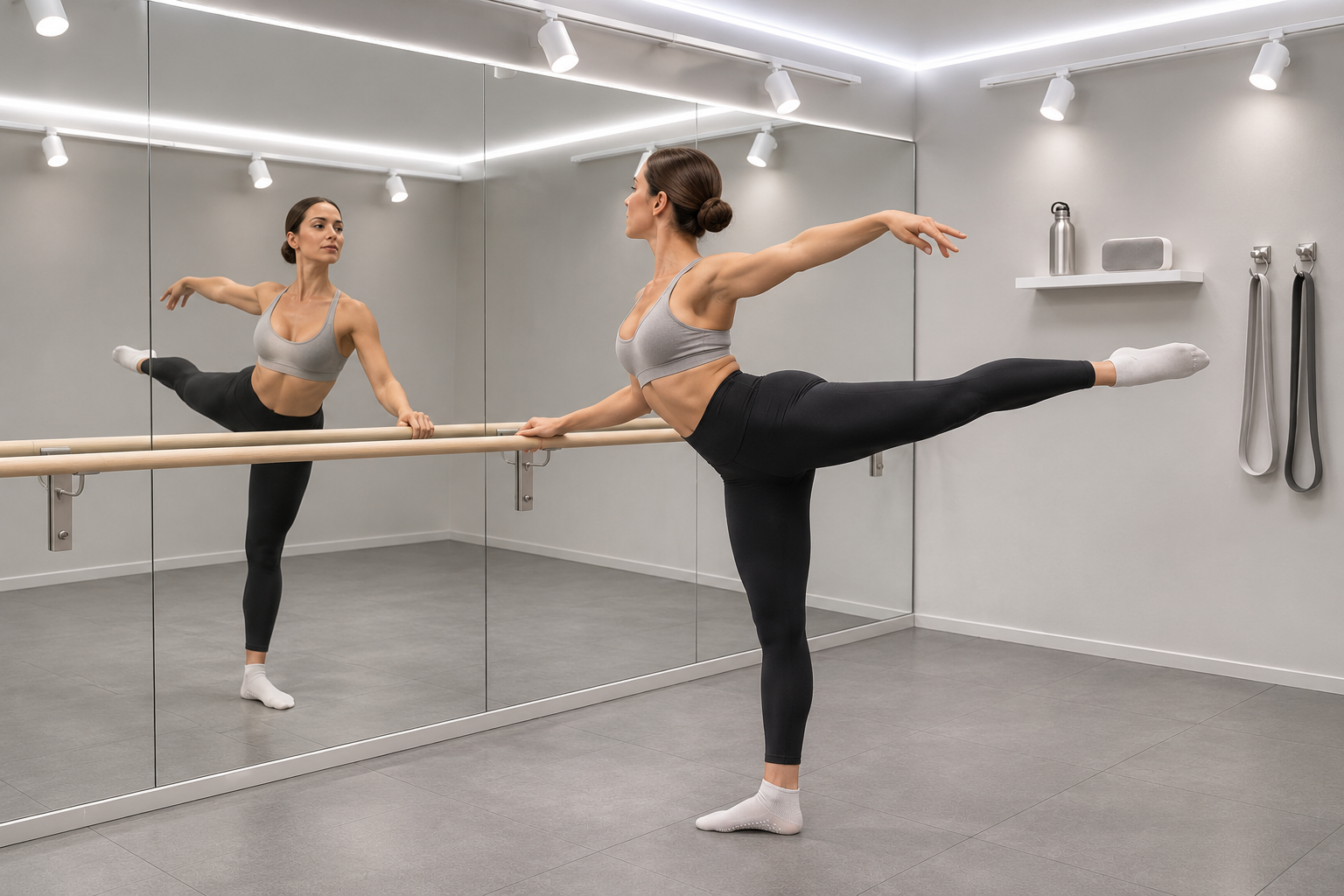
A wall-mounted barre in natural ash wood at hip height on the warm white wall provides the standing barre work surface and reads as an architectural detail from across the garage space — a warm wood element on a white wall that fits the Naturalist material language precisely.

A premium cork yoga mat for mat Pilates floor work — the same material recommendation as the yoga setup, the cork surface providing the grip and organic quality that mat Pilates and barre floor work benefits from most.
Light resistance bands in the softest earth tones — sand and warm grey — for Pilates accessory and barre conditioning work. The lightest and most delicate band arrangement of the four setups, appropriate for the controlled low-resistance work that Pilates and barre programming incorporates throughout.

The floor space advantage extends beyond the reformer to the full Pilates and barre session structure. The warm-up can happen at the barre. The reformer work occupies the primary training zone. The mat Pilates floor work uses the space beside the reformer without requiring it to be moved or stored. The cool-down stretch happens at the open door in natural light. The full Pilates and barre training session, from warm-up to cool-down, can flow continuously without the spatial constraints that the indoor configurations manage around. In the Naturalist garage it simply happens.
The Gym That Opened Its Door
Every other garage gym in this guide is defined by what it keeps out.
The Athlete Cave keeps out distraction and audience. The Industrial Loft keeps out anything that softens or decorates what is fundamentally a raw working space. The Clean Minimalist keeps out everything that doesn’t earn its presence by being exactly what the space needs.
The Naturalist garage gym is defined by what it lets in.
Morning light from a garden in October. The sound of outdoor air moving through a space that was always enclosed before. A large terracotta pot at the threshold with a plant that belongs outside and has been borrowed for the session. The warm wood of a rowing machine frame catching the outdoor light as the athlete rows toward the open door. The cork mat warm underfoot where the inside and the outside meet.
This is the Iron Paradise not as a sealed, focused interior environment but as a space that refuses to be sealed — that treats the door as the most important design element available and the outdoor world beyond it as the most powerful training partner it has.
Open the door. Let the outside in. Train in the intersection.
If you’re still exploring which home gym aesthetic is yours the free SOMA Dream Gym Style Guide walks you through all five — with mood boards equipment guides and the framework for finding the space that reflects who you’re becoming.
Leave a Reply