
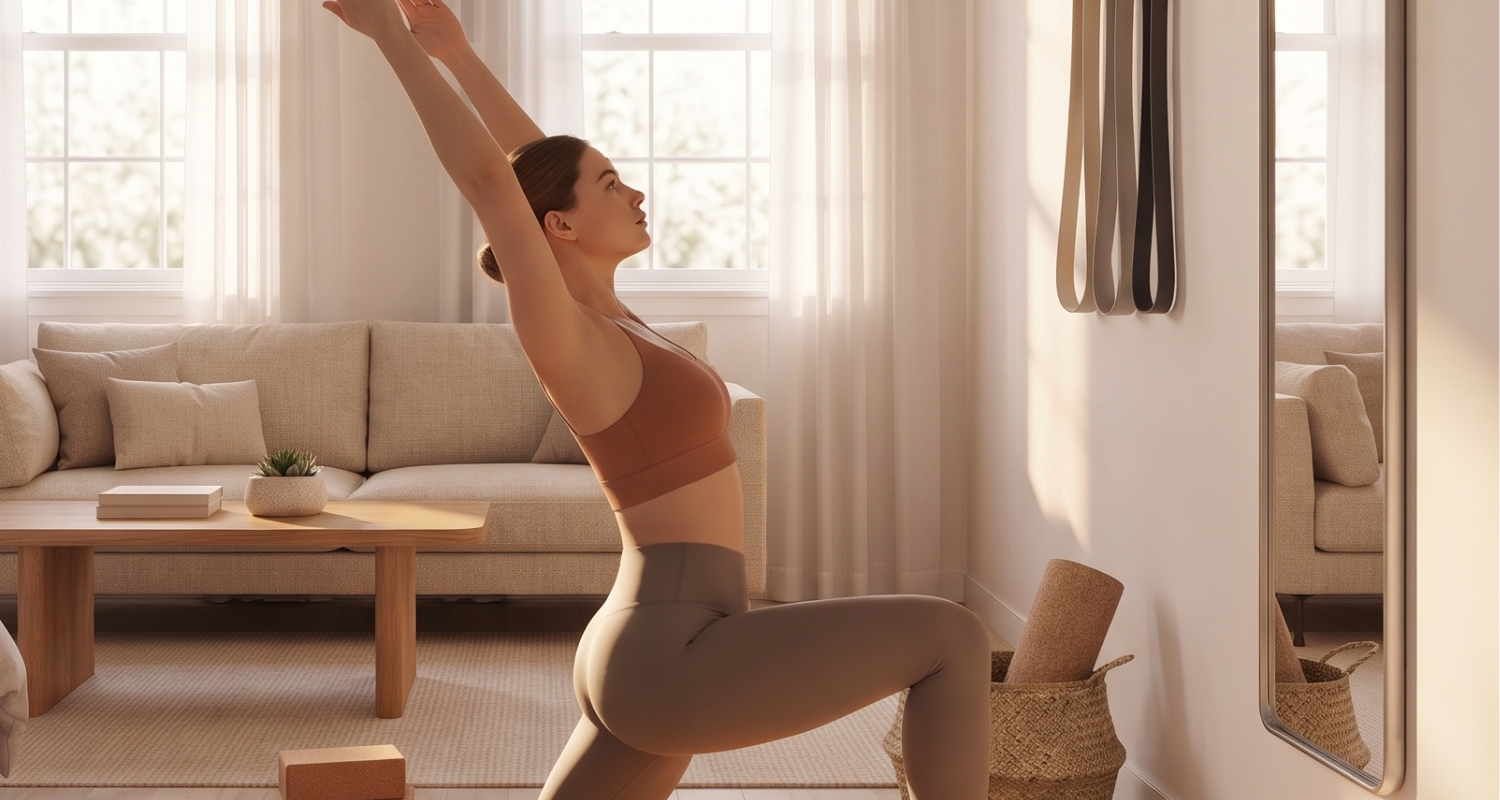
Most people rule out the living room immediately.
It’s the room guests see first. The room the household shares. The room that already has a function — and a carefully considered one, in most homes that lean toward the Clean Minimalist aesthetic. The idea of introducing gym equipment into that space feels like a compromise waiting to happen. A concession to practicality that slowly erodes everything the room was designed to be.
The execution of a home gym in the living room is a delicate balance. It is the most public and visible room in any home and the one that says the most about your taste and personality. Lean too heavily into fitness equipment, and the gym aesthetic completely devours the space. Remove too much equipment and you won’t get any progress physically. The Clean Minimalist aesthetic creates a happy medium by stripping every element of the room down to its bare form and function- ensuring no part of the communal or fitness aspect of the room “too much”.
The Clean Minimalist living room gym exists to disprove that assumption. This space doesn’t hide the fact that training happens in it — its design incorporates training zones with the same intention that was applied to every other element of the space. A rubber mat that defines the zone precisely. Equipment chosen as much for how it stores as for what it does. A mirror that reads as a design decision whether training is happening or not. The discipline to return everything to its place after every session without exception.
When those four things are present the living room gym doesn’t compromise the room. It completes it — adding a function the space was always capable of serving without asking it to become something it isn’t.
Stick around and we’ll show you how to set it up the right way.
Why the Living Room Works for the Clean Minimalist
The objection most people raise about a living room gym is understandable. A room shared by the whole household, visible from the front door, used for relaxation and social connection — it seems like the last place to introduce the aesthetic and functional demands of a training space.
But the objection assumes the gym will look like most gyms. The Clean Minimalist approach changes that assumption entirely.
Three things make the living room specifically suited to this aesthetic.
The rubber mat serves as a complete boundary. A light grey rubber mat zone against one wall of a living room establishes the training space as clearly as a closed door defines a room — without requiring one. When the mat zone is clear and equipment is stored, the gym doesn’t exist visually. The living room is simply a living room. This on-off quality is what makes the shared space work rather than compromise.
The equipment profile of the Clean Minimalist gym is uniquely appropriate for a living room. Every piece folds, stores against a wall, hangs on a hook, or slides under a sofa. Nothing is permanently freestanding in the center of the room. Nothing claims floor space that the living room needs for its primary function. The gym occupies the room only during the thirty to ninety minutes of an active training session — at all other times it returns completely to the wall.
The aesthetic alignment between a Clean Minimalist living room and a Clean Minimalist gym is more natural than any other archetype and room type combination in this guide. Warm white walls, pale wood floors, restrained furniture, natural light from generous windows — the visual language of the living room and the visual language of the gym are the same language. The training zone doesn’t interrupt the room. It extends it.
Related Post: Home Gym Design Ideas (Beautiful and Functional Spaces)
The Space Setup: Layout, Flooring, Lighting, Storage, and Mistakes to Avoid
The living room gym setup is different from the spare bedroom version in one fundamental way: the room never stops being a living room. Every setup decision has to account for how the space looks and functions during the twenty-two hours a day when training is not happening — not just during the two hours when it is. That constraint is what makes the living room Clean Minimalist gym (likely) the most disciplined build in this guide and the one that rewards intentional design the most.

Layout — defining the zone without a door
The mat zone always goes against a wall. Never in the center of the room.
A mat zone positioned in the center of a living room divides the space into two awkward halves — a living area that feels crowded on one side and a training zone that feels exposed on the other. Neither zone functions as well as it would in a room where the layout was considered rather than defaulted to convenience.
Position the mat zone against the wall that offers the best mirror placement — typically the wall opposite or perpendicular to the primary seating area. The athlete should be oriented toward the mirror and the wall during training, not toward the sofa and television. That orientation serves two purposes simultaneously: it keeps the training zone visually contained within its wall and it prevents the sofa from becoming a passive distraction during sessions.
The minimum effective mat zone size for a complete Clean Minimalist training setup is six by eight feet. Smaller than this limits movement patterns — particularly for floor work, walking pad use, and the longer-range movements of Pilates and yoga — and creates the cramped feeling that makes a living room gym feel like a compromise rather than a choice. If the living room cannot accommodate a six by eight foot mat zone against an appropriate wall without significantly disrupting the furniture arrangement, the spare bedroom is likely the better space for this aesthetic.
Flooring
Light grey interlocking rubber tiles on top of the existing living room floor. Not the entire floor — only the training zone. The contrast between the mat zone and the surrounding floor material is the design element that makes the training zone feel intentional rather than installed.
The surrounding floor — hardwood, engineered wood, laminate, or light carpet — remains visible around all four edges of the mat zone. That border is not incidental. It is the visual signal that the mat zone was placed there deliberately, as a defined zone within a larger space, rather than spread across the floor as a functional necessity.
The tiles require no adhesive or permanent installation. They sit on the existing floor under their own weight — removable completely if the room needs to return to its original configuration. In a shared household where the living room occasionally needs to reclaim its full floor space for a gathering or an event this removability is a meaningful practical advantage.
Related Post: Home Gym Lighting Ideas (How Light Transforms a Training Space)
Lighting
The living room presents a more complex lighting environment than a spare bedroom — multiple windows often from different directions, overhead fixtures on dimmer switches, floor lamps and table lamps that contribute to the ambient quality of the space throughout the day and evening.
The training zone benefits from two specific lighting conditions that the living room can provide if the setup accounts for them.
Natural light from the window nearest to the mat zone should be maximized during daytime training. Position the mirror to reflect that window — a mirror that bounces natural light across the mat zone during a morning training session changes the quality of the session in a way that artificial lighting never quite replicates. Sheer curtains rather than blackout panels on any windows adjacent to the training zone preserve this quality throughout the day.
For early morning or evening sessions when natural light is insufficient, a single warm-toned supplemental light source aimed at the mirror and training zone — a floor lamp, a wall-mounted reading light, or a directed LED — provides the focused illumination the training zone needs without flooding the entire living room with gym-level brightness at 6am. Keep the color temperature warm — 2700K to 3000K — to maintain visual coherence with the rest of the living room’s ambient lighting.
Mirror
The living room mirror has to earn two jobs simultaneously. It needs to provide the form feedback and spatial expansion that a training mirror delivers inside the mat zone. And it needs to read as a considered design element in a room where it will be visible all day whether training is happening or not.
A full-length mirror with a slim natural wood or thin matte steel frame leaning against the training zone wall at a slight angle accomplishes both. Leaning rather than wall-mounted is appropriate and visually compelling in a living room context — it reads as the kind of mirror that belongs in an interior design editorial, not as something installed for functional purposes. A leaning mirror at the boundary of the mat zone defines the training zone without announcing it.
If the wall structure permits wall mounting and the commitment feels right, a flush-mounted mirror with minimal hardware reads equally well in this aesthetic — cleaner, more architectural, more permanent. The choice between leaning and wall-mounted is ultimately about how committed the living room gym is intended to be. A leaning mirror suggests flexibility. A wall-mounted mirror suggests the training zone is here to stay.
Position the mirror so it does not directly reflect the primary seating area. A mirror that shows the sofa in the training zone reflection creates a visual connection between the two functions of the room that is subtly but persistently distracting during training. The mirror should reflect the mat zone, the wall behind it, and ideally the window — not the domestic furniture of the living space.
Storage
Three storage elements in the living room gym. The same discipline as the spare bedroom with one additional requirement — everything that can be seen from the sofa must belong in the room whether training is happening or not.
A wall-mounted equipment rack
Flush against the training zone wall — low profile, the finish matching the hardware language of the room. This is the storage element most visible from the primary seating area and the one that most determines whether the training zone reads as designed or as improvised. Choose a rack whose finish — matte steel, brushed chrome, or natural wood — matches something already present in the room.
A single natural fiber basket
Seagrass, jute, or woven cotton in a warm neutral tone — beside the equipment rack or beneath it. This basket holds accessories, small equipment items, and anything that doesn’t hang on the wall. In a living room context a quality natural fiber basket reads as décor rather than storage. Choose one that could plausibly be in the room for a reason other than the gym.
Resistance bands
on three wall hooks in a precise horizontal line above or beside the rack. Neutral tones — sand, grey, black — in order of resistance. The hooks should be the same finish as the rack. Three items, precisely placed, read as intentional. Four or five items at inconsistent heights read as accumulation.
Everything else stores completely out of sight. The walking pad slides under the sofa or stores flat against the wall behind the rack. The bench folds upright against the wall. The suspension trainer stores in its bag on the hook beside the bands. The yoga mat rolls and stands in the basket. Nothing with a dedicated storage position is ever left in the training zone after a session ends.
Related Post: Home Gym Storage Ideas: How to Organize Any Space For Serious Training
The Three Mistakes Specific to the Living Room Gym

1) Placing the mat zone in the center of the room
This is a very common living room gym error and the one with the most immediate and visible consequences. A mat zone in the center of a living room makes both the living area and the training zone feel smaller, more crowded, and less intentional than either deserves. Every living room gym layout should begin with this rule: the mat zone goes against a wall. Always.
2) Choosing any piece of equipment that can’t be stored completely
A living room gym with a non-folding bench, a full fixed dumbbell rack, or a stationary piece of cardio equipment visible from the sofa at all times is not a Clean Minimalist gym — it’s a living room that’s been partially converted into a gym and never fully recovered. Every piece of equipment in this setup must have a storage position that removes it from the visual field of the living room between sessions. If it cannot be stored it does not belong here regardless of how well it trains.
3) Allowing the training zone boundary to expand over time
This is the living room gym’s most persistent long-term failure mode. It never happens in a single session — it happens across dozens of them. A foam roller left beside the sofa after a Tuesday session. A water bottle on the coffee table that migrated from the training zone. A resistance band draped over the arm of a chair that was used once for a stretch and never returned to its hook. It’s always minor at first. Collectively they blur the boundary between living space and training zone — and once that boundary is gone the living room gym has failed at the one thing that makes it work.
The end-of-session reset takes thirty seconds. Everything returns to its place. The mat zone is clear. The living room is a living room again. That thirty seconds is the practice that makes this gym sustainable over months and years rather than weeks.
Training Setup 1: Strength and Muscle Building
For the reader training three to five days per week with progressive overload as the primary goal in a shared living space.

The Clean Minimalist living room strength setup is functionally identical to the spare bedroom version in terms of training outcome. The difference is entirely in storage discipline — in a spare bedroom the equipment can remain visible between sessions without consequence. In a living room every piece returns to its storage position after every session without exception. The training is the same. The commitment to the space is higher.
The Equipment
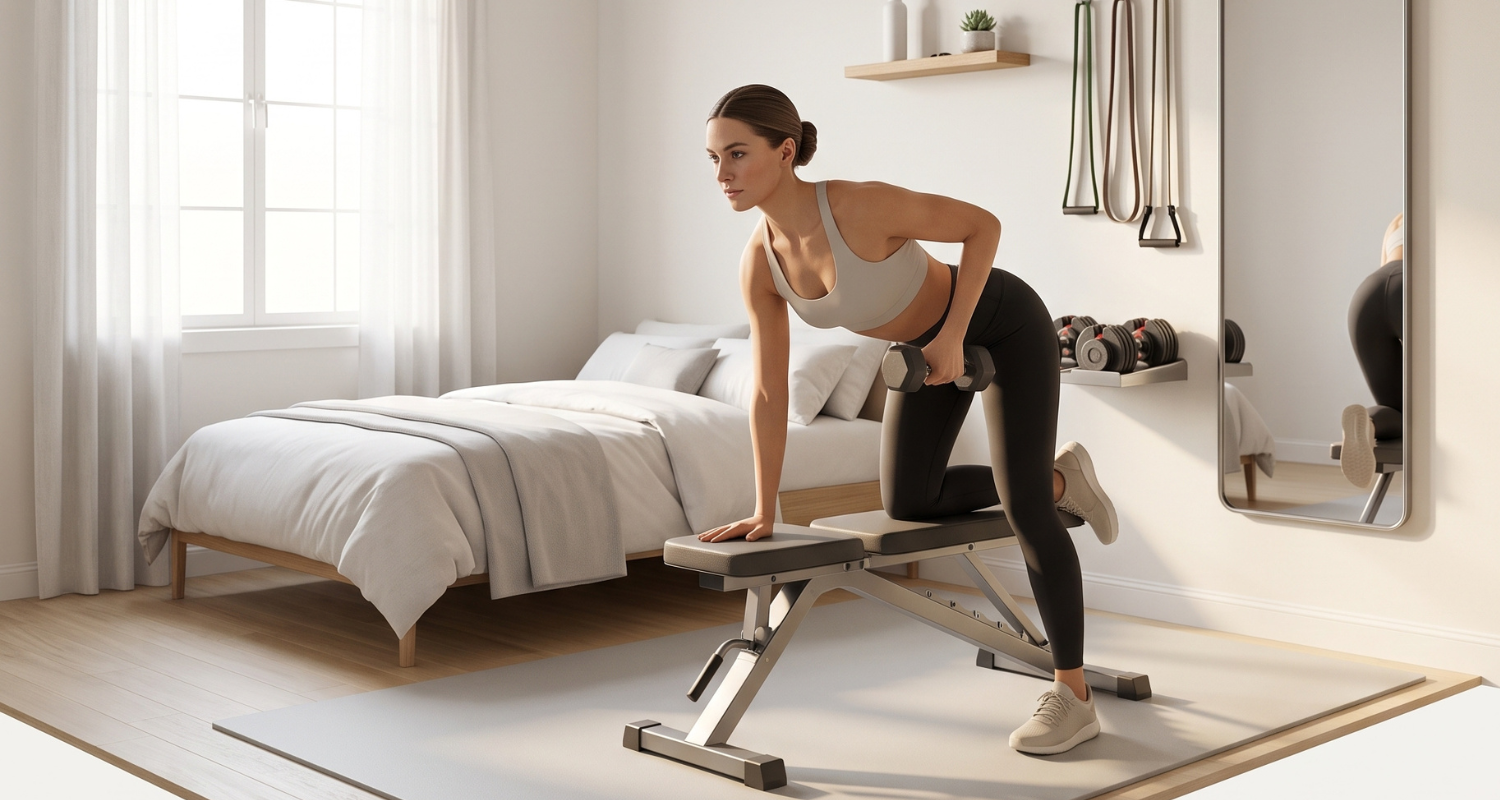
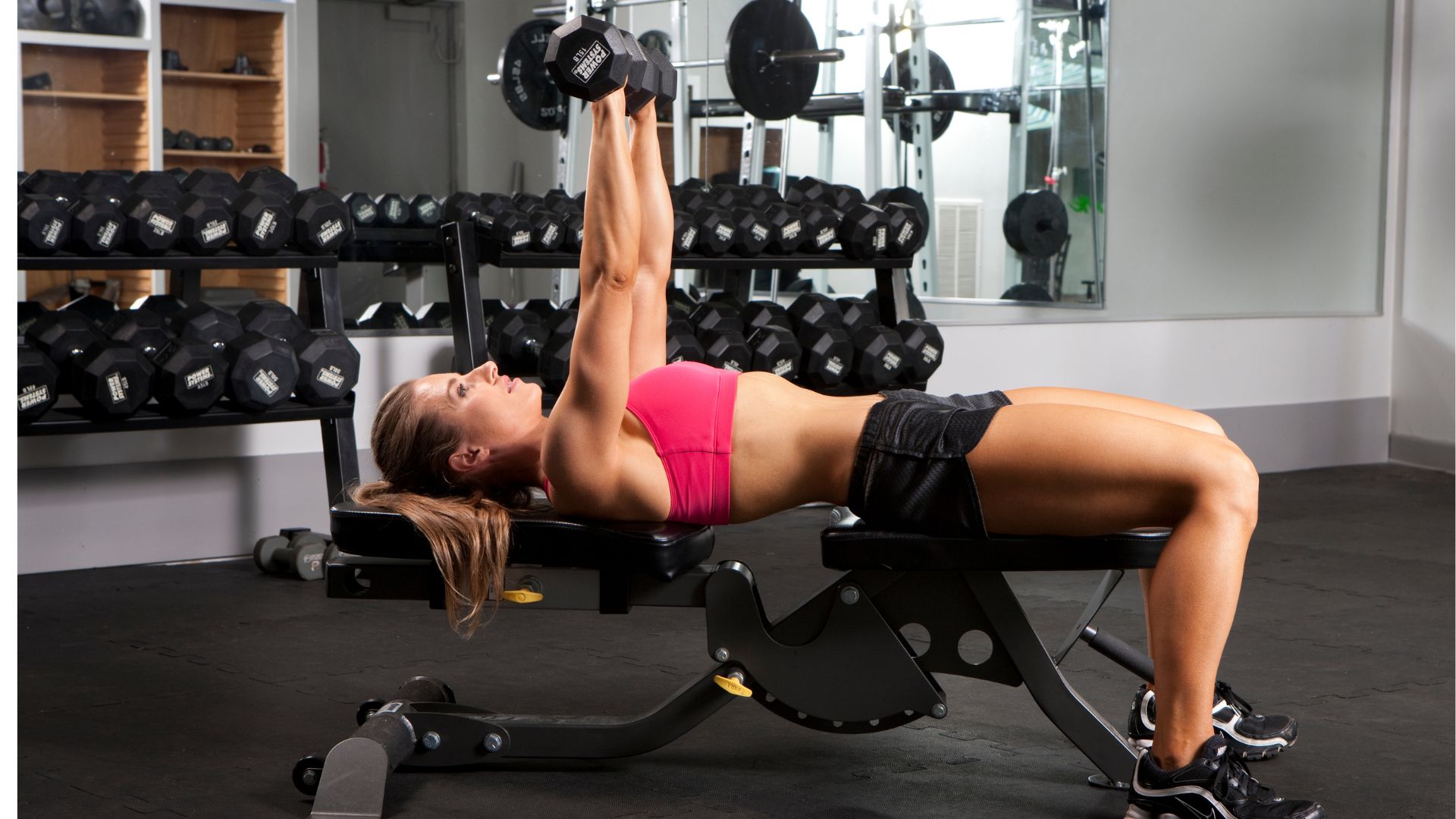
A compact adjustable dumbbell set covers every pressing, pulling, hinge, and isolation movement in a complete strength program — choose a format that stores on its rack in the footprint of a single drawer. The rack itself mounts flush to the training zone wall and reads as a designed element rather than storage when the dumbbells are seated in it. A foldable adjustable bench with a neutral upholstery color and slim frame stores upright flat against the wall between sessions — look for a bench that folds to less than ten inches of depth so it disappears against the wall when stored. A wall-mounted pull-up bar on the training zone wall handles all pulling variations and doubles as the anchor point for the suspension trainer. Resistance bands in neutral tones on three wall hooks complete the pulling and shoulder health work that dumbbell training alone doesn’t fully address.
Mikolo 2×2 Folding Wall Mounted Squat Rack
The space solution that makes a serious rack possible in a room that can’t permanently accommodate one. Folds completely flat against the wall when not in use — taking up less than six inches of depth — and deploys into a full squat and pressing station in seconds.

CAP Rubber Dumbbells
Fixed rubber hex dumbbells in a compact weight range deliver the tactile honesty of real iron without the aesthetic compromise of chrome or painted cast iron. The rubber coating protects the floor, reduces noise on contact, and maintains its appearance over years of consistent use — the kind of equipment that looks exactly the same in five years as it does on day one.

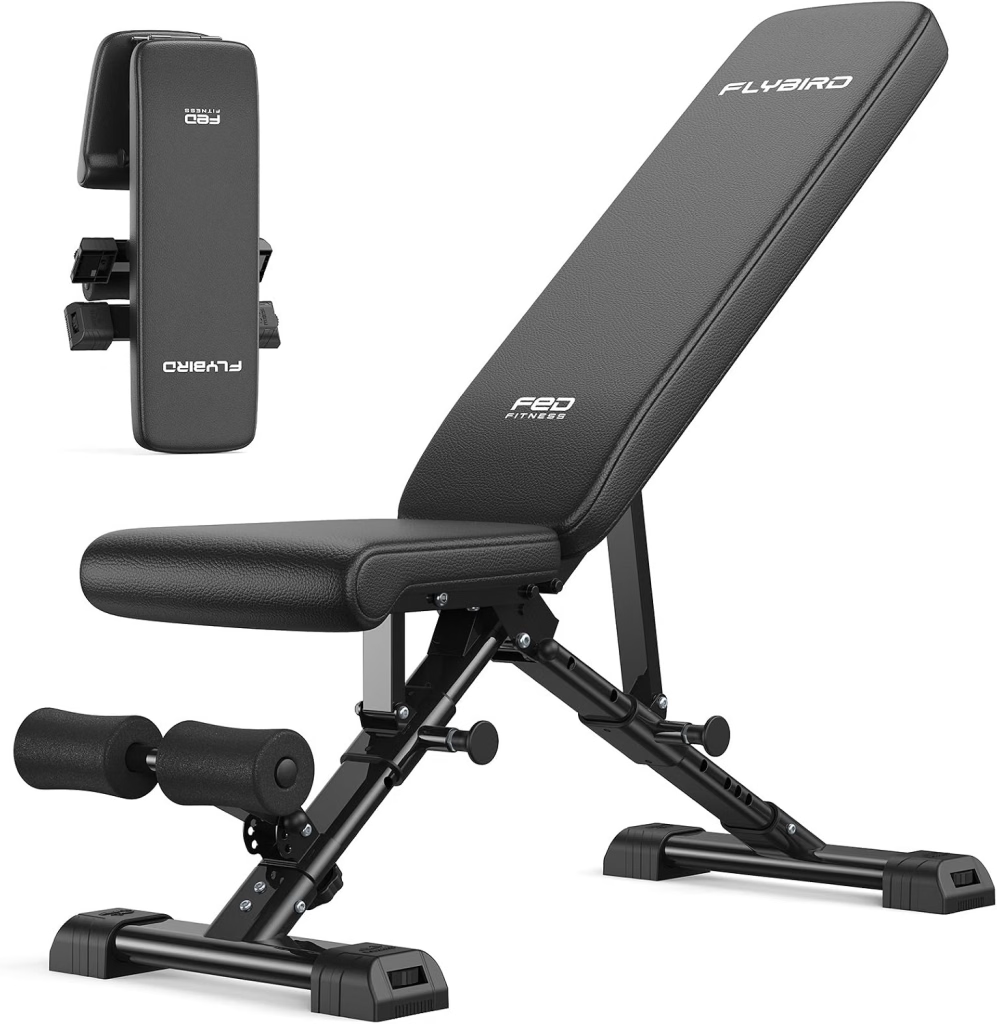
FLYBIRD WB5 Weight Bench — ASTM-Certified 800LBS Adjustable
The bench that earns its place in a Clean Minimalist gym by disappearing when not in use. ASTM-certified to 800 pounds with a full range of incline adjustments — and it folds completely flat for storage against the wall in seconds.
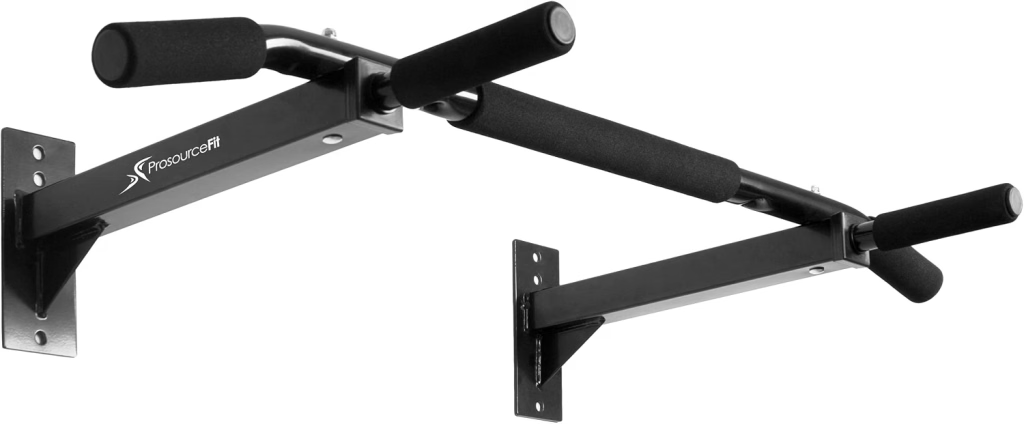
ProsourceFit Wall-Mounted Pull-Up / Chin-Up Bar — Heavy Duty 300 lb. Capacity
Permanent, architectural, and rated for serious use. A wall-mounted pull-up bar in matte steel against a white wall is the Clean Minimalist gym’s most visually defining piece of equipment — the signal that this room was designed for training rather than adapted from something else.
The program structure — an upper-lower split or push-pull-legs routine using dumbbells and the pull-up bar — produces the same strength and muscle adaptations as barbell-based programming for most goals and most experience levels. The absence of a barbell in a living room gym is a constraint that the dumbbell-based progressive overload approach resolves completely for the majority of readers.
Training Setup 2: Pilates-Informed Strength and Mobility
For the reader whose training priorities are control, body awareness, and the functional strength that Pilates and mobility-focused training produces.

Of the four training setups in this article the Pilates-informed setup is the most naturally suited to a living room environment. The calm, light-filled, aesthetically considered quality of a well-designed living room supports the mindful, precision-focused nature of Pilates work in a way that a garage or basement rarely does. The aesthetic and the training modality are genuinely aligned — which means the training zone for this setup can remain partially visible from the living area without compromising either the room or the practice.
The Equipment
A premium mat with meaningful thickness and a non-slip surface in a neutral colorway — sand, slate, or natural — is the primary training surface for this setup. The mat quality matters more here than in any other setup because the entire practice happens in contact with it. Choose a mat whose color and material reads as belonging in the room rather than imported from a gym. A wall-mounted resistance band anchor point — a single mounting plate with multiple attachment points in a finish that matches the room’s hardware — handles the cable-adjacent movements Pilates incorporates without requiring a dedicated cable machine.
A suspension trainer on the pull-up bar anchor adds bodyweight rows, atomic push-ups, and core work that develop the functional stability Pilates training prioritizes. A compact reformer with natural wood construction and neutral upholstery stores flat against the training zone wall between sessions — the wood finish reads as furniture in a Clean Minimalist living room in a way that commercial aluminum reformers never do. The foldable adjustable bench serves incline and accessory work for the strength component of this hybrid setup.
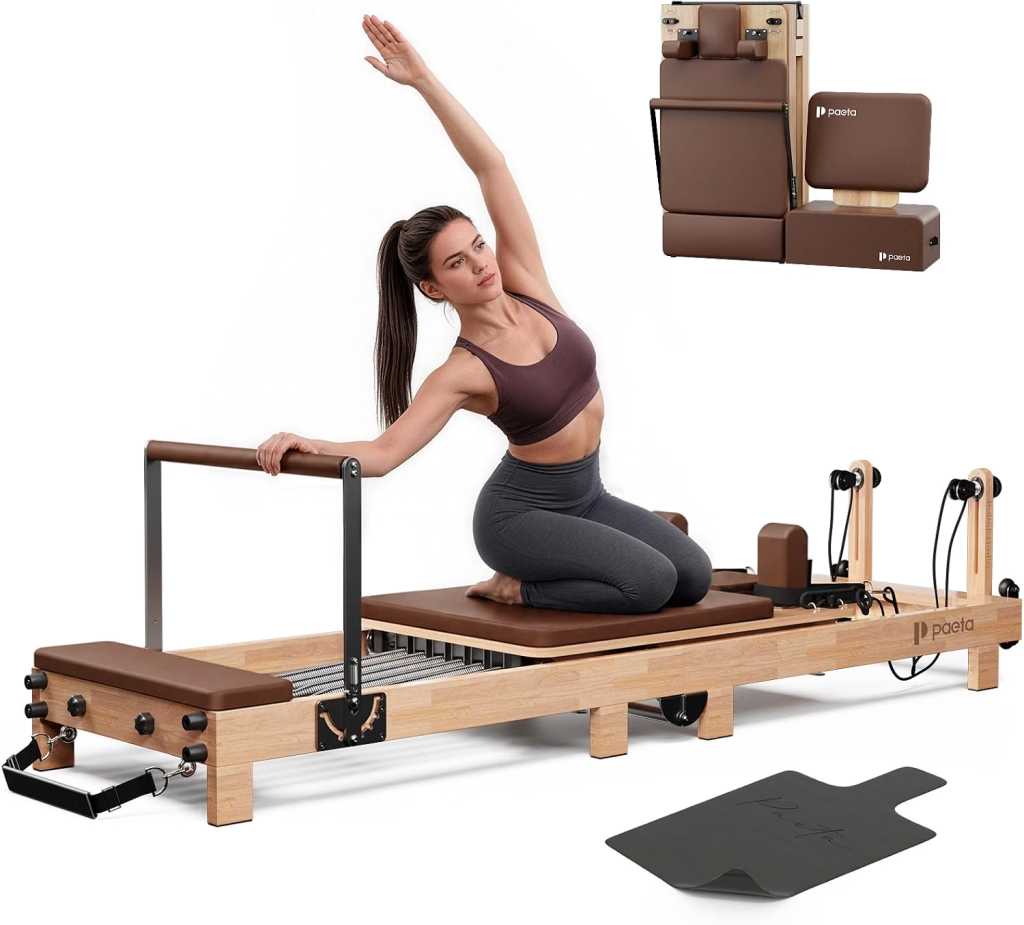
Pilates Reformer — PAETA 92″ Wooden Pilates Reformer Machine
A full Pilates reformer in a home-appropriate form factor. The natural wood construction fits the Clean Minimalist aesthetic in a way that commercial aluminum reformers don’t — it reads as a considered piece of equipment rather than something borrowed from a studio. Stores flat against the wall between sessions.
Tribe Resistance Bands Set
The most versatile accessory in the Clean Minimalist gym — and the one that takes up the least space. Bands handle the pulling movements, shoulder health work, and mobility drills that dumbbells can’t replicate, and when hung on three wall hooks in neutral tones they read as a design detail rather than equipment storage.

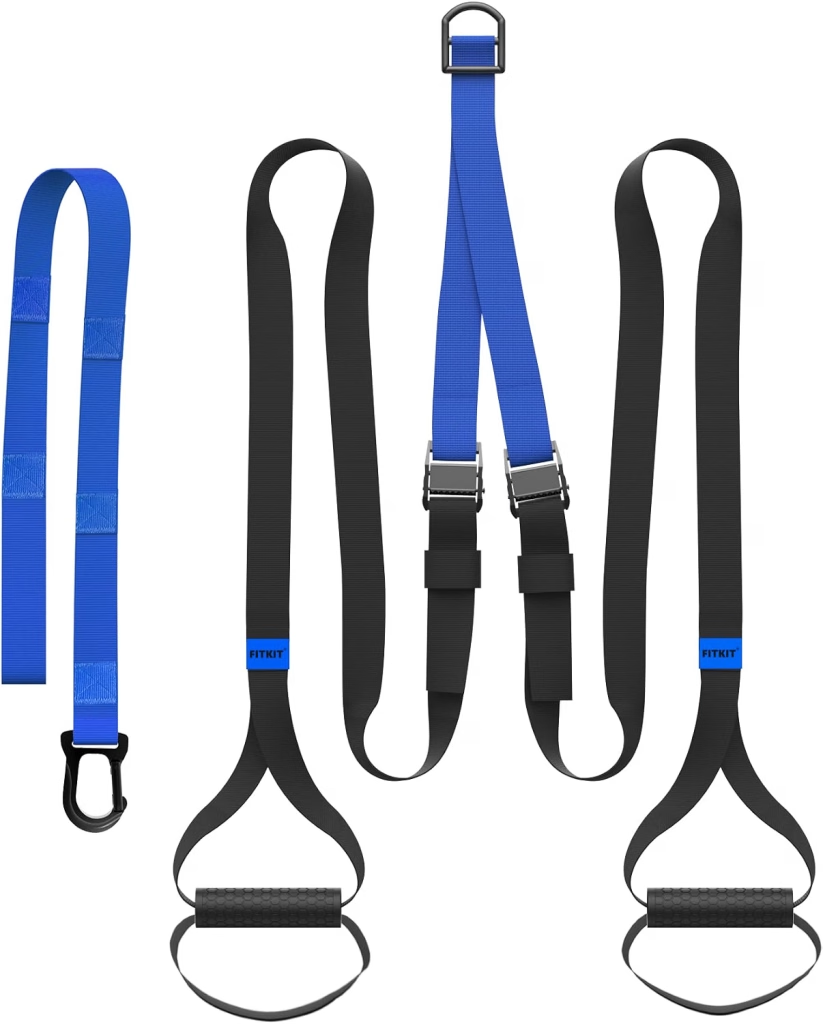
FITKIT Suspension Fitness Trainer System
Every bodyweight pulling, pushing, and core movement in a system that stores in a bag when not in use. The suspension trainer is the Clean Minimalist gym’s highest-utility accessory — it adds an entire training dimension without adding a single piece of permanent equipment to the space.
The living room’s natural light quality is a genuine training asset for Pilates-informed work. A morning session on a cork or premium mat in natural light from two windows produces a sensory environment that focused movement practice responds to directly. Schedule these sessions for the times when the light is best and let the room do part of the work.
Training Setup 3: Cardio and Conditioning
For the reader prioritizing cardiovascular fitness or conditioning work in a shared living space where noise and visual impact are both real constraints.

The living room cardio setup has two constraints that don’t exist in a private room. The floor beneath may be occupied living space — making impact noise more consequential than in a spare bedroom on a ground floor. And the cardio equipment is visible from the primary seating area when in use — making visual quality more relevant than in a room where the door closes.
The Equipment
Both constraints point toward the same solution: a compact folding walking pad in a white or light grey finish that matches the visual language of the space. A walking pad in a living room context needs to earn its place twice — as a piece of training equipment and as an object that doesn’t visually disrupt the room it occupies during use. Choose a profile that is slim and low when in operation and folds completely flat for storage beneath the sofa or against the wall when not in use. The incline range and speed capability should match the training goals — a walking pad used for low-intensity steady state cardio has different requirements than one used for incline walking protocols that challenge cardiovascular fitness more aggressively.
For higher-intensity conditioning work that the walking pad doesn’t fully address — a jump rope stored on one wall hook adds intervals and agility work with zero floor space cost and zero visual impact when stored. Resistance bands and adjustable dumbbells handle metabolic strength circuits — consecutive compound movements performed with minimal rest that develop cardiovascular fitness alongside muscular endurance in the space of a six by eight foot mat zone.
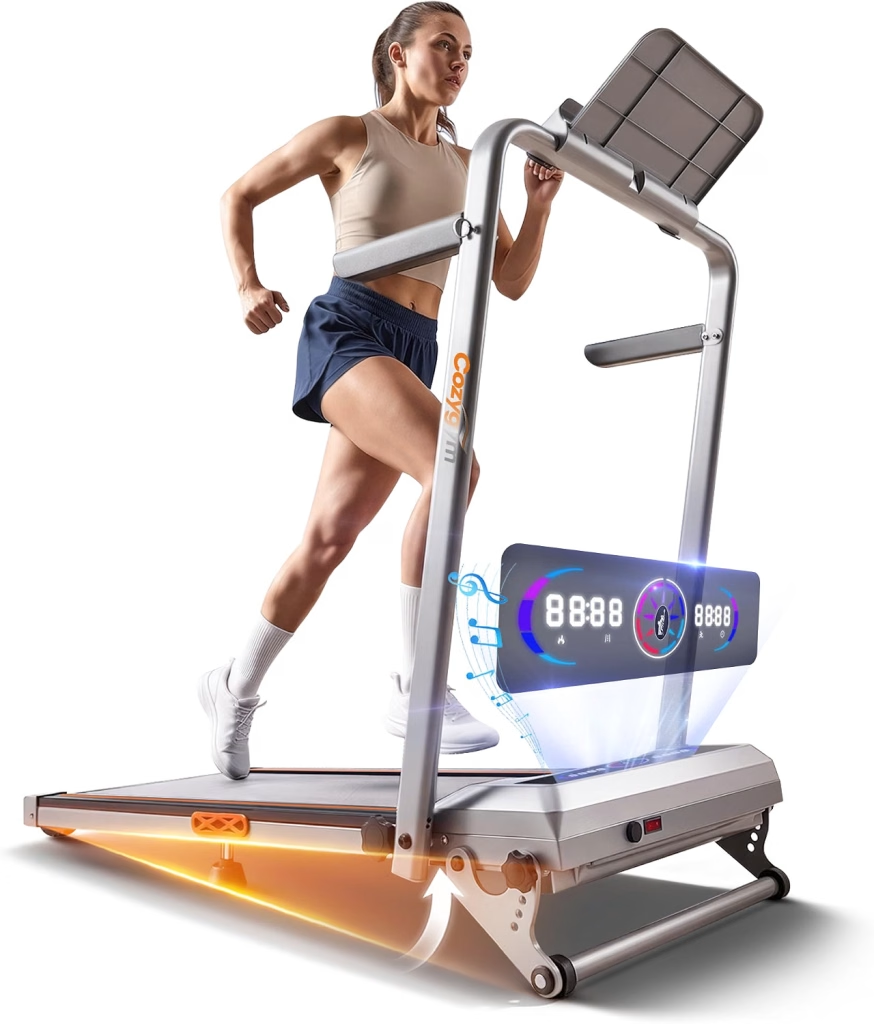
Cozygym 5 in 1 Compact Foldable Walking Pad with Incline and Handle Bar — 18% Incline
The cardio solution that doesn’t compromise the aesthetic. Folds completely flat for storage against the wall — zero visual presence between sessions. The 18% incline range and handlebar make this a genuine training tool rather than a walking novelty, and the compact footprint means it belongs in a living room in a way that a full treadmill never would.
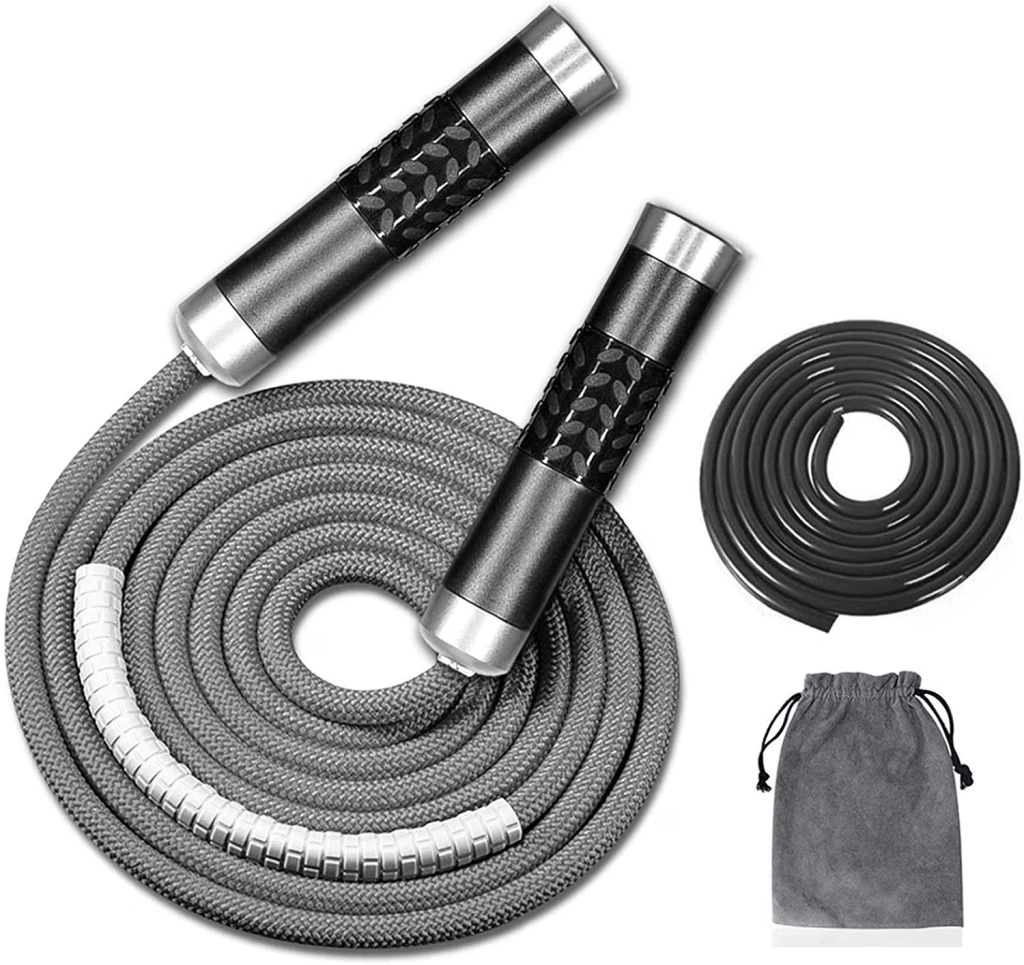
Redify Weighted Jump Rope
A weighted jump rope adds resistance to every rotation — increasing the cardiovascular demand and the upper body conditioning load of interval work simultaneously.
Noise management in the living room cardio setup requires one additional consideration beyond the rubber tile flooring specified in the space setup section. If the living room sits above occupied space — a basement apartment below, a neighbor below in a multi-story building — add a plywood layer beneath the rubber tiles in the mat zone. The combination of plywood and rubber tile absorbs impact before it reaches the structural floor more effectively than rubber alone and makes the difference between a walking pad session that is audible below and one that is not.
Training Setup 4: Yoga and Recovery
For the reader using the living room gym for yoga, active recovery, or a mindful movement practice that benefits from the quality of a well-designed shared space.

The yoga and recovery setup is the most visually appropriate training configuration for a shared living space — and the only one of the four setups in this article that can be left partially visible from the living area without disrupting the aesthetic of the room. A quality yoga mat unrolled in a defined zone beside a leaning mirror in a light-filled living room looks like a design choice. In the Clean Minimalist living room this setup doesn’t just coexist with the room — it belongs in it.
The Equipment
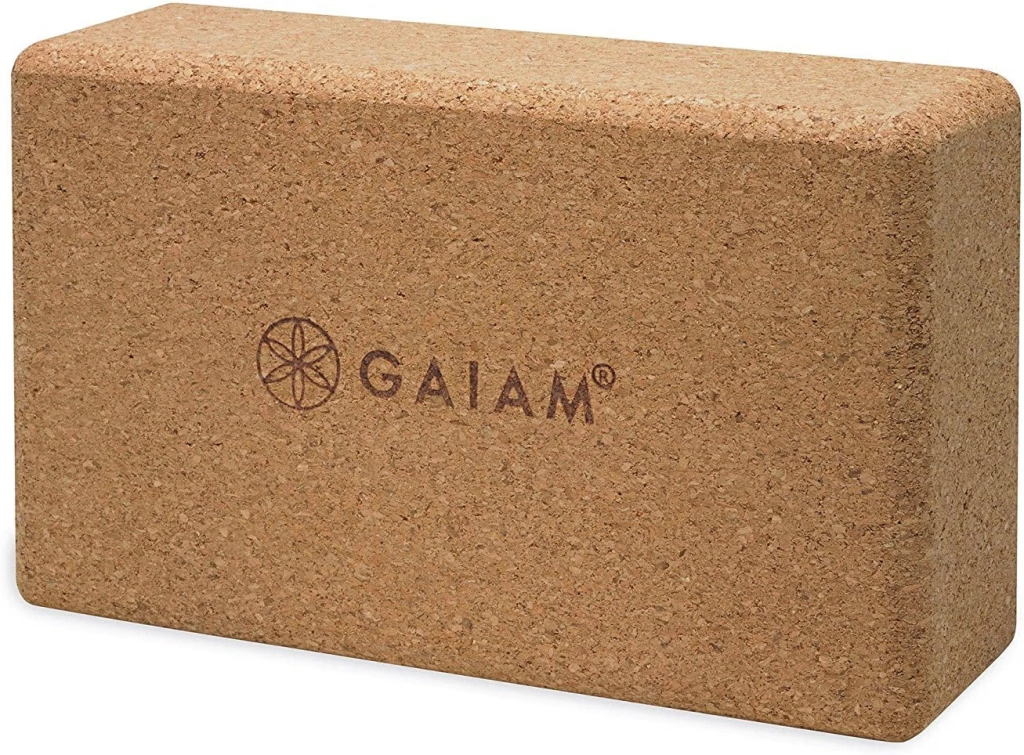
A premium mat in a natural material — cork or natural rubber — in a warm neutral tone is the visual centerpiece of this setup. The cork or natural rubber texture reads as an organic material that belongs in a Clean Minimalist space in a way that synthetic mats in bright colors don’t. Choose a size that fills the mat zone generously — a longer mat allows a wider range of supine and prone positions without the practitioner moving off the mat surface. Two yoga blocks in a matching natural material store neatly on the natural fiber basket shelf between sessions — their small footprint and natural material make them appropriate to leave visible if the basket is positioned near the training zone wall.
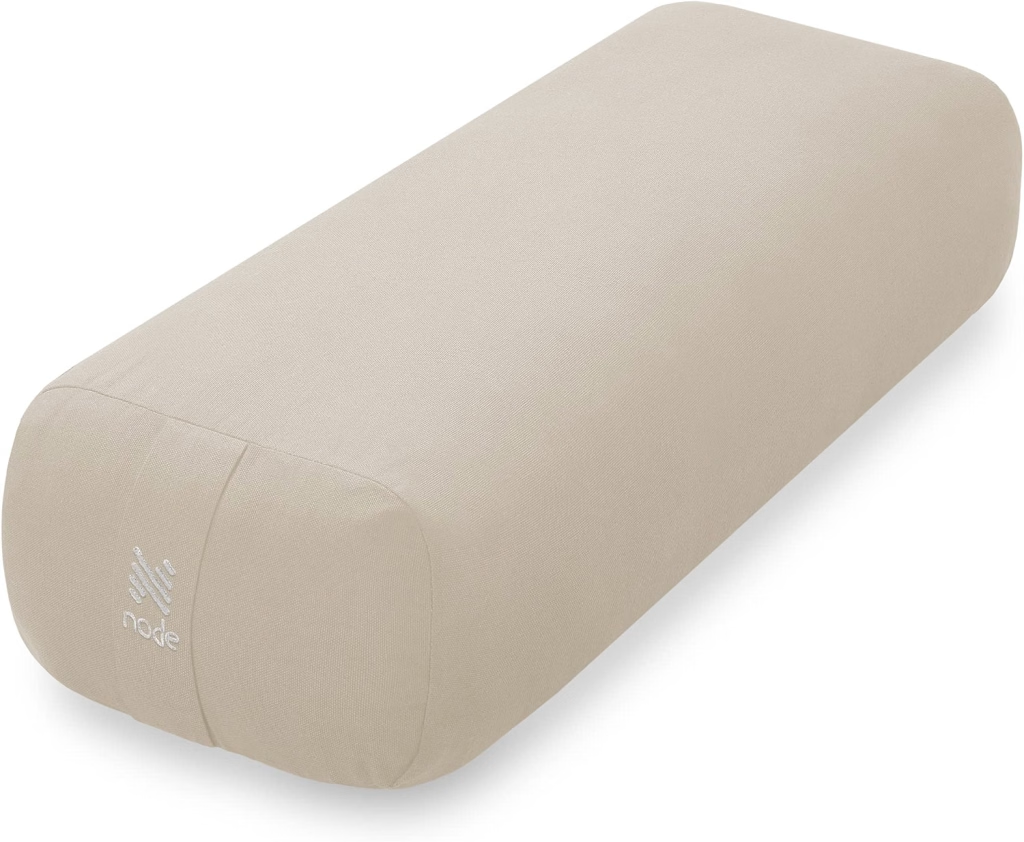
A bolster in natural linen or cotton fabric stored in or beside the natural fiber basket enables the restorative poses that distinguish a genuine recovery practice from a simple stretching session. Resistance bands on the wall hooks complete the mobility and assisted stretching work that bridges yoga and active recovery.
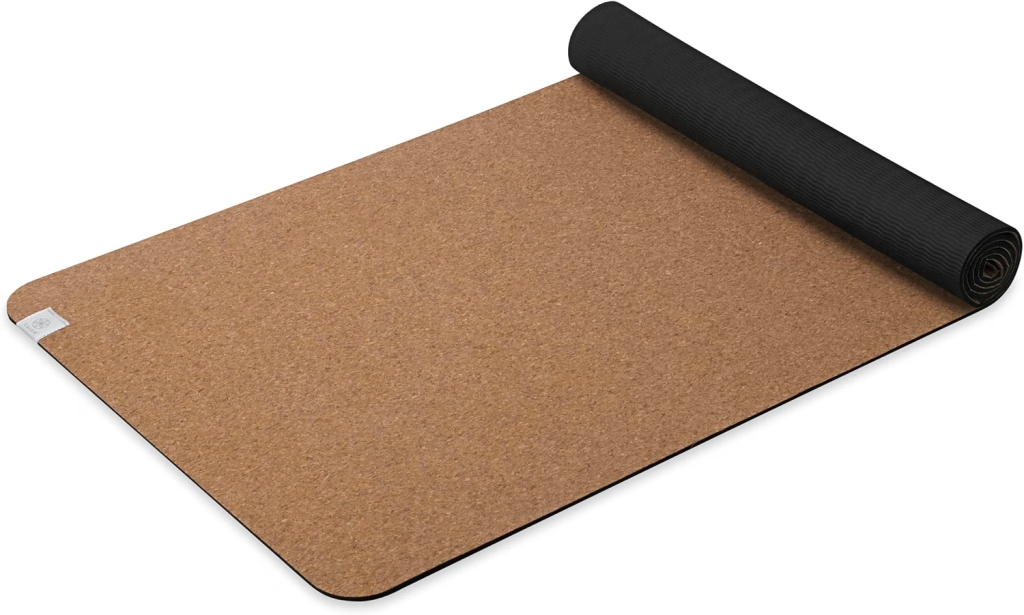
Gaiam Yoga Mat — Premium 5mm Solid Thick Non Slip
The foundation of the recovery setup. Five millimeters of cushioning on a non-slip surface in a neutral colorway that belongs in a Clean Minimalist space — practical, durable, and visually appropriate in a way that patterned or brightly colored mats are not.
Gaiam Yoga Block — EVA Foam for Balance and Stretch
The piece most home yoga practitioners skip and most yoga teachers consider essential. Two blocks extend reach, support alignment, and enable the deeper poses that a yoga practice without props quietly avoids. Stored on the floating shelf between sessions — present without being prominent.
Node Fitness Yoga Meditation Cushion — 25″ x 12″ Rectangular Bolster
The recovery tool that makes the difference between a yoga session and a genuine restorative practice. A quality bolster supports the passive holds and yin poses that release the tension that active training creates — and in a natural fabric at this size it reads as a design element in the space rather than a piece of equipment.
The living room’s natural light advantage is most pronounced in this setup. A living room with windows on two walls — or one generous window facing east or south — produces the quality of morning light that a dedicated yoga practice benefits from most. The specific quality of early morning light in a light-filled room with pale walls and pale floors — the way it moves across the mat surface as the sun rises — is a genuine environmental asset that most dedicated gym spaces cannot replicate. Plan yoga and recovery sessions for the times when that light is best. Let the room contribute what no piece of equipment can provide.
The Living Room That Finally Does Everything
The room that was already doing the most in the house is now doing one more thing — and doing it without asking anything of the living room that the living room wasn’t already giving.
The training zone occupies its wall. The mat defines its boundary. The equipment returns to its position after every session. The living room is always a living room. And every morning it is also — quietly, completely, and without compromise — a training facility capable of developing serious strength, Pilates-informed control, cardiovascular fitness, and a recovery practice that makes all of the above sustainable over the long term.
This is what the Iron Paradise looks like when it lives in the room where the rest of your life happens. Not hidden. Not apologized for. Designed intentionally, maintained with discipline, and built to belong exactly where it is.
If you’re still deciding which home gym aesthetic fits your space and your training life, the free SOMA Dream Gym Style Guide walks you through all five — with mood boards, equipment guides, and the framework for finding the gym that reflects who you’re becoming.

Leave a Reply