
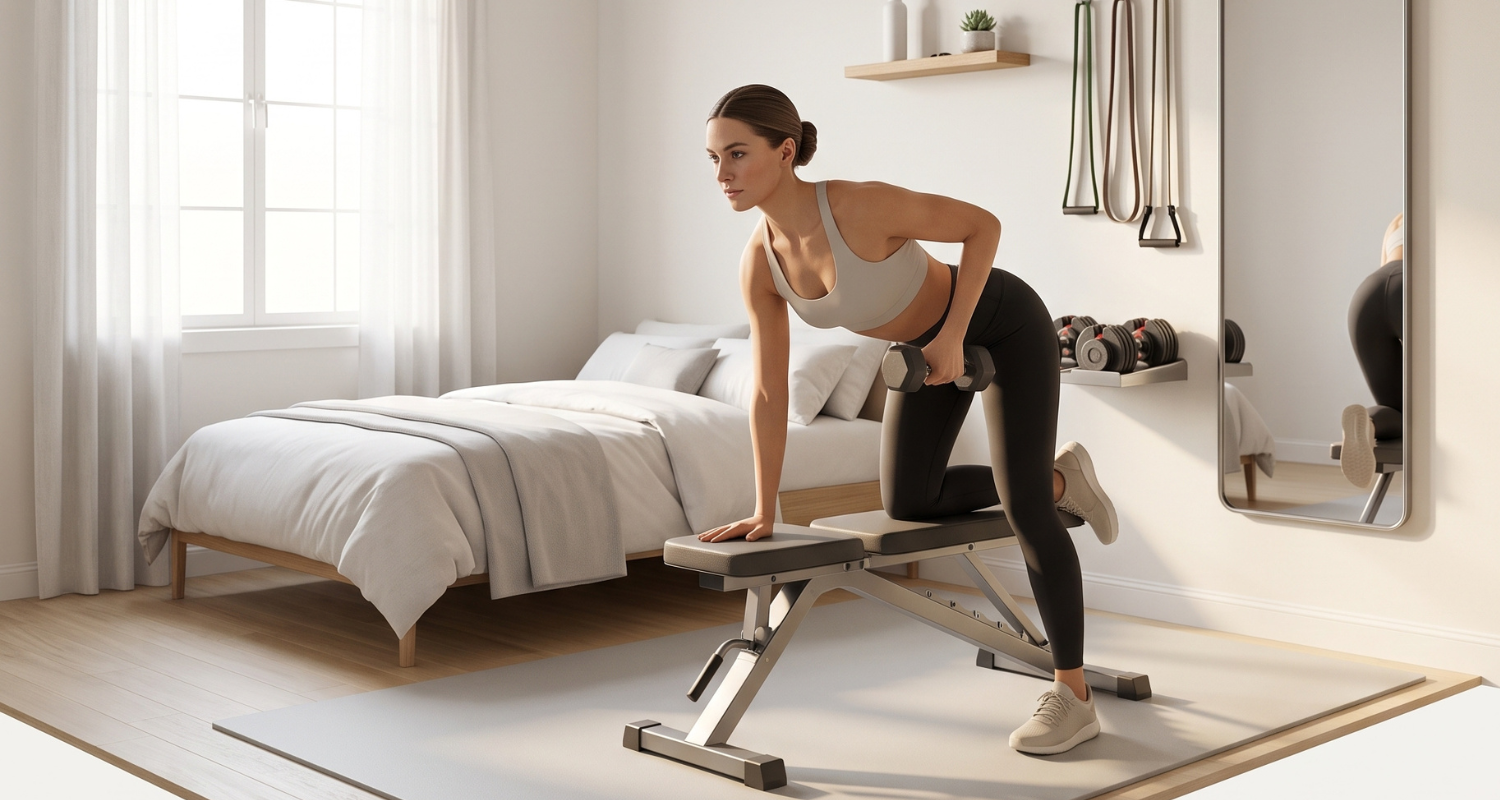
There is a room in most homes that is doing almost nothing.
It has a bed in it that nobody sleeps in. A dresser that holds things nobody wears. A closet that has become the default storage location for everything that didn’t have anywhere else to go. The door stays closed most of the time — not because the room is being used, but because it’s easier not to look at it.
That room is the most valuable square footage in your home. And the Clean Minimalist spare bedroom gym is what happens when you decide to use it seriously.
Not as a generic home gym. Not as a room where equipment accumulates until the floor disappears. As a specific, intentional training environment — one that looks like it was designed rather than converted, trains four completely different ways depending on what you need on a given day, and takes less than five minutes to reset to a guest bedroom when someone needs to sleep in it.
The Clean Minimalist spare bedroom gym is the most achievable version of the Iron Paradise for the majority of people reading this. Not because it asks less — it asks more in terms of intention and discipline than any other aesthetic in this guide. But because the space requirements are lower, the equipment investment is modest, and the result is a room that earns its place in your home every single day.
Here is everything you need to build it right.
What Makes a Clean Minimalist Spare Bedroom Gym Different
The Clean Minimalist gym is defined by one principle above all others: everything visible has a purpose, a position, and a reason to be there.
This sounds simple on paper, but in practice- it’s a whole other story.
Most spare bedroom gym builds fail not because the wrong equipment was purchased or the wrong flooring was installed — but because there was no system for what the space should look like when training is finished. Equipment gets left out. Accessories accumulate on the bench. A foam roller ends up on the floor and stays there for three weeks. Six months after the gym was built, the room looks like a room with equipment in it rather than a training space that was designed with intention.
The Clean Minimalist prevents this through design rather than discipline. When every piece of equipment has a designated storage position — when the bench folds and stands against the wall, when the dumbbells sit on their rack, when the bands hang on their hooks in order — the reset at the end of a session takes thirty seconds. The space maintains itself because it was designed to maintain itself.

The Three Characteristics
Three things define this gym in a spare bedroom context specifically.
The floor is never permanently cluttered. The rubber mat defines the training zone and nothing crosses that boundary without a reason. Equipment in use during a session returns to its storage position when the session ends. The floor of the training zone is always clear.
The room retains its original function. A guest can sleep in this room the night it needs to serve as a bedroom. The bench folds. The mat rolls or lifts. Nothing is bolted, cemented, or permanently installed in a way that makes the room exclusively a gym. This dual-use quality is what makes the spare bedroom the ideal room for this aesthetic — the discipline required to maintain it produces exactly the visual result the Clean Minimalist demands.
The equipment belongs to the space rather than sitting inside it. A wall-mounted dumbbell rack in matte steel against a warm white wall is a design element. A folded adjustable bench stored upright is architecture. A wall-mounted pull-up bar in matte steel is the signal that this room was designed for training rather than adapted from something else. Every piece of equipment was chosen as much for how it contributes to the visual language of the space as for what it does physically.
The Space Setup: Design, Flooring, Lighting, and Mistakes to Avoid
The space setup section is the foundation that all four training setups share. Get these decisions right before anything else arrives and the gym builds itself correctly from the first day. Get them wrong and every subsequent decision compensates for a problem that should have been solved at the beginning.
Wall Color
Warm white throughout — not stark, not cool, not grey. The specific quality of white that defines the Clean Minimalist spare bedroom is the kind that reads as white in all light conditions but carries just enough warmth to feel considered rather than clinical.
Benjamin Moore Chantilly Lace and Sherwin-Williams Alabaster are both specifically correct for this aesthetic. They are the whites that interior designers choose when the goal is a space that feels intentional without feeling cold. Test them on a two-foot square of wall before committing — the difference between a warm white and a cool white is invisible on a paint chip and immediately obvious across four walls.
Finish matters as much as color. Flat or matte finish on all four walls — including the ceiling. Flat finish absorbs light rather than reflecting it, which creates the soft, even illumination that defines the Clean Minimalist aesthetic. Satin or eggshell finish on white walls reads as commercial rather than intentional. The additional durability of a higher-sheen finish is not worth the visual compromise in this space.
Flooring
Light grey interlocking rubber tiles — three-eighths to half inch thickness — in the training zone. Not black. Not dark charcoal. Light grey.
Dark rubber flooring is Athlete Cave and Industrial Loft material. In a white-walled, naturally lit spare bedroom it absorbs the light that defines the Clean Minimalist aesthetic and makes the space feel heavier and more industrial than the aesthetic intends. Light grey rubber tiles maintain the pale, airy quality of the space while providing the grip and protection that serious training requires.
Lay the tiles in a grid pattern with seams running parallel to the walls — not diagonally. Diagonal seam patterns draw the eye and create visual busyness that works against the restraint this aesthetic demands. Leave a visible border of the existing flooring — hardwood, laminate, or carpet — around all four edges of the mat. That border is not incidental. It is what distinguishes the training zone from the rest of the room and what makes the gym look designed rather than installed.
Related Post: Best Home Gym Flooring: Rubber vs Foam vs Mats (Complete Guide)
Lighting
The window is the primary design element of the Clean Minimalist spare bedroom gym. Before any artificial lighting is considered, maximize what the window provides. Remove heavy curtains or blinds that block light and replace them with sheer white linen panels that diffuse daylight without blocking it. The quality of morning light in a white-walled room with one good window is the defining sensory characteristic of this space — protect it before adding anything else.
Supplemental artificial lighting should complement the natural light rather than compete with it. Warm white LED bulbs at 2700K to 3000K in any existing overhead fixture maintain the daylight feeling of the space after dark and on overcast days. Avoid cool white LEDs at 4000K or above — they shift the color quality of the space toward clinical and fluorescent, which works directly against everything this aesthetic is designed to feel like.
A single warm-toned floor lamp positioned near the window — turned on during early morning or evening sessions — creates a quality of light that is almost indistinguishable from natural daylight. At $40 to $80 it is the highest-return-per-dollar lighting upgrade available to a Clean Minimalist spare bedroom gym.
Related Post: Home Gym Lighting Ideas That Actually Improve Your Training Environment
The Mirror
The mirror belongs on the wall before the equipment is positioned — not after. This is the single most important sequencing decision in the entire build and the one most commonly reversed.
The mirror needs a full, unobstructed wall. That wall should be identified, painted, and cleared before any equipment finds its permanent position. If the mirror wall is chosen after the dumbbell rack is already mounted, the rack is almost certainly on the wrong wall — which means moving it, patching the holes, repainting, and remounting before the mirror can be installed properly.
Choose the wall opposite the window where possible. A mirror that reflects the window doubles the natural light in the space and makes a 10×12 room feel significantly larger than it is. Mount the mirror flush — frameless with standoff hardware for the most studio-grade result, or in a slim matte steel frame for a slightly warmer residential quality. Minimum 48 inches wide by 72 inches tall. Larger is always better in this context.
Position the mirror so it does not reflect the bed if the bed remains in the room. A mirror that reflects the sleeping zone in a training space creates a visual connection between the two functions that undermines both.

Storage
Three storage elements. Nothing more.
A wall-mounted dumbbell rack in matte steel — flush to the wall, low profile, holding the dumbbell set at standing height on the wall perpendicular to the mirror. This rack is visible in the mirror reflection, which means it reads as part of the designed space rather than as storage.
One floating shelf in natural wood or white — mounted above the dumbbell rack at arm height — holds three items only. A water bottle. A training journal. A small plant. If a fourth item appears on the shelf, one of the existing three is removed. This is the rule that keeps the shelf from becoming the flat surface where things accumulate.
One natural fiber basket stored beneath the bench when folded — seagrass or woven cotton in a neutral tone — holds foam roller, stretching strap, and small accessories completely out of sight. One basket. One location. The floor of the training zone is always clear.
The Three Mistakes Specific to This Aesthetic in a Spare Bedroom
The first mistake is painting after the mirror is installed. The mirror wall gets painted first — before the mirror, before the equipment, before anything else touches that wall. Painting around a mounted mirror produces visible brush marks, missed sections, and the low-level visual imprecision that this aesthetic cannot tolerate.
The second mistake is choosing the wrong white. Stark bright white — the kind that comes off a roller without tinting — reads as clinical and institutional on four walls in a room this size. The warm whites recommended above cost the same and look completely different. This is one of those decisions that feels irrelevant until you’re standing in the finished room and something feels slightly wrong without being able to identify why.
The third mistake is letting the sleeping zone and training zone bleed into each other visually. If the bed remains in the room, position the bench and dumbbell rack so they face away from the bed during training — oriented toward the mirror and the window rather than toward the sleeping area. The training zone should feel like it is pointing toward the light, not toward the room’s residential function. This orientation keeps both zones visually coherent and makes the dual-use nature of the space feel intentional rather than compromised.
Training Setup 1: Strength and Muscle Building
For the reader training three to five days per week with progressive overload as the primary goal.

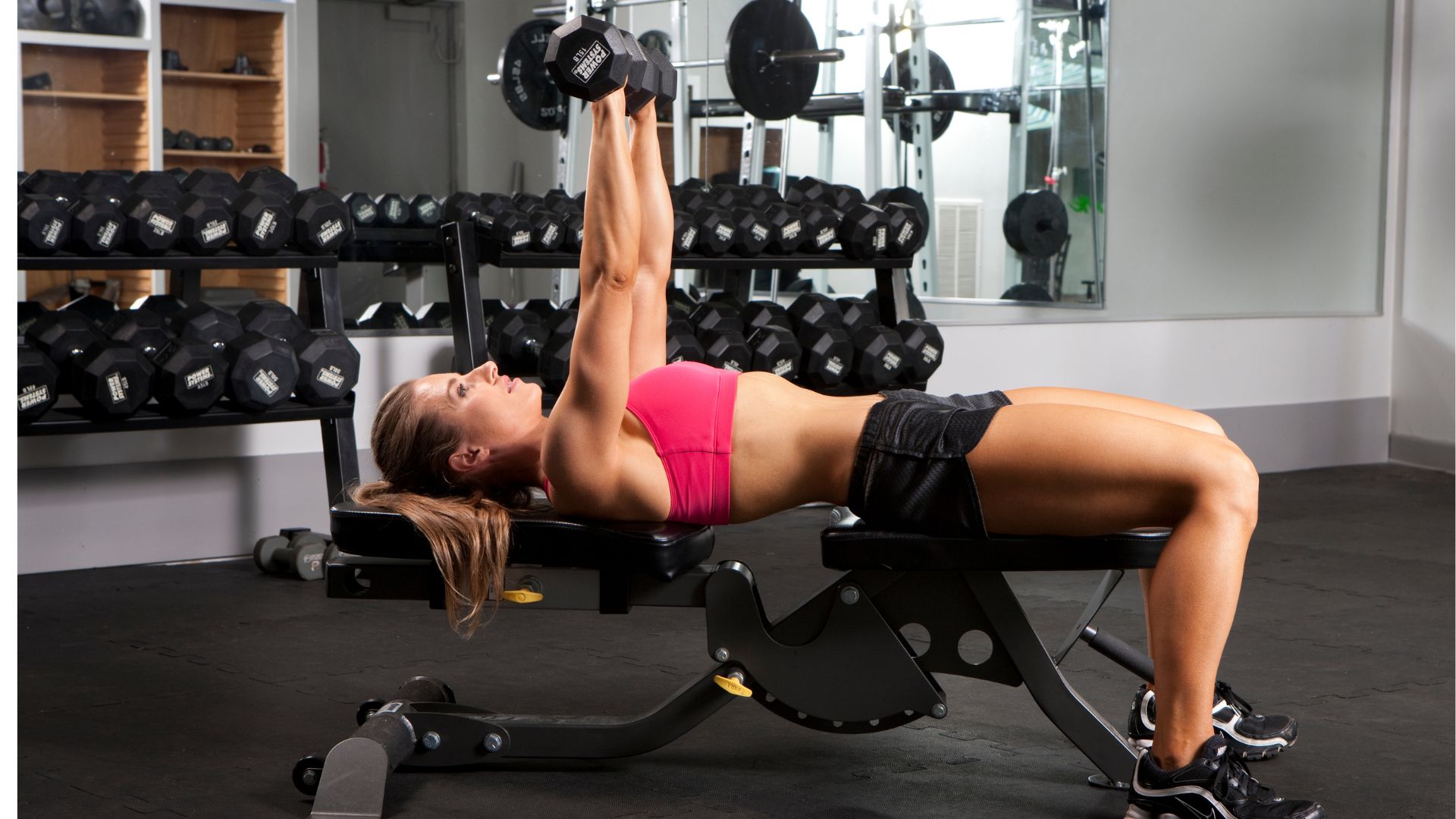
The Clean Minimalist spare bedroom is a complete strength training facility when equipped correctly. The limitation is the absence of a barbell — which in this aesthetic and this room type is a feature rather than a constraint. Dumbbell-based progressive overload produces the same strength and muscle adaptations as barbell training for most goals and most experience levels, in a fraction of the floor space, with none of the ceiling height or structural requirements that barbell training introduces.
The Equipment:
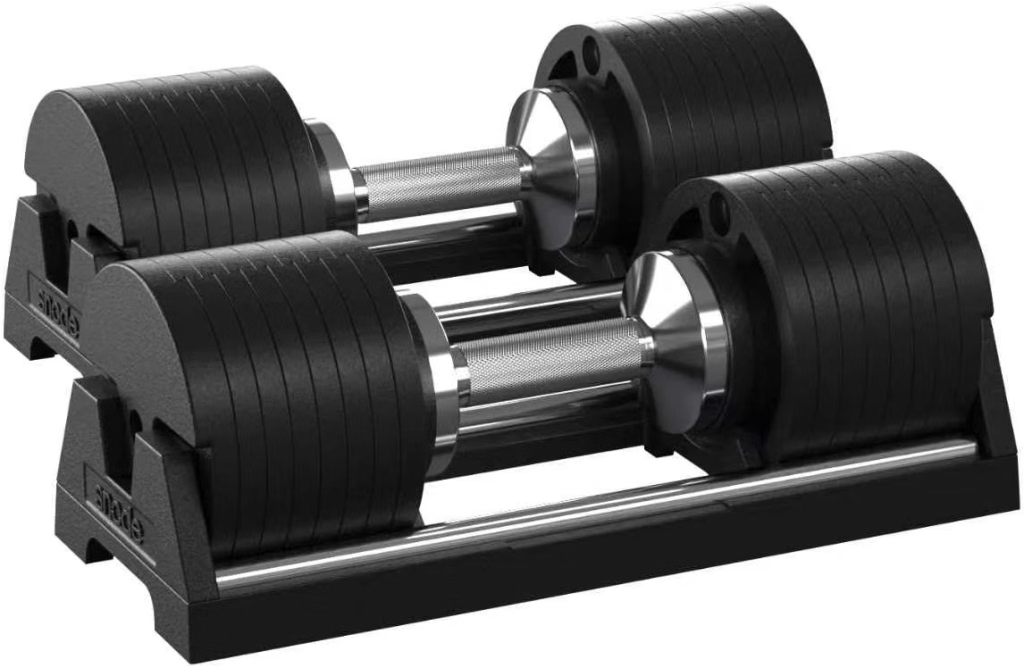
Adjustable dumbbells in a compact format — PowerBlock Sport series or Bowflex SelectTech 552 — on a slim wall-mounted matte steel rack. These two pieces handle every pressing, pulling, hinge, and isolation movement in a comprehensive strength program. Buy the rack at the same time as the dumbbells. Dumbbells on the floor are a Clean Minimalist violation that compounds daily.
Snode AD80 Drop-proof Cast Iron Adjustable Dumbbells 80LBs
A complete dumbbell rack in one compact unit. The drop-proof cast iron construction handles the demands of serious training without the floor space or cost of a fixed set — the only dumbbell purchase most home gym athletes will ever need to make.
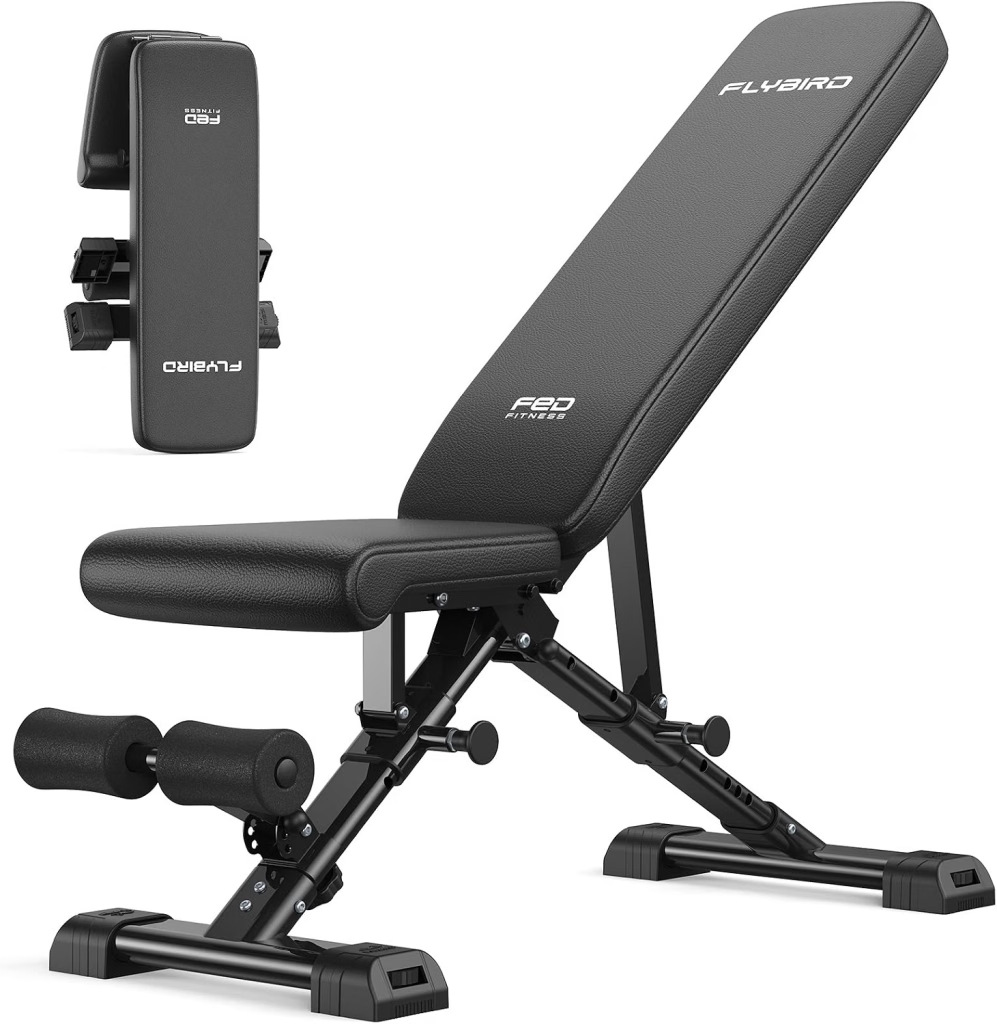
A foldable adjustable bench in light grey upholstery with slim matte steel legs. Rep Fitness AB-3100 folds completely flat and stores upright against the wall in eight inches of depth. At every incline and decline angle needed for a complete pressing program. When stored it reads as furniture rather than gym equipment — which in a dual-use spare bedroom is exactly the right quality.
FLYBIRD WB5 Weight Bench — ASTM-Certified 800LBS Adjustable
The bench that earns its place in a Clean Minimalist gym by disappearing when not in use. ASTM-certified to 800 pounds with a full range of incline adjustments — and it folds completely flat for storage against the wall in seconds.
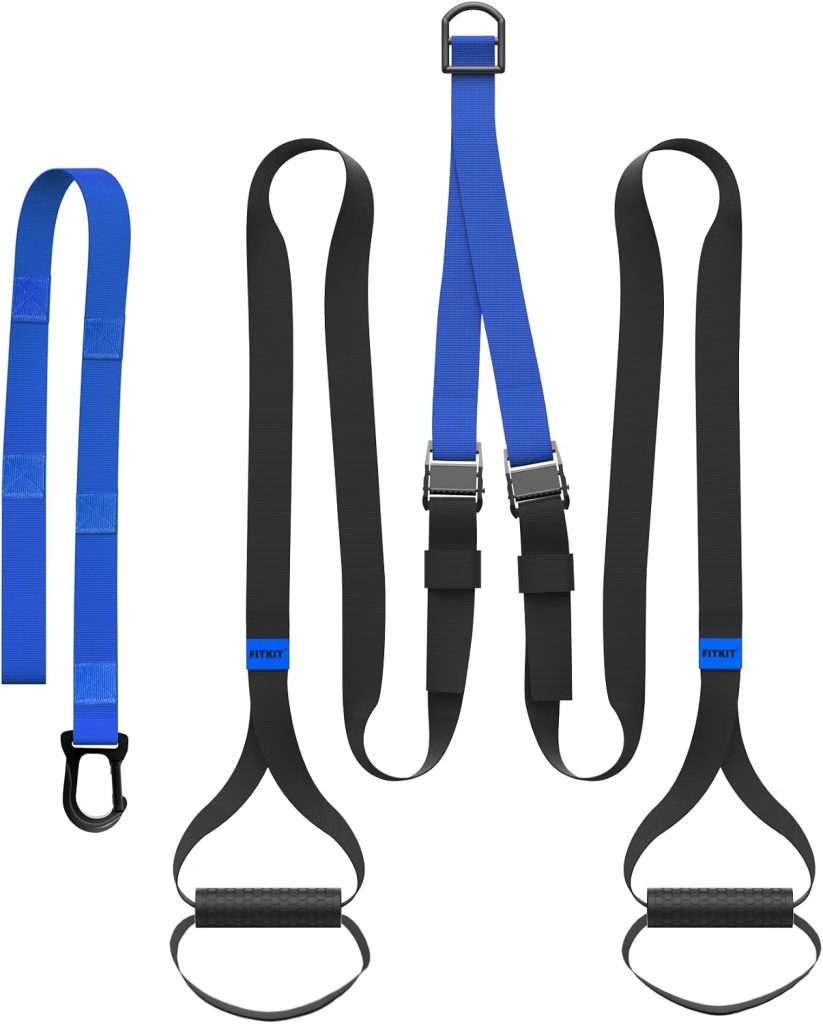
A wall-mounted pull-up bar in matte steel on the wall with the best stud placement. Handles pull-up and chin-up variations, ring or suspension trainer attachment, and hanging core work. Permanent, minimal, architectural.
FITKIT Suspension Fitness Trainer System
Every bodyweight pulling, pushing, and core movement in a system that stores in a bag when not in use. The suspension trainer is the Clean Minimalist gym’s highest-utility accessory — it adds an entire training dimension without adding a single piece of permanent equipment to the space.
Resistance bands in neutral tones — sand, grey, and black — on three wall-mounted hooks organized by resistance. Fill the movements that dumbbells handle less efficiently: face pulls, pull-aparts, banded Romanian deadlifts, and the rotator cuff work that protects the shoulders from pressing volume over time.
Tribe Resistance Band Set
One of the most versatile accessory in the Clean Minimalist gym — and the one that takes up the least space.

The Program Structure:
An upper-lower split or push-pull-legs routine using dumbbells and bodyweight covers every major movement pattern. Progressive overload in a dumbbell-only environment works through three mechanisms — increasing weight as the adjustable set allows, increasing reps within a given weight, and increasing difficulty through tempo manipulation and unilateral variations. None of these require a barbell.
Training Setup 2: Pilates-Informed Strength and Mobility
For the reader whose training priorities are control, body awareness, and the kind of lean functional strength that Pilates and barre training produces.

The Clean Minimalist spare bedroom is the most naturally appropriate home gym environment for Pilates-informed training of all five archetypes. The calm, uncluttered, light-filled quality of this space produces a training atmosphere that supports the mindful, precision-focused nature of Pilates work in a way that the Athlete Cave or Industrial Loft cannot. The aesthetic and the training modality are genuinely aligned.
The Equipment:
A premium yoga and Pilates mat — Manduka PRO or Liforme — in a neutral colorway at minimum 6mm thickness. This is the primary training surface for this setup and the one piece of equipment worth investing in at the higher price point. A mat that feels good underfoot changes the quality of every floor session.
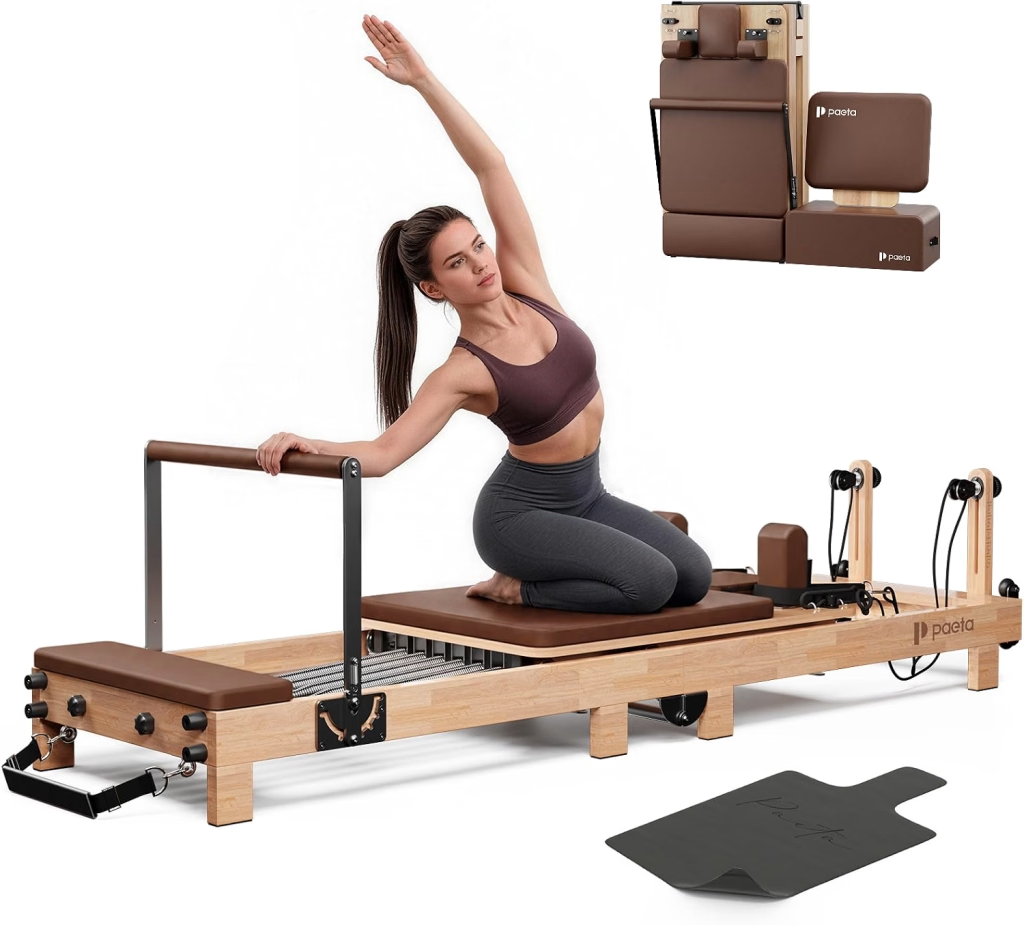
Pilates Reformer — PAETA 92″ Wooden Pilates Reformer Machine
A full Pilates reformer in a home-appropriate form factor. The natural wood construction fits the Clean Minimalist aesthetic in a way that commercial aluminum reformers don’t. Stores flat against the wall between sessions.
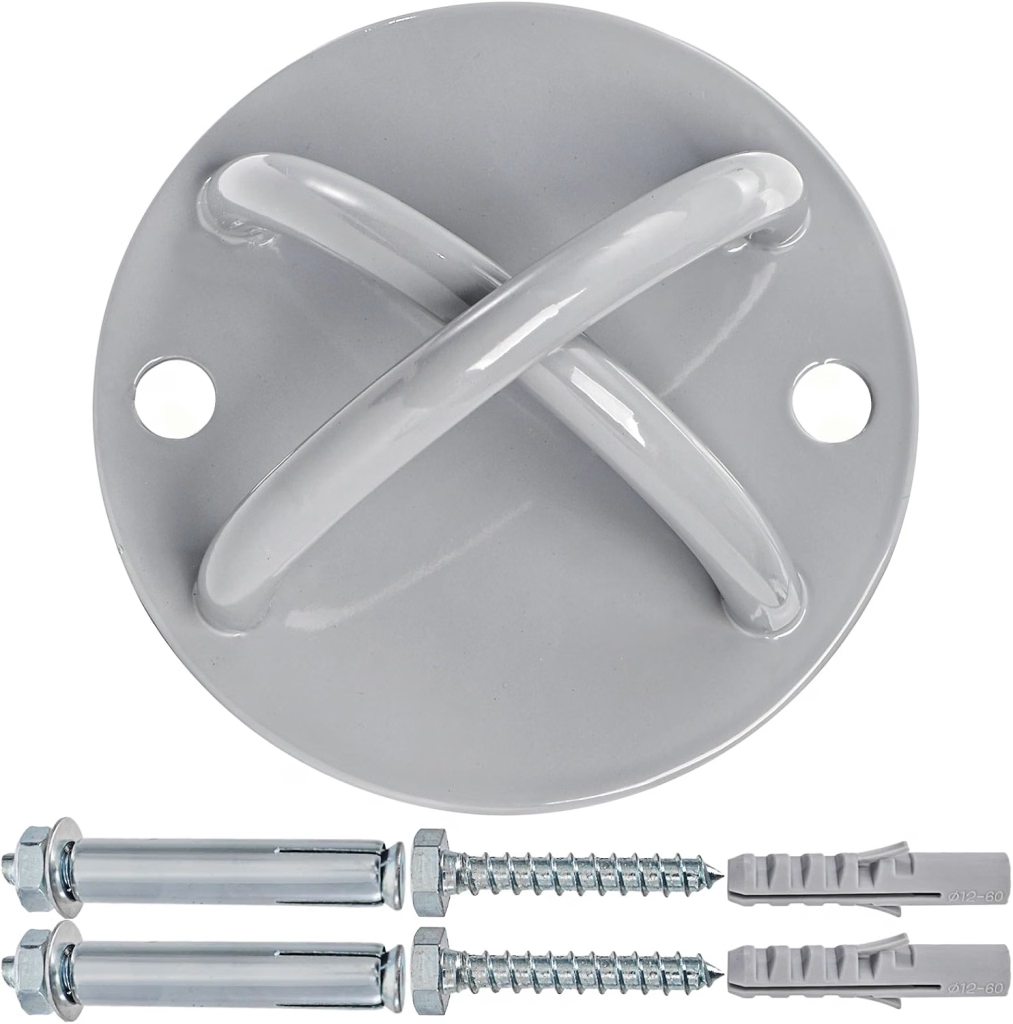
A wall-mounted resistance band anchor system — a single mounting plate with multiple attachment points installed beside the mirror — handles the cable-adjacent movements that Pilates work incorporates: standing leg work, arm circles, lateral pulls, and the core exercises that require constant tension through the full range of motion. This replaces a cable machine cleanly and visually in a way that fits the Clean Minimalist finish language.
Faswin Store Wall Mount Bracket for Suspension Straps
The anchor point that makes the suspension trainer a permanent part of the space rather than a door-frame workaround. Wall-mounted, rated for the full load of suspension training, and minimal enough to read as hardware rather than equipment against a white wall.
A suspension trainer — TRX or equivalent — mounted on the pull-up bar anchor point. Bodyweight rows, atomic push-ups, fallouts, single-leg squats, and core work that develops the functional stability Pilates training prioritizes. Stores in a small bag when not in use — zero floor space, zero visual impact between sessions.
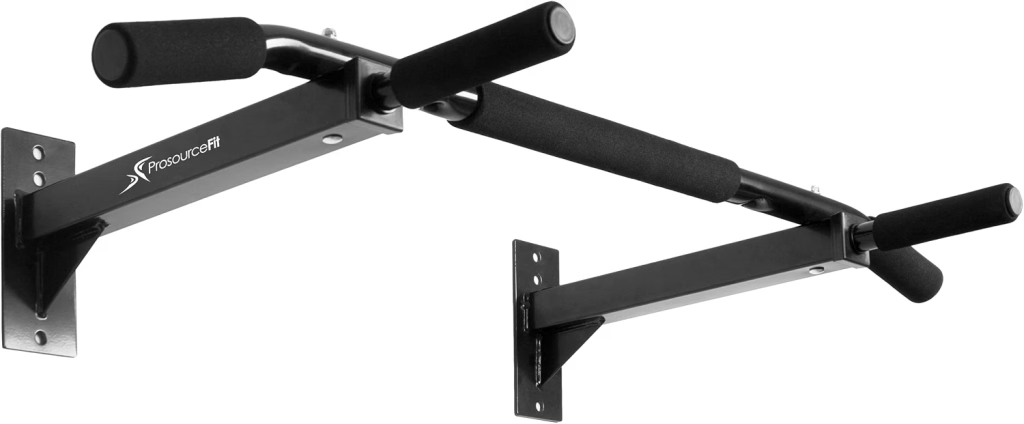
ProsourceFit Wall-Mounted Pull-Up / Chin-Up Bar — Heavy Duty 300 lb. Capacity
Permanent, architectural, and rated for serious use. This home gym essential is the signal that this room was designed for training rather than adapted from something else.
The adjustable bench serves this setup for incline work, split squats, and the accessory exercises that complement mat-based Pilates training. No additional bench is required.
For readers with sufficient floor space and budget — a compact Pilates reformer positions against the wall when not in use. Entry-level reformers from AeroPilates or Align-Pilates start at $400 to $800 and bring the full reformer movement library into a spare bedroom without requiring commercial equipment footprints. Measure the wall clearance before purchasing — a standard reformer requires approximately 90 inches of wall length.
Training Setup 3: Cardio and Conditioning
For the reader prioritizing cardiovascular fitness, fat loss, or athletic conditioning alongside or instead of strength training.

Cardio in a spare bedroom gym introduces one consideration that doesn’t exist in a garage or basement — noise. Impact transmitted through a residential floor to adjacent rooms or the floor below is the constraint that shapes every equipment decision in this training setup. The Clean Minimalist solution to this constraint is characteristically precise: choose equipment that performs well and generates minimal impact rather than trying to soundproof a room after the fact.
The Equipment:
A walking pad — not a full treadmill — is the Clean Minimalist spare bedroom’s cardio solution. Walking pads fold completely flat and store under the bed or flat against the wall, taking up zero visual space between sessions. They generate significantly less impact noise than running on a standard treadmill and are appropriate for the floor load of a residential spare bedroom in a way that heavier commercial-grade treadmills are not.
WalkingPad or Urevo walking pads in white or light grey maintain the visual language of this aesthetic. At $300 to $500 they represent a meaningful investment that delivers genuine cardiovascular training in a form factor that disappears when not in use.
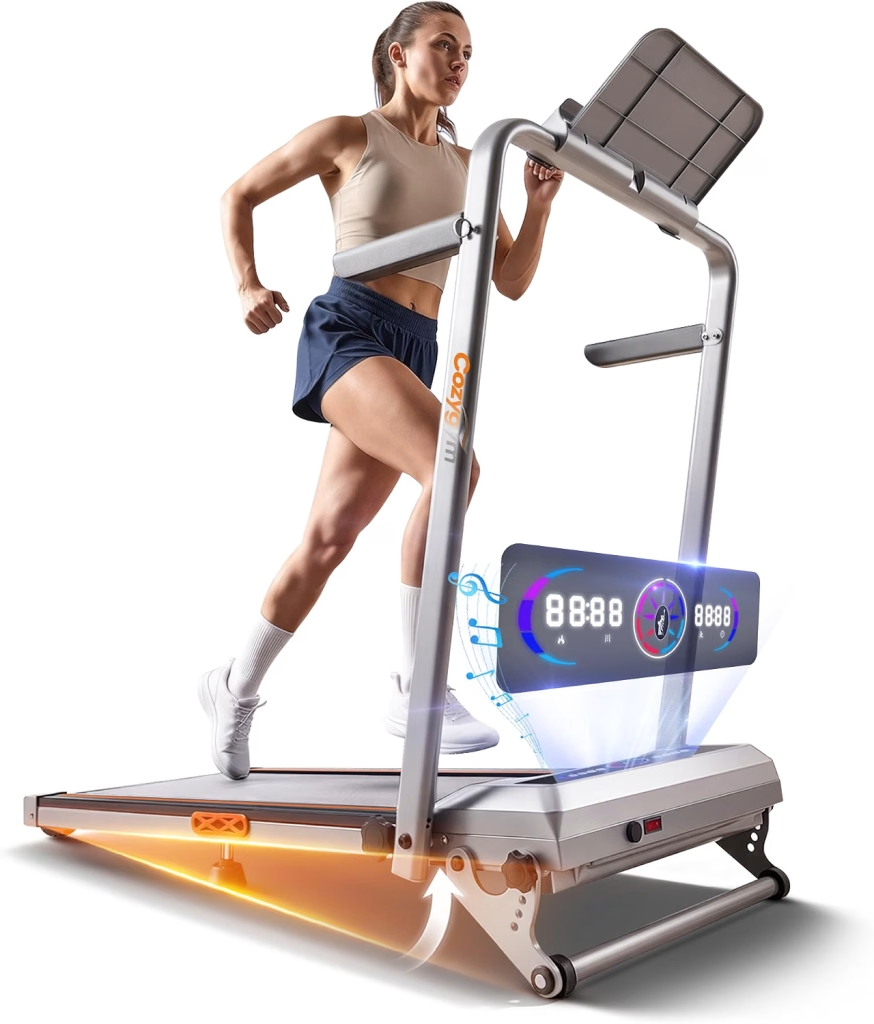
Cozygym 5 in 1 Compact Foldable Walking Pad with Incline and Handle Bar — 18% Incline
The cardio solution that doesn’t compromise the aesthetic. Folds completely flat for storage under the bed or against the wall — zero visual presence between sessions. The 18% incline range and handlebar make this a genuine training tool rather than a walking novelty, and the compact footprint means it belongs in a spare bedroom in a way that a full treadmill never would.
A jump rope stored on one of the wall hooks — a speed rope or weighted rope in a neutral color — adds high-intensity interval training capability at zero floor space cost. Ten minutes of jump rope intervals at moderate intensity produces cardiovascular adaptation equivalent to significantly longer steady-state cardio sessions.
Resistance bands and adjustable dumbbells handle dumbbell complexes and metabolic strength circuits — consecutive compound movements performed with minimal rest that develop cardiovascular fitness alongside muscular endurance. A dumbbell complex requiring three movements and twelve repetitions each produces significant conditioning effect from a set of adjustable dumbbells and a small section of floor.
Noise Management:
The three-eighths inch rubber tile flooring specified in the space setup section reduces impact transmission meaningfully but not completely. If the room shares a floor with living space below, upgrade to half inch tiles and add a thin plywood subfloor layer beneath the mat. The combination of plywood and rubber tile absorbs impact before it reaches the structural floor — the most effective residential noise reduction solution available without acoustic construction.
Training Setup 4: Yoga, Stretching, and Recovery
For the reader using the spare bedroom gym for active recovery, flexibility training, or a dedicated yoga practice alongside another primary training method.

Of the four training setups in this article, the yoga and recovery setup requires the least equipment and demands the most from the space itself. The quality of the environment — the light, the stillness, the visual calm — is as important to the training outcome as anything on the equipment list. A yoga practice in a poorly lit, cluttered room produces a fundamentally different experience than the same practice in a warm-lit, completely clear, intentionally designed space.
The Clean Minimalist spare bedroom is the only home gym aesthetic in this guide that is genuinely, functionally suited to yoga and recovery work as a primary training modality. The Athlete Cave is too energetically intense. The Industrial Loft is too raw. The Naturalist gym shares some of this quality but the Clean Minimalist’s specific combination of warmth, stillness, and visual restraint creates the most naturally appropriate yoga environment available in a home gym context.
The Equipment:
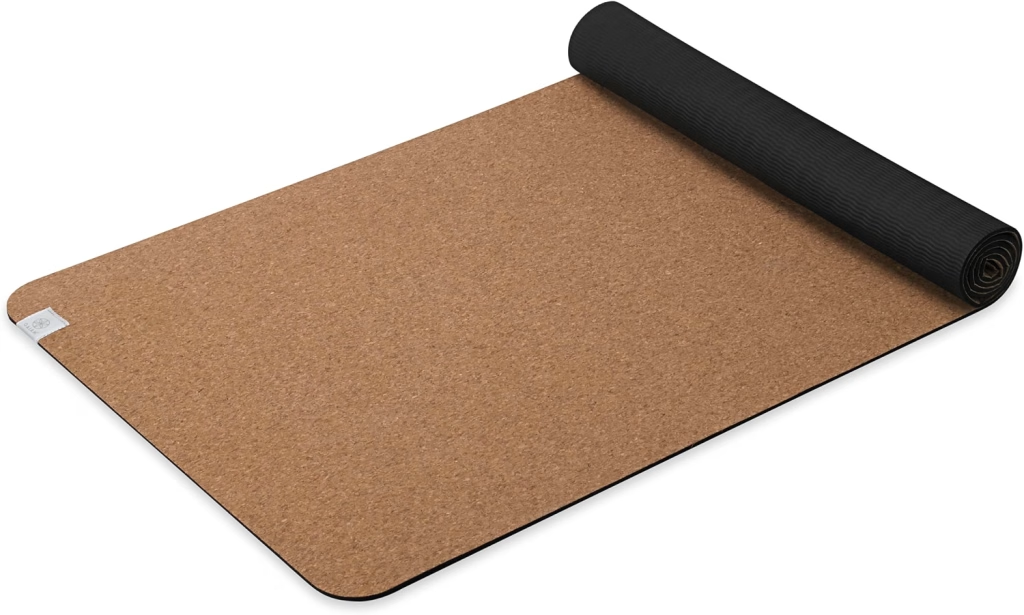
A premium yoga mat in cork or natural rubber — in warm sand, slate, or natural cork color. Cork mats are naturally antimicrobial, provide excellent grip in both dry and humid conditions, and read as a natural material that belongs in this space in a way that synthetic mats don’t. Manduka eKO or Yoloha cork mats are both premium options at $80 to $150.
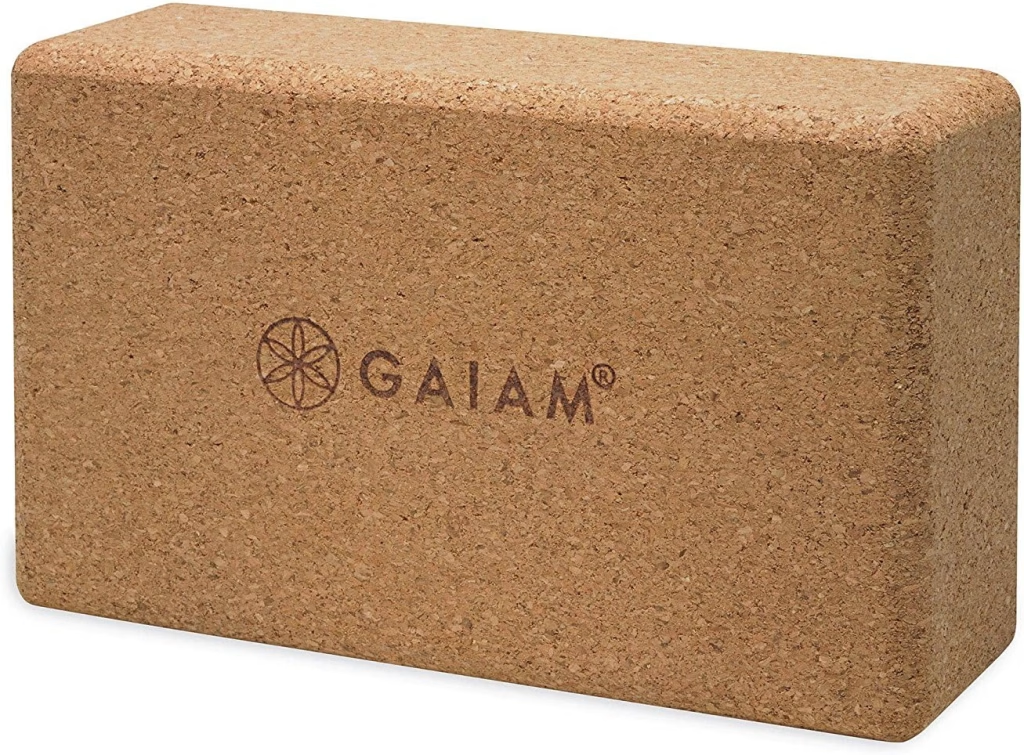
Two yoga blocks in cork or foam — stored on the floating shelf beside the water bottle when not in use. Two items on a three-item shelf rather than three. The space they occupy on the shelf is part of the visual composition of the room between sessions.
Gaiam Yoga Mat — Premium 5mm Solid Thick Non Slip
The foundation of the recovery setup. Five millimeters of cushioning on a non-slip surface in a neutral colorway that belongs in a Clean Minimalist space — practical, durable, and visually appropriate in a way that patterned or brightly colored mats are not.
Gaiam Yoga Block — EVA Foam for Balance and Stretch
The piece most home yoga practitioners skip and most yoga teachers consider essential. Two blocks extend reach, support alignment, and enable the deeper poses that a yoga practice without props quietly avoids. Stored on the floating shelf between sessions — present without being prominent.
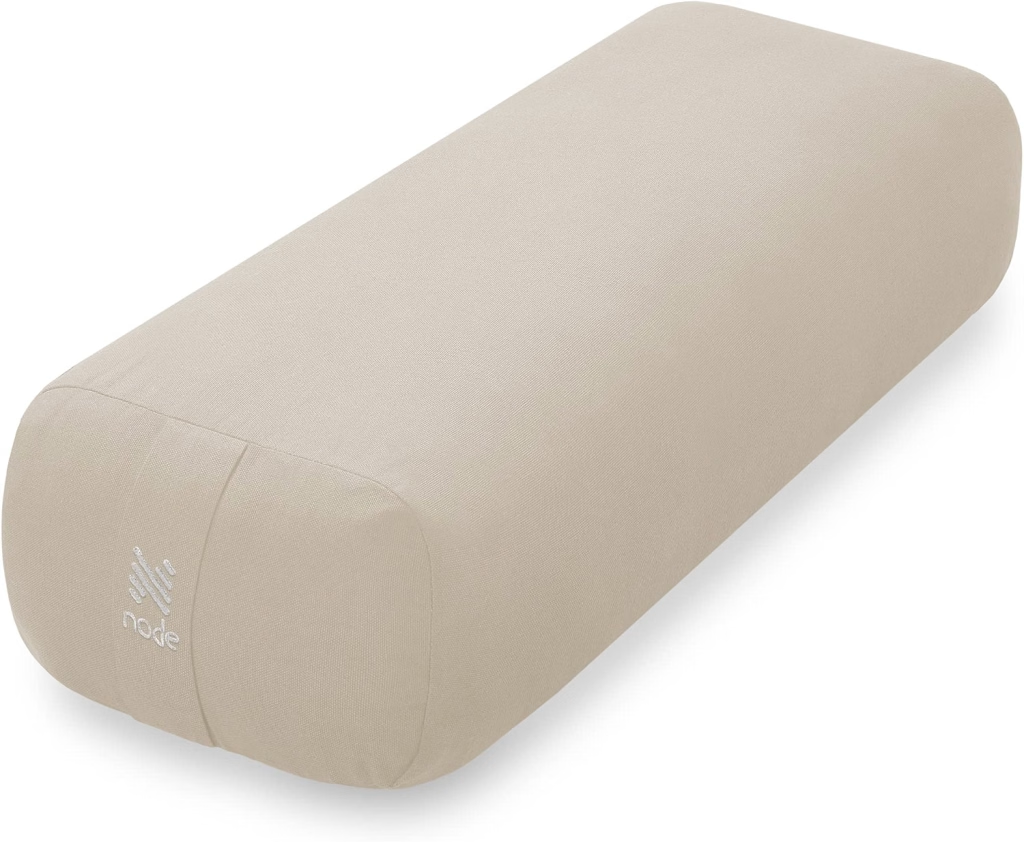
A yoga bolster in natural linen or cotton fabric — stored beneath the bench when folded or in the natural fiber basket beside it. Essential for restorative poses and yin yoga practice and the piece of equipment most commonly omitted from home yoga setups despite being the one that enables the deepest recovery work.
Node Fitness Yoga Meditation Cushion — 25″ x 12″ Rectangular Bolster
The recovery tool that makes the difference between a yoga session and a genuine restorative practice. A quality bolster supports the passive holds and yin poses that release the tension that active training creates — and in a natural fabric at this size it reads as a design element in the space rather than a piece of equipment.
Resistance bands in the neutral tones already mounted on the wall hooks serve the mobility work that bridges yoga and strength training — banded hip openers, shoulder mobility sequences, and assisted hamstring stretching that extends the benefit of both practices.
The Morning Light Consideration:
The specific quality of morning light in a white-walled spare bedroom with one east or south-facing window between 6 and 9am is genuinely worth planning around. If the room’s window orientation allows it, a morning yoga practice in natural light on a cork mat in a clean, uncluttered space produces a quality of session that no amount of artificial lighting can replicate. Schedule the yoga and recovery sessions for the times when the natural light is best. Let the room’s best feature do the work that no piece of equipment can do for you.
The Room That Finally Earned Its Place
The spare bedroom that was doing nothing useful is now doing the most important thing in the house.
It trains four different ways. The space resets in thirty seconds. It serves guests when it needs to. And ultimately it looks exactly the same the morning after a session as it did the morning before it — because the end-of-session reset is not a discipline requirement, it is a design feature that was built into the space from the beginning.
The Clean Minimalist spare bedroom gym is not the gym with the most equipment. It is the gym with exactly the right equipment — chosen deliberately, positioned intentionally, and maintained with the same standard the rest of this space demands. The discipline required to keep it that way is the same discipline that makes every session inside it better than it would be anywhere else.
This is what the Iron Paradise looks like when you build it in the room that was closest to you the whole time.
If you haven’t yet identified which home gym aesthetic is yours, the free SOMA Dream Gym Style Guide walks you through all five — with mood boards, equipment guides, and the framework for finding the space that reflects who you’re becoming.

Leave a Reply