

Whether you’re setting up your first home gym or finally committing to a strength routine, choosing the right beginner strength training equipment can feel overwhelming. Walk into any sporting goods store and you’ll find an entire wall of gear promising to transform your body — most of it unnecessary for someone just starting out.
The truth is, building real strength as a beginner doesn’t require a commercial gym setup. It requires a handful of well-chosen tools, a solid plan, and the consistency to see it through. This guide cuts through the noise and focuses on eight essential pieces of beginner strength training equipment that cover every movement pattern your body needs — pushing, pulling, hinging, squatting, and carrying.
We’ve also organized these picks with budget and space in mind, because the best home gym is the one you’ll actually use.
One more thing worth saying upfront: this isn’t a list built around what’s trending on social media or what pays the highest affiliate commissions. Every piece of beginner strength training equipment featured here was chosen based on build quality, versatility, value, and how well it serves someone in the early stages of a strength training journey. If a piece of gear doesn’t earn its floor space, it didn’t make the cut.
What Beginner Strength Training Equipment Should Actually Do
Before diving into the gear, it’s worth understanding what your equipment needs to accomplish. Beginners benefit most from:
- Compound movements — exercises like squats, deadlifts, rows, and presses that work multiple muscle groups at once and produce the most strength and muscle gain per session.
- Scalability — equipment that grows with you as you get stronger, so you’re not buying new gear every few months.
- Versatility — pieces that support a wide range of exercises rather than locking you into one movement.
- Durability — beginner strength training equipment should last years, not months. Cheap gear breaks, wobbles, or wears out fast and can compromise form and safety.
With those criteria in mind, here are the eight best pieces of beginner strength training equipment you can buy today.
⚠ Affiliate Disclaimer: This article contains affiliate links. If you purchase through links on this page, we may earn a small commission at no extra cost to you. Our recommendations are based on genuine research and testing — your trust matters to us.
1. NUOBELL Adjustable Dumbbells 5–80 lbs

Best for: All-around strength training and versatility
If you could only buy one piece of beginner strength training equipment, adjustable dumbbells would be it — and the NUOBELL 5–80 lb set is one of the finest options on the market.
Traditional dumbbell sets require a full rack and hundreds of square feet of space. The NUOBELL replaces all of that with a single compact unit that dials from 5 to 80 pounds in small increments. The selector mechanism is smooth and intuitive — you twist the handle to your desired weight and lift. No pins to fumble with, no plates to swap mid-set.
For beginners, the 5 lb starting point means you can train safely through early learning phases without ego-loading. For intermediate lifters, the 80 lb ceiling means you won’t outgrow these for years. That range supports nearly every dumbbell exercise in existence: goblet squats, Romanian deadlifts, chest press, bent-over rows, lateral raises, Arnold presses, lunges, farmer carries, and more.
The build quality is notably premium — the handle feels solid and the weight transitions smoothly. This is beginner strength training equipment designed to last.
Why it makes the list: Replaces an entire dumbbell rack. Covers every major exercise. Grows with you from day one through years of progress.
2. Yes4All Cast Iron Kettlebell

Best for: Conditioning, hip hinge patterns, and total-body strength
The kettlebell is one of the most effective and underrated tools in any beginner strength training equipment lineup. Its offset center of gravity — the weight sitting below the handle rather than inline with it — creates a fundamentally different training stimulus than dumbbells, making it exceptional for dynamic, full-body movements.
The Yes4All Cast Iron Kettlebell is a standout choice for beginners because it delivers serious quality at an accessible price. The cast iron construction is solid and durable, with a wide, smooth handle that accommodates both single and double-handed grips. The flat base keeps it stable on the floor, and the powder coat finish provides grip without tearing up your hands.
For beginner strength training, the kettlebell excels at hip hinge patterns — the swing, the deadlift, the clean — movements that are foundational to back health and athletic performance. It also shines in exercises like the Turkish get-up, goblet squat, windmill, and single-arm press, all of which build functional strength that transfers to real life.
Most beginners do well starting with a 16 kg (35 lb) bell for men and a 12 kg (26 lb) bell for women, though Yes4All offers a wide range of weights so you can pick what suits your current strength level.
Why it makes the list: Teaches movement patterns dumbbells can’t replicate. Combines strength and conditioning in a single tool. Durable, affordable, and built to last.
3. Mikolo 7ft Olympic Barbell

Best for: The big compound lifts — squat, deadlift, bench press, overhead press
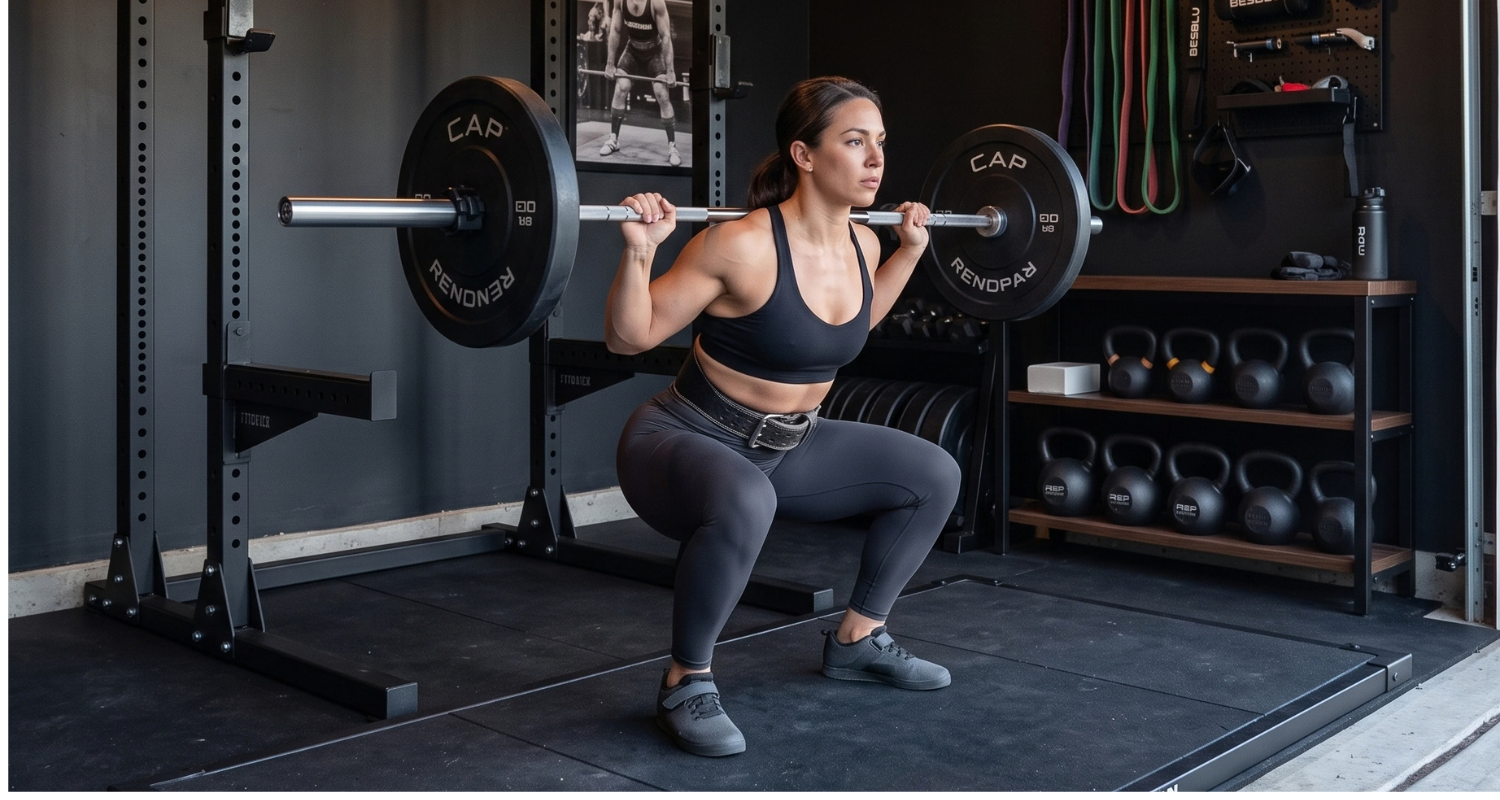
No piece of beginner strength training equipment is more closely associated with getting strong than the barbell. The squat, deadlift, bench press, and overhead press — the cornerstones of virtually every strength program ever written — are all barbell movements. If building serious strength is your goal, a quality barbell is non-negotiable.
The Mikolo 7ft Olympic Barbell earns its place as a top recommendation for beginners through a combination of quality construction and smart design. It uses a standard 28mm shaft diameter — the right size for comfortable grip on most pulling and pressing movements — and features rotating sleeves that reduce torque on your wrists during dynamic lifts. The knurling is aggressive enough to hold securely without being sharp enough to shred your hands.
At 7 feet, this is a full-size Olympic barbell, which means it pairs with standard 2-inch Olympic weight plates and fits comfortably in a squat rack or over a bench. It’s built to handle serious loads, so beginners won’t be stressing about the bar’s limits anytime soon.
Why it makes the list: The barbell is the single best tool for progressive overload — the principle of consistently adding weight over time that drives long-term strength gains. No beginner strength training equipment collection is complete without one.
4. Steel Olympic Plates Set (175 lb)

Best for: Loading the barbell progressively from beginner through intermediate
A barbell without plates is just an expensive stick. The Steel Olympic Plates Set at 175 lbs gives beginners everything they need to start loading meaningful weight and progress steadily for a long time.
Steel plates are the gold standard for home gyms. Unlike bumper plates (designed for Olympic weightlifting where drops are common), steel plates are denser, more compact, and more durable for traditional strength training. The smaller diameter means more plates fit on the bar, and they stack tightly without taking up excessive sleeve space.
A 175 lb set typically includes a range of plate sizes — from small 2.5 lb and 5 lb increments up to 25 lb and 45 lb plates — which is exactly what beginner strength training requires. Small plates matter enormously in early training because the ability to add just 5 lbs to a lift (2.5 lbs per side) is the difference between making progress every week and stalling out.
The machined center holes ensure a snug fit on any standard Olympic barbell, and the clean finish resists rust with proper care.
Why it makes the list: Progressive overload is the engine of strength gains. Having the right plate variety — especially smaller increments — keeps beginners progressing week after week instead of hitting a wall.
5. MAJOR Fitness Adjustable Bench

Best for: Pressing movements, incline rows, step-ups, and support exercises
The adjustable bench is the piece of beginner strength training equipment most people skip — and most people regret skipping. Without a bench, your pressing options are limited to the floor. With one, your exercise library expands dramatically.
The MAJOR Fitness Adjustable Bench is a commercial-quality option built for serious use. It offers multiple back pad angle adjustments — flat, incline, and decline positions — which means it supports flat bench press, incline dumbbell press, incline rows, seated shoulder press, step-ups, and a long list of accessory exercises. The padding is firm enough to provide stable support without being uncomfortably hard, and the steel frame handles heavy loads without rocking or wobbling.
For beginner strength training specifically, the flat and incline positions are most important. Flat bench press (with dumbbells or a barbell) is a foundational upper body push exercise. Incline variations shift emphasis to the upper chest and front deltoids for more complete development. The bench also doubles as a support surface for single-arm dumbbell rows — one of the best back exercises a beginner can do.
Look for a bench rated for at least 600 lbs of combined user and load weight. The MAJOR Fitness bench clears this threshold comfortably.
Why it makes the list: Unlocks the full range of pressing and rowing exercises. Sturdy enough for heavy barbell work. This is beginner strength training equipment that pays dividends immediately.
6. KakiClay Pull Up Bar

Best for: Upper body pulling strength — lats, biceps, rear delts
Pulling strength is one of the most underdeveloped qualities in beginners, and it’s also one of the most important for balanced shoulder health and overall upper body development. The pull-up is the gold standard pulling exercise — it builds the lats, biceps, rhomboids, and rear deltoids simultaneously, and it requires nothing but your bodyweight and a bar.
The KakiClay Pull Up Bar mounts in a standard doorframe without drilling or permanent installation. The design distributes weight across the door frame rather than putting stress on a single point, which means it’s stable under full bodyweight without damaging your walls or doors. Multiple grip positions — wide, neutral, and narrow — let you target different areas of the back and vary your training.
For beginners who can’t yet do a full pull-up, resistance bands (covered below) can be looped over the bar to provide assistance, making this a progression-friendly piece of beginner strength training equipment that scales as your strength grows.
Why it makes the list: Bodyweight pulling is essential for balanced upper body development. This bar is affordable, requires no installation, and can support a beginner through years of pull-up progression.
7. BesBlu Resistance Band Set

Best for: Assisted movements, warm-ups, mobility, and accessory work
Resistance bands are the most versatile and portable piece of beginner strength training equipment on this list — and the most frequently underestimated. The BesBlu Resistance Band Set includes multiple bands of varying thickness, which translates to a wide range of resistance levels that can be used alone or stacked.
For beginners, resistance bands serve several critical functions:
Assisted pull-ups: Loop a thick band over the pull-up bar, place your knee or foot in it, and it offloads a portion of your bodyweight to help you complete reps you couldn’t manage unassisted. This is one of the best pull-up progression methods available.
Warm-up and activation: Banded exercises like monster walks, pull-aparts, and face pulls activate small stabilizing muscles before heavier lifts, reducing injury risk and improving movement quality.
Accessory exercises: Banded rows, curls, tricep pushdowns, and lateral raises complement barbell and dumbbell work and can be done anywhere — no rack, no bench, no floor space required.
Mobility and stretching: Bands are exceptional tools for improving hip, shoulder, and ankle mobility, which directly impacts how well beginners move through foundational strength exercises.
The BesBlu set includes a range of resistance levels from light to heavy, clip handles for tube-style exercises, ankle straps, and a door anchor — making it a complete system rather than just a few rubber loops.
Why it makes the list: No piece of beginner strength training equipment offers more versatility per dollar. Bands fill the gaps that free weights can’t, and they travel anywhere.
8. AIRHOP High Density EVA Foam Tiles

Best for: Floor protection, joint comfort, noise reduction, and defining your training space
Gym flooring is the unglamorous but genuinely important finishing piece of any beginner strength training equipment setup. The AIRHOP High Density EVA Foam Tiles deliver on every front.
Dropped dumbbells, dragged kettlebells, and repeated heavy footfalls destroy hardwood, laminate, and tile floors. EVA foam tiles absorb impact, protect your subfloor, and prevent weights from scratching or gouging the surface beneath. They also reduce noise transmission — important for apartment dwellers or anyone training while others sleep.
For the lifter, foam tiles provide meaningful cushioning during floor-based exercises like deadlifts, push-ups, stretching, and core work. High-density foam provides enough firmness to stand and lift on without the squishy, unstable feel of softer mats. The AIRHOP tiles are interlocking, so you can configure them to fit any space — a 6×6 ft area is plenty for most beginner home gym setups.
Beyond practicality, flooring defines your training space. Laying down tiles creates a dedicated zone that signals — psychologically — that this is where you work. That mental boundary matters more than most beginners expect.
Why it makes the list: Protects your floors, protects your joints, and completes the home gym setup. Beginner strength training equipment isn’t just the weights — it’s everything that makes your training space functional and safe.
How to Build Your Beginner Strength Training Equipment Setup by Budget
Not everyone is ready to buy all eight pieces at once, and that’s completely fine. Strength training is a long game, and your equipment should grow with your commitment. Here’s how to phase your purchases:
Tier 1: Under $150 — Start Here
- BesBlu Resistance Bands
- KakiClay Pull Up Bar
- Yes4All Cast Iron Kettlebell (one or two weights)
This minimal setup supports full-body conditioning, pulling strength, and fundamental movement patterns. It’s enough to build a meaningful base and test your commitment before investing more.
Tier 2: $150–$600 — The Core Setup
- Add NUOBELL Adjustable Dumbbells
- Add MAJOR Fitness Adjustable Bench
- Add AIRHOP Foam Tiles
Now you have a genuinely complete beginner strength training equipment setup. The adjustable dumbbells unlock hundreds of exercises, the bench opens up pressing and rowing movements, and the flooring makes everything safer and more comfortable.
Tier 3: $600+ — The Full Home Gym
- Add Mikolo 7ft Olympic Barbell
- Add Steel Olympic Plates Set (175 lb)
The barbell and plates transform your setup from a solid home gym into a legitimate strength training facility. At this tier, you have everything needed to run any beginner or intermediate strength program written.

Key Principles to Get the Most from Your Beginner Strength Training Equipment
Having the right beginner strength training equipment is step one. Using it effectively is step two. A few principles that separate beginners who make fast progress from those who spin their wheels:
Train compound movements first
Squats, deadlifts, presses, and rows should form the backbone of every training session. These multi-joint exercises stimulate more muscle, build more strength, and burn more calories than isolation movements. Save curls and lateral raises for the end of your workout — treat them as a bonus, not the main event.
Prioritize progressive overload
The single most important variable in strength training is progressive overload — consistently adding more weight, reps, or sets over time. Track your workouts. Know your numbers. Aim to improve something every session, even if it’s just one extra rep. A training log — even a simple notes app on your phone — is one of the most underused tools in beginner strength training.
Don’t overbuy at first
One of the most common beginner mistakes is spending thousands of dollars on equipment before establishing a consistent training habit. Start with Tier 1 or Tier 2. Prove to yourself you’ll use it. Then invest more. Beginner strength training equipment is most valuable when you’ve already built the habit around using it.
Learn the movements before loading them
Bodyweight squats before barbell squats. Banded rows before bent-over rows. Learning proper movement patterns with light or no weight prevents injury and builds the motor patterns that allow for heavier loading later. Consider spending your first two to four weeks focused purely on technique with very light loads before pushing intensity.
Recover intentionally
Strength is built during rest, not during training. When you lift, you’re creating micro-damage in muscle tissue. Sleep, nutrition, and rest days are when that tissue repairs and grows back stronger. Beginners often underestimate how much rest matters. Aim for 7–9 hours of sleep per night, eat enough protein (roughly 0.7–1g per pound of bodyweight), and take at least one to two full rest days per week. Your beginner strength training equipment can’t do its job if your body isn’t recovering properly between sessions.
Consistency beats intensity
Three solid training sessions per week, every week, for a year will produce far more results than training five days a week for a month and burning out. Your beginner strength training equipment is only as valuable as the consistency with which you use it. Show up, do the work, recover, and repeat. That cycle — more than any single piece of gear — is what produces lasting results.
Related Article: How to Start Strength Training: The Complete Beginner’s Guide
Final Thoughts
The best beginner strength training equipment is the equipment you’ll actually use — consistently, intelligently, and progressively over time. The eight pieces covered in this guide — the NUOBELL Adjustable Dumbbells, Yes4All Kettlebell, Mikolo Barbell, Steel Olympic Plates, MAJOR Fitness Bench, KakiClay Pull Up Bar, BesBlu Resistance Bands, and AIRHOP Foam Tiles — cover every movement pattern, every training need, and every budget level a beginner is likely to encounter.
You don’t need all of it on day one. Start where your budget allows, commit to learning the fundamental movements, and add pieces as your training evolves. Done right, this collection of beginner strength training equipment will carry you from your very first workout to years of consistent, measurable progress.
The gym is set up. The rest is up to you.
One final note: don’t wait until your setup is “complete” to start training. The biggest mistake beginners make is letting the perfect be the enemy of the good. A kettlebell and a pull-up bar is enough to start building real strength today. Every piece you add after that just expands what’s possible — it doesn’t create the foundation. You do that with the first workout, and every one that follows.
Related Article: Best Strength Training Programs for Beginners

Leave a Reply