

If you’ve come to the conclusion that you need to start strength training- you’re about to make one of the best decisions of your life. This statement sounds like an exaggeration, but when you consider how resistance training improves muscle mass, bone density, metabolic rate, posture, and even neurologic/ mental health– strength training truly is a goldmine of health benefits.
The next natural (and most crucial) step is deciding the best strength training program for you. Strength training programs today offer many routes to get to the same destination, but the sheer volume of choices can be overwhelming. Do you choose a full body routine, a split program, powerlifting template? The internet offers a lot of “solutions” but not as many answers to how to approach strength training as a beginner.
This guide was written to offer you both answers and solutions. We’ll dissect what makes a beginner program effective, review the five most popular programs you can begin immediately, help you understand the fundamental exercises every beginner should master, and provide you with the tools to help you pick the right program for your goals and lifestyle.
Whether you’re a former gym-rat getting back into the swing of things or a novice just starting out, you’ll have everything you need to start developing serious strength today.
What Makes a Great Strength Training Program for Beginners?
Before we jump into the top programs, you have to understand the principles that make them great in the first place. The training routines that yield the most gains in strength will have these points in common– however, to lack even one will inevitably lead to a sub-par program at best and a potentially dangerous one at worst.
1. Progressive Overload
Progressive overload is the cornerstone of strength training– without it the whole equation falls apart. It simply defines increasing intensity a little more over time– whether that means adding weight to the bar, performing more reps, or reducing rest periods. Without this stimulus, your body has no need to change, which means it has no need to get stronger.
The best strength training programs for beginners bake progressive overload into the very foundation of its routines, typically adding small amounts of weight every session. This method is called linear progression, and it’s a period in which beginners enjoy the benefit of a straight-forward strategy and explosive initial strength gains.
2. Compound Movements as the Foundation
If progressive overload is the method for increasing strength, compound exercises represent the techniques that make it possible. Unlike exercises that target one muscle group, compound exercises work to recruit multiple muscle groups simultaneously. This makes them ideal for developing effective, well-rounded strength throughout the body. The main compound exercises every beginner should incorporate include:
- Squat — the king of lower body exercises, working quads, hamstrings, glutes, and core
- Deadlift — a full-body pull that builds posterior chain strength like nothing else
- Bench Press — the primary upper body push, targeting chest, shoulders, and triceps
- Overhead Press — builds shoulder and upper back strength while requiring core stability
- Barbell Row — develops the back muscles and creates the balance needed for healthy posture
3. Appropriate Training Frequency
While training frequency is a topic for debate in the fitness industry, beginners will benefit from training each muscle group around two to three times per week. For an athlete just starting out, the nervous system is adjusting in order to utilize muscle fibers efficiently. This frequent practice will accelerate motor skills, muscle size, and strength gains. Full-body programs three days per week are ideal for most beginners for exactly this reason.
4. Simplicity Over Complexity
While advanced programs include dozens of exercises, numerous periodization techniques, and multiple rep ranges– the beginner has no need for this. Complexity for the beginner is more of a hindrance than a help; simplicity and consistency are the initial keys to success. Remember, the best beginner program is the one you’ll actually stick to.
5. Built-In Recovery
Recovery is such an overlooked aspect of both advanced and beginner strength training. Muscle is not built in the gym — it is built during rest and recovery. Effective beginner programs include rest days between sessions and do not exceed what a novice can recover from. Training hard with inadequate recovery leads to stalled progress, fatigue, and injury.

The 5 Best Strength Training Programs for Beginners
Below is a sneak peak of five of the most tried and tested programs for developing superior strength. While countless other routines exist, these juggernauts of the fitness community have been tested by thousands of rookie lifters with great success.
| Program | Days/Week | Focus | Equipment | Best For |
| StrongLifts 5×5 | 3 | Compound lifts | Barbell + rack | Pure strength |
| Starting Strength | 3 | Barbell basics | Barbell + rack | Strength + technique |
| GZCLP | 3–4 | Strength + volume | Barbell + rack | Faster progression |
| Greyskull LP | 3 | Strength + aesthetics | Barbell + rack | Size & strength |
| PPL (Beginner) | 3–6 | Push/Pull/Legs | Barbell + dumbbells | Flexible schedules |
1. StrongLifts 5×5
Best for: Complete beginners who want maximum simplicity and rapid strength gains.
If you’re looking for lifting simplicity, strength training doesn’t get more basic than StrongLift 5×5. It strips everything down to just five exercises performed over two alternating workouts. This workout structure provides an excellent opportunity to master the technique of the five great compound movements and the simplicity to prioritize 1 goal: strength.
Workout A: Squat, Bench Press, Barbell Row
Workout B: Squat, Overhead Press, Deadlift
You train three days per week (Monday, Wednesday, Friday is classic), alternating between Workout A and Workout B. The squat is performed every session, making it the cornerstone of the program. You perform 5 sets of 5 reps for most exercises, and add 2.5–5 kg to the bar each session as long as you complete all reps.
The beauty of StrongLifts is its scalability. When you can no longer add weight every session, the program has built-in deload protocols to keep you progressing. The companion app is also excellent for tracking workouts automatically.
Ideal if: You want to get strong fast, enjoy tracking numbers, and have access to a barbell and squat rack.
2. Starting Strength
Best for: Beginners who want to deeply understand the fundamentals of barbell training.
Created by coach Mark Rippetoe, Starting Strength is one of the most influential beginner programs ever written. The program shares structural similarities with StrongLifts — three days per week, five reps, linear progression — but places an extraordinary emphasis on technique coaching.
The Starting Strength approach treats the barbell lifts as skills to be learned, not just exercises to be performed. The accompanying book is considered essential reading by many coaches and provides an unmatched level of detail on squat, deadlift, bench press, and overhead press mechanics.
The core lifts are the squat, deadlift, press, power clean, and bench press. The program adds 5 lbs to squats and deadlifts each session and 2.5 lbs to upper body lifts.
Ideal if: You are analytical, serious about mastering technique, and want to understand the ‘why’ behind every movement.
3. GZCLP
Best for: Beginners who want more volume and variety without overcomplicating things.
Developed by powerlifter Cody Lefever (known online as GZCL), GZCLP is a tiered linear progression program that many experienced lifters consider the most intelligently designed beginner template available.
The program divides exercises into three tiers:
- Tier 1 (T1): Heavy compound lifts — squat, bench, deadlift, overhead press — performed for lower reps (5×3) with maximum intensity
- Tier 2 (T2): Secondary compound movements performed for moderate volume (3×10), building work capacity and reinforcing movement patterns
- Tier 3 (T3): Isolation and accessory work performed for high reps (3×15+), targeting specific weaknesses or aesthetics
This tiered structure means your program automatically adjusts intensity throughout the session, and each tier has its own built-in progression scheme. When one tier stalls, the others continue progressing.
Ideal if: You want to do more than just the bare minimum and enjoy having some variety in your training.
4. Greyskull LP
Best for: Beginners interested in both strength and physique development.
Greyskull LP was created by John Sheaffer as a modification of Starting Strength, designed to be more amenable to those interested in aesthetics alongside raw strength. The core structure is similar — three days per week, alternating workouts — but with several key modifications.
The most notable change is the final set of each exercise, which is performed as an AMRAP (As Many Reps As Possible) set. Instead of stopping at 5 reps, you push for as many as you can safely complete with good form. This drives additional volume and muscle growth beyond what standard 5×5 programs provide.
Greyskull LP also includes more flexibility for adding accessory work like curls, face pulls, and tricep extensions — exercises that contribute to a balanced physique without detracting from the core program.
Ideal if: You want to get strong AND look good, and you appreciate some flexibility to customize your program.
5. Beginner Push/Pull/Legs (PPL)
Best for: Beginners who prefer training more frequently or enjoy more exercise variety.
Push/Pull/Legs is a training split that organizes workouts by movement pattern: push days train chest, shoulders, and triceps; pull days train back and biceps; leg days train quads, hamstrings, and glutes. Beginners typically run a three-day version, training each pattern once per week before progressing to a six-day version.
PPL introduces more exercise variety than the programs above and transitions naturally into intermediate programming without requiring a major overhaul of your training structure. It is also widely accessible, as most exercises can be performed with dumbbells if a barbell is not available.
Ideal if: You enjoy training frequently, want more variety in your sessions, or prefer a split-style approach.
| 💡Recommendation: For most complete beginners, StrongLifts 5×5 or GZCLP offer the best balance of simplicity, effectiveness, and built-in progression. If you are more experience with gym equipment, Greyskull LP offers outstanding strength and physique results. |

The Essential Beginner Movements: A Quick-Start Guide
No matter which program you choose, you’ll become very well acquainted with a handful of exercises. They will represent the non-negotiable core of your training– without them there is no strength training. So before picking up a barbell let’s discuss these fundamental movements.
The Squat
The squat is without a doubt the “King” of lower body exercises and often one of the most technically demanding for novices. Some important cues to remember are as follows:
- Stand with feet shoulder-width apart, toes pointed slightly outward
- Brace your core as if you are about to take a punch
- Push your knees out in line with your toes throughout the movement
- Aim to break parallel — hips below the crease of the knee — on each rep
- Drive through your whole foot to stand, keeping your chest tall
The Deadlift
If the Squat is the king of lower body exercises, the deadlift serves as the “Queen”. Targeting the posterior chain (muscles lining the back of the body– back, glutes, hamstrings, etc.) the two exercises work together to balance the strength and coordination of the lower body. This exercise and its variations also require a great deal of technical skill. If you neglect this you run the very serious risk of injuring yourself.
- Set up with the bar over your mid-foot, roughly 1 inch from your shins
- Hinge at the hips, push them back, and grip the bar just outside your knees
- Take a big breath into your belly, brace hard, and create full-body tension before lifting
- Drive the floor away, keeping the bar close to your body throughout the lift
- Lock out at the top by squeezing your glutes — do not hyperextend your lower back
The Bench Press
The bench press is one of the most popular upper body exercises and a foundational pressing movement of any proper strength program.
- Lie flat with your eyes directly under the bar
- Grip the bar slightly wider than shoulder width, wrists stacked over elbows
- Retract your shoulder blades and create a slight arch in your lower back
- Lower the bar to your lower chest / upper abdomen in a slight arc
- Press explosively back to the starting position, keeping your feet flat on the floor
The Overhead Press
The overhead press has earned its place as one of the most powerful compound lifts on this line-up, requiring just as much technical skill and strength to progress as the bench press.
- Stand with feet hip-width apart, bar resting on your front deltoids
- Grip the bar just outside shoulder width with elbows slightly in front of the bar
- Brace your core, squeeze your glutes, and press the bar straight overhead
- Lock out with arms fully extended and shrug your traps slightly to support the bar overhead
- Lower under control back to the starting position
| ⚠️ Safety First: If you are brand new to barbell training, consider investing in two to four sessions with a qualified strength coach before beginning a program. Learning proper form from the outset will accelerate your progress and significantly reduce your injury risk. |
Related Article: Best Compound Exercises for Muscle Growth
How to Set Up Your Training Schedule
A common pitfall for many beginners is not form or technique, but actually training too often. The key to strength training when starting out is developing a schedule with the right frequency; not too many sessions to hinder recovery, but not too few sessions to derail strength progression. Fortunately, each of the mentioned programs have set training days and schedules, which means all you need to do is learn and integrate them into your own week.
For Full-Body Programs (StrongLifts, Starting Strength, Greyskull, GZCLP)
The full body programs adhere to a very basic structure; training sessions per week with a rest day between workouts. While a typical Monday, Wednesday, Friday schedule suits most lifters, how you orientated training days will depend on your own schedule.
- Day 1 (Monday): Workout A
- Day 2 (Wednesday): Workout B
- Day 3 (Friday): Workout A
- Next week alternates, starting with Workout B
For Push/Pull/Legs (Beginner Version)
A three-day PPL schedule might look like this:
- Monday: Push (Chest, Shoulders, Triceps)
- Wednesday: Pull (Back, Biceps)
- Friday: Legs (Quads, Hamstrings, Glutes, Calves)
Once you have been training consistently for six to twelve months, you can consider extending to a four or six-day version if your recovery allows.
How Long Should Each Session Take?
A beginner session usually takes 45 to 75 minutes, including the initial warm-up sets. Any more time than that usually means a few things; either you’re resting too long between sets, you’re adding exercises the plan doesn’t call for, or you’re socializing too much. Avoid these pitfalls by adhering to the exercises of your chosen program and the standard rest periods between sets (2– 4 minutes for heavy compound exercises and 60– 90 seconds for lighter accessory movements).
Nutrition Basics for Beginner Strength Trainers

Even the best program is only part of the equation. If you practice poor nutritional habits, your strength and muscle growth will suffer the consequences. You don’t need an overly demanding diet or strict calorie counting, but understanding the fundamental principles of good nutrition will do wonders for your progress in and out of the gym.
Protein: Your Most Important Macronutrient
Protein provides the amino acids your muscles need to repair and grow after training. Current evidence supports consuming between 0.7 and 1 gram of protein per pound of bodyweight per day for those engaged in consistent resistance training. Good protein sources include chicken, beef, fish, eggs, dairy, legumes, and protein supplements when needed.
Total Calories: Eat Enough to Train Hard
Building muscle requires energy. If you are consistently under-eating, your body will struggle to recover and grow regardless of how well-designed your program is. Most beginners benefit from eating at or slightly above their total daily energy expenditure (TDEE). If you are unsure of your calorie needs, a TDEE calculator is a useful starting point.
Carbohydrates and Performance
Carbohydrates are your body’s preferred fuel source during high-intensity training like strength work. Do not fear carbohydrates — a well-timed serving of carbs before a session can meaningfully improve your performance and training quality.
Hydration
Even mild dehydration impairs strength and cognitive performance. Aim to drink enough water throughout the day to keep your urine a pale yellow color, and consider sipping water between sets during training.
Common Beginner Mistakes (And How to Avoid Them)
Understanding the most common beginner pitfalls will save you months of frustration and wasted effort.
Ego lifting:
Adding weight before you are ready. Always prioritize technique over the number on the bar. A lighter weight performed correctly builds more strength than a heavy weight performed sloppily.
Program hopping:
Jumping between programs every few weeks because you saw something new online. Pick a proven program and commit to it for at least 12 weeks before evaluating results.
Skipping warm-ups:
Beginning your working sets cold dramatically increases injury risk. Always perform 2 to 3 progressive warm-up sets before your heaviest sets.
Neglecting sleep:
This is where most of your recovery and muscle growth actually happens. Aim for 7 to 9 hours per night. Poor sleep will stall your progress no matter how well you train and eat.
Ignoring pain:
There is a difference between productive discomfort (muscle burn, general fatigue) and pain that signals injury. Never train through sharp or joint-specific pain — see a sports medicine professional if something does not feel right.
Training without a log:
Tracking your workouts — weights, sets, and reps — is essential for monitoring progress. Use an app, a notebook, or a spreadsheet. What gets measured gets managed.
How Long Until You See Results?

This is the question every beginner wants answered, and the honest answer depends on several factors including your genetics, diet, sleep, and training consistency. That said, here is a general timeline you can expect:
Weeks 1–4: Strength gains from neurological adaptation. Your muscles are not yet significantly larger, but your nervous system is becoming more efficient at recruiting muscle fibers. You will notice strength improvements quickly even though the mirror may not show much change yet.
Weeks 4–8: Muscle tissue is beginning to grow. Many beginners start to notice changes in their physique during this period — fuller muscles, better definition, improved posture.
Months 3–6: Significant strength and physique changes become noticeable to others. This is when beginners really start to feel and look like they lift weights.
Months 6–12: You are no longer a complete beginner. Your strength levels are meaningfully above average, and you have built a solid foundation for more advanced training.
| 🔑 Key Takeaway: Consistency is the most powerful variable in your results. Showing up three times per week, every week, for six months will outperform the most perfect program done inconsistently. Do not let perfect be the enemy of good. |
Frequently Asked Questions
Q. Do I need a gym membership to start strength training?
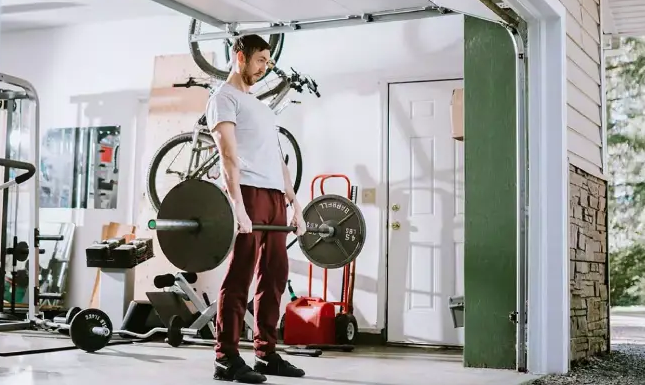
A gym membership may not be necessary– but it’s likely more convenient. Unless you already have a home gym or are willing to invest in home gym equipment like a barbell, weight plates, squat rack, etc., you may benefit from a gym membership. It’s hard to beat the amount of variety in tools and weight selection that commercial gyms offer from the on-set, an advantage that will make your first few months very smooth. However if you’re looking for benefits long-term, it’ll be cheaper to invest in home gym equipment and far more convenient to train from home. That being said, it’s up to you to weigh the pros and cons of either choice.
Q. Can I do cardio while on a beginner strength program?
Definitely, it’ll likely benefit your training too. Cardio is a powerful tool for supporting recovery, improving heart health, and boosting overall well-being. The trick is balancing it in a way that compliments your strength training rather than hindering it. 20– 40 minute moderate cardio sessions about two to three days a week will benefit your strength training and help your recovery.
Q. How do I know when I am no longer a beginner?
You have outgrown beginner programming when you can no longer add weight to the bar every single session (linear progression stalls). At this point, you will need to transition to an intermediate program that uses weekly or monthly progression rather than session-to-session increases. Most people reach this stage after four to twelve months of consistent training.
Q. What if I miss a session?
While it’s not ideal, life happens to everyone. Reset and pick up where you left off. What’s important is understanding the difference between prioritizing necessary breaks (illness, travel, emergencies, etc.) and making excuses to avoid exercises. Consistency doesn’t mean you’ll make it to 100% of your workouts, but the only way to see lasting results is to stay committed to your program over a long period of time.
Q. Is strength training safe for older beginners?
Absolutely. Research consistently shows that strength training is not only safe but particularly beneficial for older adults, improving bone density, joint health, balance, and functional independence. If you have existing health conditions, consult with your physician before starting. Starting with lighter weights and focusing on form is especially important for older beginners.
Conclusion
Starting a strength training program as a beginner is one of the most impactful decisions you can make for your physical and mental health. The science is unambiguous: lifting weights makes you stronger, leaner, healthier, and more confident.
The best strength training program for beginners is one that is built on progressive overload, centers compound movements, allows for adequate recovery, and that you will consistently follow. Whether you choose StrongLifts 5×5 for its simplicity, GZCLP for its intelligent structure, Greyskull LP for its balance of strength and aesthetics, Starting Strength for its technical depth, or a beginner PPL split for its flexibility — all five programs covered in this guide have produced thousands of success stories.
Stop overthinking and start lifting. Pick one program, commit to it for at least twelve weeks, eat enough protein, sleep well, and track your progress. The results will follow.
The best time to start was a year ago. The second best time is today.
Quick Reference: Program Comparison at a Glance
| Program | Days/Week | Focus | Equipment | Best For |
| StrongLifts 5×5 | 3 | Compound lifts | Barbell + rack | Pure strength |
| Starting Strength | 3 | Barbell basics | Barbell + rack | Strength + technique |
| GZCLP | 3–4 | Strength + volume | Barbell + rack | Faster progression |
| Greyskull LP | 3 | Strength + aesthetics | Barbell + rack | Size & strength |
| PPL (Beginner) | 3–6 | Push/Pull/Legs | Barbell + dumbbells | Flexible schedules |

Leave a Reply