
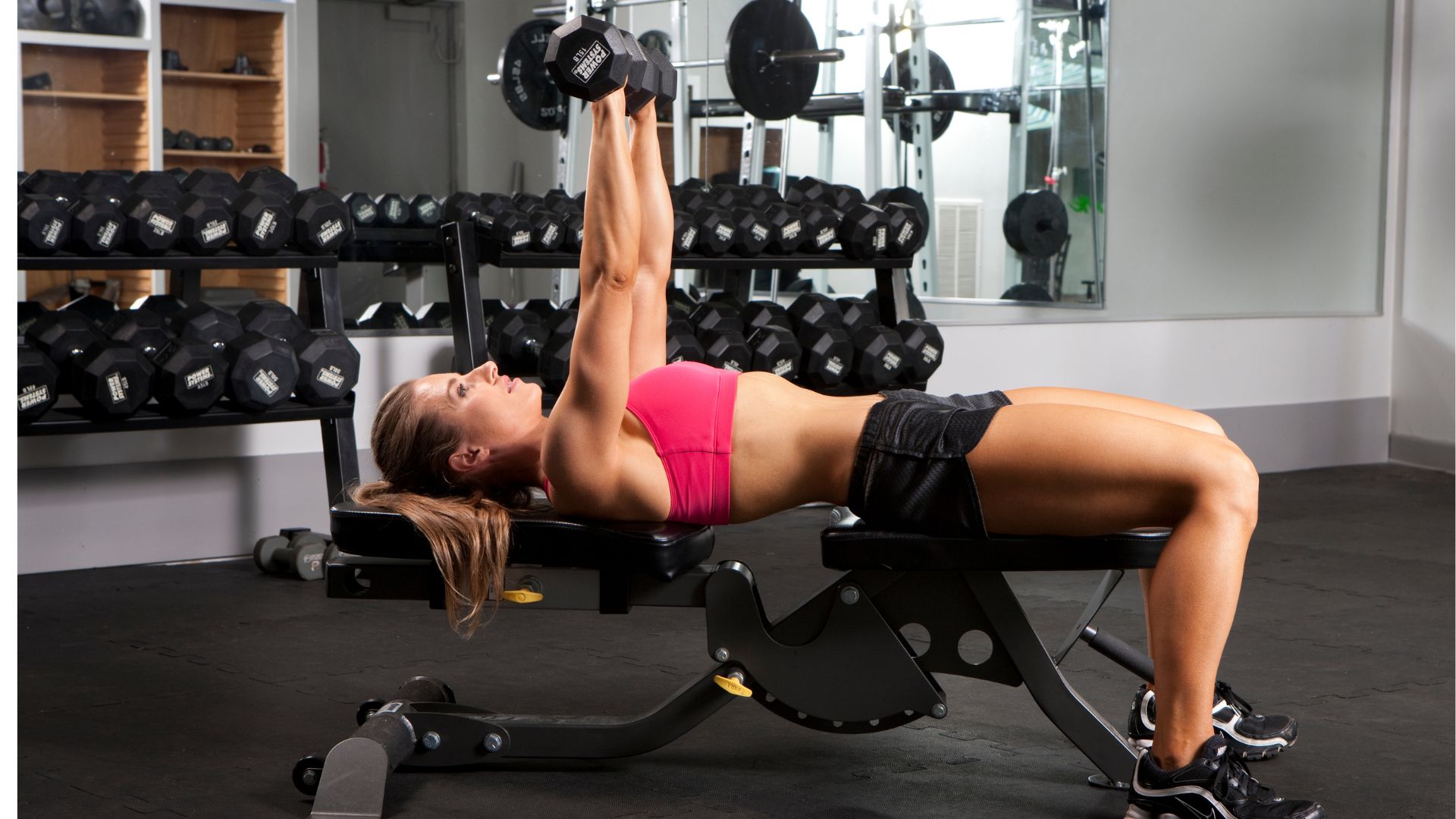
You’ve canceled the gym membership before. Maybe more than once. Not because you didn’t want to train — because the 6 a.m. drive, the wait for equipment, the feeling of being watched while you figured out a new movement, made consistency almost impossible. If that’s you, a home gym workout plan for women isn’t a downgrade from the commercial gym experience. Done right, it’s an upgrade — one that removes every excuse standing between you and showing up.
This is a complete, trainer-built plan: what to buy, how to structure your week, and how to progress without ever stepping foot in a commercial gym. No fluff, no filler — just what actually works.
Why Choose a Home Gym Over a Commercial Gym?
The case for training at home isn’t just about convenience — though the math on that alone is compelling. A mid-range commercial gym membership runs $40–$80 a month. Over three years, that’s $1,440–$2,880 — often more than the cost of a fully equipped home setup you’ll own for a decade or longer. A home gym workout plan for women built around owned equipment stops being a recurring expense and starts being an asset.
But the real advantage is behavioral. Commercial gyms introduce friction at every step: driving there, waiting for a squat rack, feeling watched while you learn a new lift. That friction is often the difference between a workout that happens and one that gets pushed to “tomorrow.” At home, the barrier between deciding to train and actually training is the time it takes to walk into your living room or garage.
There’s also the privacy factor. For many women, especially those newer to strength training, a home gym removes the self-consciousness that can quietly derail consistency — no one’s watching your form while you figure it out, no waiting for the one squat rack in the building, no navigating a space designed without your comfort in mind.

The Freedom of Flexibility
Flexibility matters too. A commercial gym operates on its own schedule — staffed hours, peak-time crowding, closures on holidays when you might actually have the time to train. A home setup runs on your schedule, full stop. A 20-minute window between a work call and picking up kids becomes a viable training session instead of a wasted one.
None of this makes the commercial gym wrong. It makes home training a legitimate, often superior, path for anyone who values ownership, privacy, and eliminating friction between intention and action.
Practical takeaway: if canceled memberships or skipped sessions are a pattern for you, treat that as data — it’s telling you where your actual training environment should be.
Essential Equipment for a Home Gym
You don’t need a fully loaded garage gym to start. What you need is equipment matched to where you are now, with a clear path to add more as your training demands it. Here’s how I break it down for clients building home gym strength training setups from scratch.
Minimal / Budget Setup ($75–$150)
- A set of resistance bands (light to heavy)
- One pair of adjustable or moderate-weight dumbbells
- A workout mat for floor work and stretching
This is enough to run a full beginner program built on bodyweight and band resistance — genuinely enough to get stronger, not just a placeholder until you “get real equipment.”
Mid-Range Setup ($300–$600)
- Adjustable dumbbells (5–50 lbs per hand)
- A flat or adjustable bench
- A doorway or wall-mounted pull-up bar
This tier covers the vast majority of women following a serious home gym workout plan for women for 1–3 years without hitting a plateau from lack of load options.
Full Setup ($800–$2,000+)
- A barbell and weight plates
- A power rack or squat stand
- A bench with rack compatibility
Reserve this tier for once you’ve outgrown dumbbell resistance on compound lifts — usually 12–18 months into consistent training, not week one.
Related Post: Best Budget Home Gym Equipment Under $600
Practical takeaway: buy for where you are, not where you hope to be in a year. An underused power rack is a worse investment than a well-used set of bands.
Strength Training Principles for Women
Let’s clear up the myth that follows almost every woman into her first strength program: lifting weights will not make you “bulky.” Significant muscle size requires a caloric surplus, years of targeted training, and hormonal conditions most women simply don’t have. What strength training actually builds is a leaner, more resilient body — and it does it faster than cardio-only approaches.
The principle underneath every effective program is progressive overload — gradually increasing the demand on your muscles over time, through more weight, more reps, or better control. Without it, your body has no reason to adapt.
Beyond aesthetics, this matters for reasons that outlast any single training season. Strength training preserves bone density, which becomes increasingly important as estrogen levels shift with age. It raises resting metabolic rate by building metabolically active muscle tissue. And it builds the joint and connective tissue resilience that prevents the everyday injuries — a tweaked back lifting groceries, a rolled ankle — that sideline people who never trained for strength in the first place.
Practical takeaway: if you remember one number, remember this — aim to increase load, reps, or control by roughly 5–10% every 1–2 weeks. That’s progressive overload in practice, not theory.
The Home Gym Workout Plan
This is the core of your home gym workout plan for women — a structure you can run indefinitely, scaling with your equipment and experience.

Weekly Split: 4-Day Upper/Lower
For most women training at home, a 4-day upper/lower split hits the sweet spot between frequency and recovery — enough volume to drive progress, enough rest to sustain it long-term.
- Day 1: Lower Body (Strength Focus)
- Day 2: Upper Body (Strength Focus)
- Day 3: Rest or Active Recovery
- Day 4: Lower Body (Volume Focus)
- Day 5: Upper Body (Volume Focus)
- Day 6–7: Rest
Lower Body (Strength Focus): Day 1
| Exercise | Sets | Reps | Rest |
|---|---|---|---|
| Goblet Squat | 4 | 6–8 | 90 sec |
| Romanian Deadlift (dumbbell) | 4 | 8–10 | 90 sec |
| Walking Lunge | 3 | 10 per leg | 60 sec |
| Glute Bridge (banded) | 3 | 12–15 | 45 sec |
| Standing Calf Raise | 3 | 15 | 30 sec |
Upper Body (Strength Focus): Day 2
| Exercise | Sets | Reps | Rest |
|---|---|---|---|
| Dumbbell Bench Press (or floor press) | 4 | 6–8 | 90 sec |
| Bent-Over Row (dumbbell) | 4 | 8–10 | 90 sec |
| Overhead Press | 3 | 8–10 | 75 sec |
| Assisted or Band Pull-Up | 3 | 6–10 | 75 sec |
| Bicep Curl to Overhead Triceps Extension | 3 | 12 | 45 sec |
Lower Body (Volume Focus): Day 4
| Exercise | Sets | Reps | Rest |
|---|---|---|---|
| Bulgarian Split Squat | 3 | 10–12 per leg | 60 sec |
| Banded Deadlift | 3 | 12–15 | 60 sec |
| Step-Ups | 3 | 12 per leg | 45 sec |
| Lateral Band Walk | 3 | 15 per side | 30 sec |
| Wall Sit | 3 | 30–45 sec hold | 30 sec |
Upper Body (Volume Focus): Day 5
| Exercise | Sets | Reps | Rest |
|---|---|---|---|
| Incline Push-Up or Dumbbell Incline Press | 3 | 12 | 60 sec |
| Single-Arm Row | 3 | 12 per side | 60 sec |
| Lateral Raise | 3 | 15 | 45 sec |
| Band Face Pull | 3 | 15 | 45 sec |
| Plank | 3 | 30–45 sec hold | 30 sec |
Beginner-Friendly Modifications
Running a home gym program for beginners doesn’t mean a different plan — it means adjusting the same plan’s inputs. If you’re new to structured training:
- Cut sets from 3–4 down to 2–3 per exercise for the first 3–4 weeks
- Prioritize form over load — use a weight you could do 3–4 more reps of at the end of each set
- Extend rest periods by 15–30 seconds if you need it to maintain clean technique
- Replace overhead press and pull-up variations with wall-supported or fully band-assisted versions until shoulder and back strength catch up
Related Post: Best Strength Training Programs for Beginners
Practical takeaway: if a beginner client can’t hold form for the last two reps of a set, that’s the signal to reduce load or reps — not push through. Form breakdown, not fatigue, is what causes injury.
Warm-Up and Cool-Down Routine
Skipping the warm-up is one of the most common ways I see progress stall — not from injury necessarily, but from workouts that never hit full output because the body wasn’t primed. Before each session, spend 5–8 minutes on dynamic movement: leg swings, arm circles, bodyweight squats, and a few reps of the day’s first exercise at low load, to activate the specific muscles you’re about to train.
After training, 5 minutes of static stretching — hamstrings, hip flexors, chest, and shoulders held for 20–30 seconds each — supports recovery and keeps mobility from becoming a limiting factor as your strength increases.
Practical takeaway: treat warm-up and cool-down as part of the workout, not optional extras — schedule the full session length, not just the lifting portion.
How to Progress Over Time

Progressive overload without a wall of gym machines requires more intention, but it’s just as effective — arguably more so, because it forces genuine control over the variables. Here’s how to keep advancing your home gym workout plan for women as your body adapts:
- Add reps first. Once you can complete every set at the top of your rep range with good form, that’s your cue to progress.
- Add load next. Increase dumbbell weight by the smallest increment available — even 2.5–5 lbs makes a measurable difference over a training block.
- Slow the tempo. A 3-second lowering phase on a squat or press increases time under tension without needing heavier weight — useful when you’ve hit your equipment’s load ceiling.
- Increase band resistance. Moving from light to medium to heavy bands is a direct, low-cost way to keep loading patterns like rows and presses.
- Reduce rest periods slightly to increase overall training density once strength gains from load and reps start to plateau.
Practical takeaway: track every session — even a simple notes app log of weight, sets, and reps. Progress you can’t see is progress you can’t repeat.
Nutrition and Recovery Basics
Training is the stimulus; nutrition and recovery are what actually let your body adapt to it. You don’t need a complicated approach — just consistent fundamentals. Aim to include a source of protein at each meal, since it’s the primary building block for the muscle repair your program depends on. Prioritize 7–9 hours of sleep, which is when the majority of physical recovery and hormonal regulation happens. And don’t skip your programmed rest days — they’re not time off from progress, they’re part of how progress happens.
Practical takeaway: if you’re consistently sore for more than 2–3 days after a session, that’s usually a recovery gap, not a sign you need to train harder.
Common Mistakes to Avoid
These are the patterns I see most often derail an otherwise solid home gym workout plan for women:
- Buying equipment before building the habit. A fully stocked garage gym doesn’t create consistency — a workable plan with minimal equipment does. Start small and expand as you outgrow it.
- Skipping progressive overload. Doing the same weights and reps for months feels productive but stalls results. Without a plan to add load or reps, your body has no reason to change.
- Training without a structured split. Random workouts pieced together day-to-day lead to imbalanced development and plateaus. A repeatable weekly structure is what drives real progress.
- Neglecting warm-ups under time pressure. Cutting the warm-up to save five minutes often costs far more in performance and injury risk.
- Comparing your home setup to a commercial gym’s equipment variety. You don’t need machine-equivalent variety to get strong — you need consistency with the tools you have.
- Treating rest days as optional. When your gym is 10 feet from your bedroom, the temptation to train through a scheduled rest day is real. Recovery days aren’t a gap in your program — they’re where the adaptation from your training actually happens.
Frequently Asked Questions
How many days a week should I train at home?
Four days a week, following an upper/lower split, is ideal for most women balancing strength progress with recovery. Beginners can start with three days and add a fourth once the routine feels sustainable.
Do I need weights to build strength at home?
No — resistance bands and bodyweight movements can build genuine strength, especially early on. Weights become more valuable as you advance and need more load to keep progressing.
How long before I see results training at home?
Most women notice strength gains — lifting more, completing more reps — within 3–4 weeks of consistent training. Visible physical changes typically follow around the 8–12 week mark.
Is it possible to get a full workout without a gym membership?
Yes. A well-structured plan to train at home with the right equipment tier for your level can match or exceed the results of commercial gym training, without the friction of getting there.
What’s the biggest difference between training at home and at a commercial gym?
Consistency. The equipment gap matters less than most people expect — what matters most is whether the environment makes it easy or hard to actually show up.
Building the Environment, Building Yourself

A home gym isn’t just a room with equipment in it — it’s the environment that makes consistency possible, and consistency is the entire game. Every element of this plan, from the equipment tiers to the weekly split to the progression strategy, is built around one goal: removing the friction between who you are now and who you’re capable of becoming.
You don’t need a perfect setup to start. You need a plan you’ll actually follow, in a space you actually control. That’s the real advantage of a home gym workout plan for women — it puts the environment, and the outcome, in your hands.
Ready to plan your setup? Download SOMA’s free Home Gym Planning Checklist to map out your equipment, space, and first month of training — no guesswork required.


Leave a Reply